Jessica: So Google just put a frontier model at the top of the leaderboard and they're only giving it to security teams.
Eric: Wait, really?
Jessica: Yeah. Gemini 4 Carbon launched today.
Eric: Okay. This is dailybrief, I'm Eric.
Jessica: I'm Jessica, and it's Thursday, October twenty ninth, twenty twenty six.
Jessica: So Carbon scores first place on the Artificial Analysis Intelligence Index at fifty nine. Google DeepMind says it's built for cybersecurity—eighty eight percent on SEC-bench Pro, seventy one percent on CWE-bench.
Eric: But I can't use it?
Jessica: Not yet. This week it's only available through something called the Fairwind Program, which goes to cyber defenders. Broader access coming later.
Eric: Huh. What's the pricing when it does open up?
Jessica: Two dollars per million input tokens, ten output. Cached input is ninety five percent off.
Eric: That's... actually pretty competitive for a top model focused on security work.
Jessica: Yeah, and I like that they're being careful with initial access given what it can do with exploit detection.
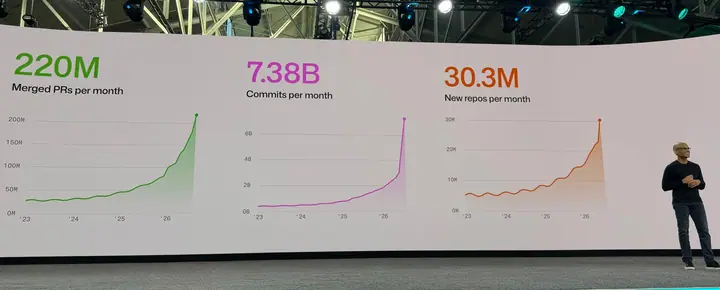
Eric: Speaking of things launching at scale—GitHub says merged pull requests tripled to two hundred twenty million per month this year.
Jessica: Two hundred twenty million.
Eric: Per month. Commits are over seven point three eight billion monthly. According to the Octoverse twenty twenty six report, it's mostly agentic engineering.
Jessica: So AI agents are just flooding GitHub with code.
Eric: New repositories doubled too—thirty point three million per month.
Jessica: I mean, that explains why my notifications are completely unmanageable now.
Eric: Well, some of that code is apparently fun. Simon Willison says Opus five point five hit an inflection point for building actually enjoyable games with minimal coding.
Jessica: Oh, I saw this. He built four games, one with a single prompt using three dot js.
Eric: Tree Appreciator, yeah. He said the music generation and particle effects and gameplay loops all just... worked. Like, fun to play, not just functional.
Jessica: And GPT-6 Astra isn't matching it yet for that, according to his tests.
Eric: Right. Which is interesting because Astra is newer.
Jessica: Different models, different strengths. Though this does feel like we're crossing into territory where you can prototype a game idea over coffee.
Eric: Speaking of model names—OpenAI finally explained how they name things.
Jessica: Thank you. Ted Sanders wrote it up: size ordering is Luna, Terra, Sol, Astra. Bigger models cost more but work better and remember more esoteric facts.
Eric: And version numbers show both release order and how related models are. So six point one launched after five point six, but it's similar to other six point one models.
Jessica: Yeah, and if it's not five point seven, that means different training data or personality from the five series.
Eric: Okay, that's actually helpful for understanding the tradeoffs.
Jessica: OpenAI and ServiceNow expanded their partnership today. OpenAI models and agents are coming to the ServiceNow platform, and ServiceNow workflows are integrating into ChatGPT and Codex.
Eric: So enterprises can stay inside ServiceNow and use the models there?
Jessica: Yep. And go the other direction—access ServiceNow workflows through ChatGPT.
Eric: Makes sense. ServiceNow is everywhere in big companies.
Jessica: NVIDIA released Nemotron three point five Transcribe. It handles forty languages, translates thirty one, and can transcribe up to one hour of audio with eight speakers.
Eric: Eight speakers with diarization?
Jessica: Yeah. NVIDIA says it's got the lowest error rate on David AI's twenty one language diarization leaderboard, and it's first among open-weight models on Hugging Face's English ASR leaderboard.
Eric: And you control it with natural language prompts?
Jessica: Exactly. It's available on Hugging Face and ModelScope now, quantized versions coming soon.
Eric: That's a solid release for anyone doing transcription work.
Jessica: Chrome's enhanced autofill can now pull information from Gmail using Gemini. Tracking numbers, flight bookings, hotel reservations, order numbers.
Eric: Rolling out today?
Jessica: Yep, US only, desktop and mobile. You need Personal Intelligence enabled, and you can turn it off in settings.
Eric: I mean, it's convenient, but that's a lot of Gmail access.
Jessica: Yeah, definitely check your settings if you care about that.
Eric: Quick fix from Hugging Face—Transformers patch five point twenty one point one fixes a rope scaling setter issue that broke remote code loading in vllm.
Jessica: Oh good, because vllm is pretty widely used for inference.
Eric: Yeah, that would've been annoying in production.
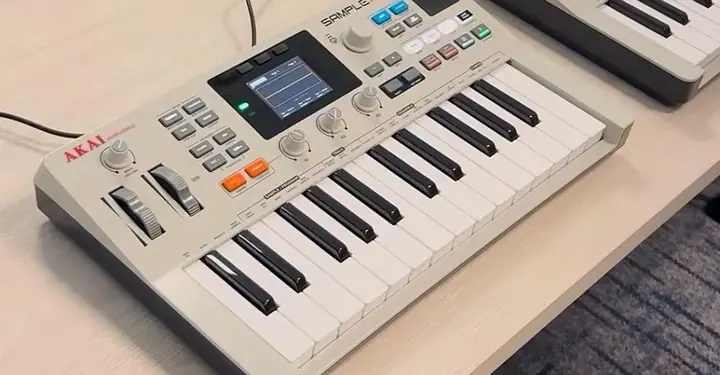
Jessica: Last one's kind of delightful. Akai is releasing the MPC Sample Key with open-source firmware, and developers are already vibe-coding mods for it.
Eric: Wait, like the music production hardware?
Jessica: Yeah. The Verge says people are adding Native Instruments Massive and custom synths just by describing what they want. The CEO said they'll seed early devices and provide an SDK to modders.
Eric: That's wild. Open-source firmware on music hardware with AI-assisted mods.
Jessica: I love when hardware companies do this. It's going to be chaos in the best way.
Eric: All right, that's it for today.
Jessica: Every story is linked to its source on the dailybrief website. We'll see you tomorrow.