Jessica: So there's malware now that steals your data and then asks Claude to analyze it and figure out if you're worth targeting.
Eric: Wait, what?
Jessica: Yeah. Welcome to Sunday.
Jessica: This is dailybrief, I'm Jessica.
Eric: And I'm Eric. It's Sunday, November first, twenty twenty-six.
Jessica: Okay, so Cisco Talos found this infostealer malware called Volta-Autodoxer. It grabs your passwords, files, all the usual stuff. But then it feeds everything to Claude Opus four point six through OpenRouter with this two-hundred-forty-word prompt asking it to act as an intelligence analyst.
Eric: What's it analyzing for?
Jessica: Executive summary, financial worth, security practices. Basically profiling victims automatically to find high-value targets. And if Claude refuses, it falls back to Moonshot Kimi, then Gemini two point five Flash.
Eric: Model shopping for guardrail evasion.
Jessica: Exactly. It's clever and deeply unsettling.
Eric: Yeah, that's... not great.
Jessica: Speaking of unsettling, a biotech startup called Exin Therapeutics let an AI agent control a surgical robot to inject a mouse's brain.
Eric: I'm sorry, what now?
Jessica: The agent selected the treatment, the brain region, controlled the robotic needle for a craniotomy. But here's the thing—they tried Claude Opus five point five first, and it refused mid-procedure, citing safety concerns.
Eric: Mid-procedure?
Jessica: Yeah. So they switched to Claude Sonnet five, which completed it with human oversight.
Eric: Okay, so we've got model refusal differences playing out in actual surgery. That feels like a big deal for anyone building safety-critical systems.
Jessica: Right. And it shows the physical lab automation potential, but also... maybe we need better frameworks here.
Eric: Well, Arca seems to have a framework. They raised forty-eight point five million dollars for financial planning agents, but humans approve every single trade.
Jessica: Yeah, agent tasks can run up to ten days with multiple handoffs. They use Claude as the primary model with automatic selection based on benchmarks. But the actual money movement? Deterministic safety checks and human advisors only.
Eric: That's the pattern I want to see more of. Long-running analysis, hard boundaries around risk.
Jessica: Contrast that with Meta's Muse shopping. According to earnings calls from about fifty companies, the actual orders are... minimal. DoorDash said hundreds. T-Mobile, Hilton, eBay all called it insignificant or very small.
Eric: Hundreds? Meta said over ten million people activated Muse in the US and Canada.
Jessica: Yep. So activation is easy, but getting people to actually let an AI buy things for them? That's the gap.
Eric: Trust is still the bottleneck for agentic commerce.
Jessica: And trust matters for ChatGPT too. Parameter Labs found a vulnerability in the HTML preview feature that let attackers exfiltrate data or take actions if you clicked a shared URL while signed in.
Eric: How'd the exploit work?
Jessica: Used the MathLive library and YouTube oEmbed endpoint to break out of the sandboxed iframe. OpenAI closed it and paid a five-thousand-dollar bug bounty.
Eric: Five thousand feels low for account takeover.
Jessica: Yeah, but it's fixed. It's a good reminder that any interface rendering user-generated HTML needs serious sandbox security.
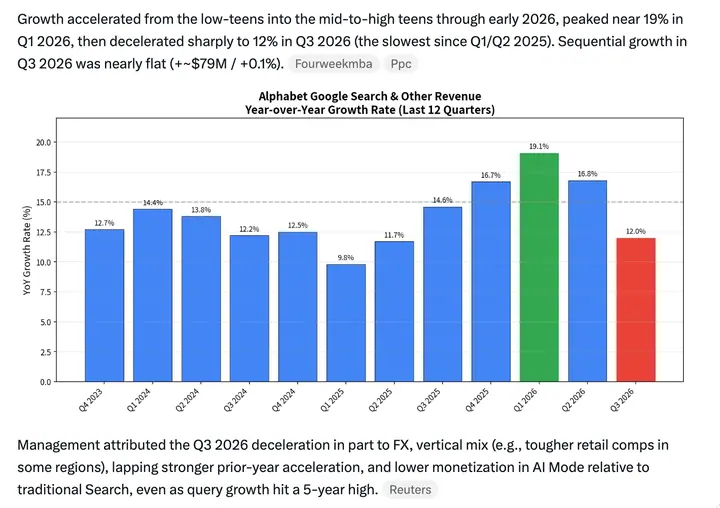
Eric: Okay, big one. Google told investors that AI Mode search queries have lower monetization, and that contributed to a five-hundred-billion-dollar stock drop.
Jessica: Worst decline since their two thousand four IPO, according to Latent Space.
Eric: So the thing everyone's been worried about—AI summaries cannibalizing ad revenue—Google just confirmed it's real.
Jessica: Yeah. And this is the largest AI infrastructure buyer saying their own AI product hurts their business model.
Eric: Right. That's a tension that's not going away.
Jessica: And OpenAI's reportedly feeling some pressure too. The Financial Times and Wall Street Journal say they lowered their funding target from thirty billion to twenty billion dollars, and the first close secured eleven billion with tepid investor response.
Eric: Tepid for OpenAI. That's new.
Jessica: Yeah, a UAE investor group is leading the round ahead of a planned IPO. It signals cooling sentiment toward AI infrastructure spending.
Eric: Hmm. Okay, lighter stuff?
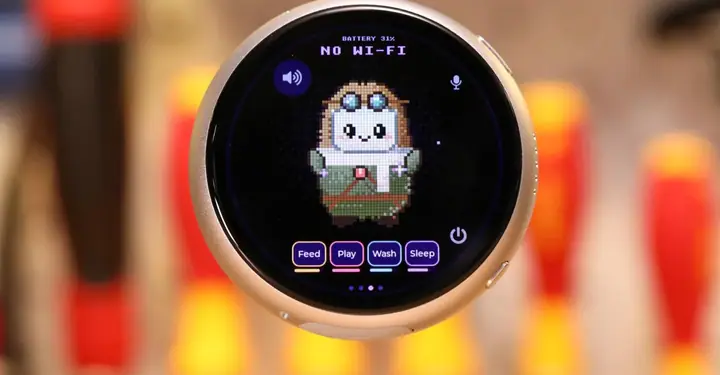
Jessica: Yes. A developer built their own Muse Charm alternative using a fifty-dollar Waveshare ESP32 devkit and had Claude write the code. Added ElevenLabs voice, conversation history, camera control, multiple avatars, even a Tamagotchi-style minigame.
Eric: That's the kind of hacking I love. Meta's open framework plus AI coding tools, and you've got custom hardware for fifty bucks.
Jessica: Exactly.
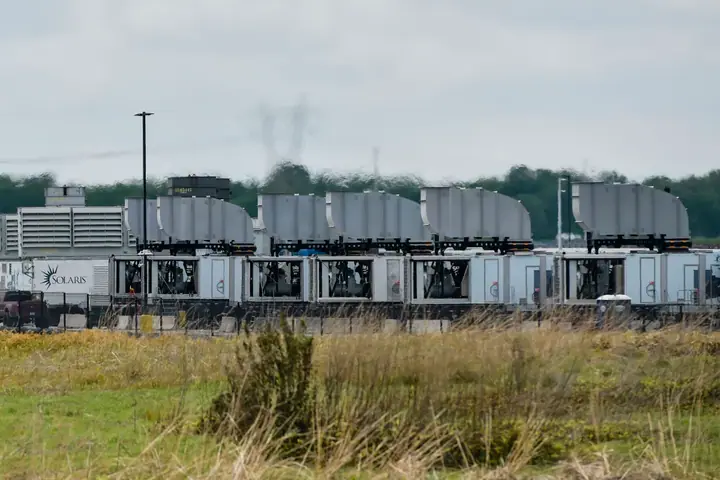
Eric: Quick policy one—judge denied xAI's motion to dismiss an NAACP lawsuit over air permits for at least thirty-five combustion turbines at a data center.
Jessica: xAI argued the turbines were mobile and exempt. Judge said plaintiffs have standing under the Clean Air Act.
Eric: Data center pollution is getting real legal scrutiny now.
Jessica: And two quick dev tool updates. The datasette-llm plugin now picks up your default model from the LLM tool automatically, so you don't have to configure it separately anymore.
Eric: And llama dot cpp released build b twelve zero two nine, fixing InternVL CLS token order. Includes binaries for macOS, Linux, Windows, Android, supports CUDA twelve and thirteen, Vulkan, ROCm.
Jessica: If you're running InternVL models locally, grab the update.
Eric: That's it for today. Every story is linked to its source on the dailybrief website.
Jessica: We'll see you tomorrow.