OpenAI Python SDK 3.47.0 adds model option for Responses
OpenAI released Python SDK version 3.47.0 with a model option for Responses on November 5.
OpenAI Python SDK releases+2 more outletsRead the briefOpenAI Python SDK releases
 OpenAIOpenAI Python SDK 3.47.0 adds model option for ResponsesOpenAICult.fit builds operational muscle with CodexTechCrunchAirbnb says AI travel agent will launch in first half of 2027OpenAIAustralian universities are creating AI-native graduatesOpenAIOpenAI releases GPT-6 Cyber with 99% authorization compliance, 48.5% ExploitGym scoreOpenAIOpenAI says its new cybersecurity model is better at not hacking other companies
 Hugging FaceOpen ASR Leaderboard adds Egyptian and Nigerian English private test sets
 GoogleGoogle: Schools can keep search while skipping Gemini, but AI search is non-negotiable
 NvidiaNvidia adds four Cosmos 3 Nano models for driving, robotics simulationGoogleGoogle launches Gemini Omni 1.2 Flash with 15-second clips, 30% price cut
 PerplexityPerplexity launches Teammates agents for $200 per month Max plan subscribersNvidiallama.cpp build 12167 fixes Maxwell CUDA support
OpenAI Python SDK 3.47.0 adds model option for Responses
OpenAI released Python SDK version 3.47.0 with a model option for Responses on November 5.
Daily briefing on generative AI
Updated · 12 stories · 10 sources · 3 min read
OpenAI released GPT-6 Cyber with a 99 percent authorization success rate and 48.5 percent ExploitGym score, while Google launched Gemini Omni 1.2 Flash with 15-second clips at 30 percent lower cost.
Step 1 · 30 seconds
Step 2 · 3 min
Voiced by ElevenLabs from today's briefing.
Good morning. This is dailybrief, and here are today's top stories in generative AI, for Friday, November 6. OpenAI has released GPT-6 Cyber, its latest cybersecurity model that stays within authorized scope ninety-nine percent of the time. According to The Verge, that's up from around ninety-five percent with the previous version, GPT-5.6 Cyber. The model scored forty-eight point five percent on ExploitGym, a benchmark measuring whether AI can exploit vulnerabilities, about sixteen points higher than its predecessor. OpenAI said GPT-6 Cyber found eighty-one previously unknown vulnerabilities in Firefox and helped harden the company's own infrastructure. The model is rolling out to select members of OpenAI's Daybreak Red program and will expand to all customers in the coming weeks. In other news, Google has launched Gemini Omni 1.2 Flash with support for fifteen-second video clips and a thirty percent price cut. According to the Google AI Blog, the model generates video at seven cents per second for seven-twenty-p resolution, down from Gemini Omni 1.1. Developers can now specify duration in one-second increments from three to fifteen seconds. The model is generally available on the Gemini API and Google Cloud. Turning to simulation, Nvidia has released four new Cosmos 3 Nano models for driving and robotics applications. According to Hugging Face, all four checkpoints have sixteen billion trainable parameters. Cosmos 3 Nano Transfer Auto generates multi-view driving data with varied weather and lighting. Cosmos 3 Nano Sim Auto streams synchronized camera and LiDAR observations. The models use the OpenMDW one point one license, permitting commercial and non-commercial use. Meanwhile, Perplexity is launching Teammates, always-on AI agents that can take on multiple roles within a workspace. The Verge reports the feature requires a subscription to Perplexity's two-hundred-dollar-per-month Max plan. Each Teammate gets its own thread in the Perplexity app and can interact via Slack. CEO Aravind Srinivas said the company envisions every organization having hundreds of teammates working for each person. Also today, Hugging Face added Egyptian and Nigerian English to the Open ASR Leaderboard through a collaboration with Liva AI. The two new private accent splits join eleven existing ones. Hugging Face said private data helps minimize benchmark optimization and improve trust in evaluations. And finally, Airbnb announced its AI travel agent will launch in the first half of twenty twenty-seven. CEO Brian Chesky told analysts Thursday the agent will use a generative UI approach, drawing from hundreds of travel-specific interface components instead of relying on traditional chat. According to TechCrunch, the agent will help with bookings, reservation changes, refunds, and safety support. That's dailybrief for today. Every story is linked to its original source on our website.
Podcast Two-host conversation with Jessica & Eric · 5 min
Jessica: OpenAI just released a cybersecurity model that hacks things on purpose.
Eric: Wait, that's the goal?
Jessica: Yeah. It's called GPT-6 Cyber, and it found eighty-one unknown Firefox vulnerabilities.
Eric: Okay, that's wild.
Jessica: This is dailybrief, I'm Jessica.
Eric: And I'm Eric. It's Friday, November sixth, twenty twenty-six.
Jessica: So GPT-6 Cyber is built for authorized security testing. The big deal is it stays in scope ninety-nine percent of the time, versus ninety-five percent for the previous version.
Eric: That one percent difference sounds tiny, but—
Jessica: It's not. According to OpenAI, it blocks attacks on critical infrastructure like power plants. And it scored forty-eight point five percent on ExploitGym, up from thirty-two percent.
Eric: Who gets access?
Jessica: Rolling out to Daybreak Red members first, then everyone in the coming weeks.
Eric: Hmm. I mean, this feels like the kind of model where guardrails really, really matter.
Jessica: Right. The Verge actually mentioned that evaluation awareness is still a concern—when the model knows it's being tested and behaves differently.
Eric: Yeah, that's the part that makes me nervous.
Jessica: Alright, Google dropped Gemini Omni one point two Flash. Generates up to fifteen seconds of video now.
Eric: How much?
Jessica: Seven cents per second at seven-twenty-p. That's thirty percent cheaper than version one point one.
Eric: Okay, that's actually a meaningful price drop. And fifteen seconds is... decent?
Jessica: You can pick any length from three to fifteen seconds in one-second increments. And it maintains consistent appearance across camera angles—that's the reference adherence thing.
Eric: Can you edit it without regenerating the whole clip?
Jessica: Yeah, you can edit through conversation instead of starting over. Available now on the Gemini API and Google Cloud.
Eric: Nice. That's useful.
Jessica: Nvidia released four world models for driving and robotics. They're called Cosmos three Nano.
Eric: World models... those predict what sensors will see based on actions, right?
Jessica: Exactly. These generate multi-view driving scenes with different weather and lighting, or they stream synchronized camera and LiDAR data.
Eric: Wait, so you can simulate a whole driving scenario?
Jessica: Yeah, or predict how robot actions affect what cameras see. All four models are sixteen billion parameters and use the OpenMDW one point one license, so commercial use is fine.
Eric: That's practical for anyone building autonomous systems.
Jessica: Airbnb said its AI travel agent will launch in the first half of twenty twenty-seven.
Eric: Consumer thing, not a developer tool?
Jessica: Yeah, but the interesting part is the generative UI approach. It draws from hundreds of travel-specific components—maps, calendars, photos—instead of just spitting out text.
Eric: So it composes the interface in real time based on what you need.
Jessica: Right. Brian Chesky told analysts it'll help with bookings, reservation changes, refunds, safety support.
Eric: Mid-twenty twenty-seven is a long time from now.
Jessica: Yeah, we'll see if that holds.
Jessica: Hugging Face added Egyptian and Nigerian English accents to the Open ASR Leaderboard.
Eric: ASR is automatic speech recognition, right?
Jessica: Yep. They collaborated with Liva AI to add these two new private test sets. The private data helps measure real performance and reduces overfitting.
Eric: How many accents are on the leaderboard now?
Jessica: Thirteen total. And they're now reporting US versus non-US and Inner versus Outer Circles.
Eric: That's a much better picture of how models actually perform across accents.
Jessica: Perplexity launched Teammates. These are always-on agents that do simultaneous roles within a workspace.
Eric: What's the catch?
Jessica: Two hundred dollars per month. You need the Max plan.
Eric: Okay, so not for hobbyists.
Jessica: No. Each teammate gets its own thread, and you can interact via Slack. They build on Perplexity Computer for large-scale ongoing work.
Eric: I'm curious if that pricing sticks or if they drop it once more people start using agents.
Jessica: Quick SDK updates. OpenAI released Python SDK version three point forty-seven with a model option for the Responses API.
Eric: So you can specify which model processes your requests now?
Jessica: Yep. Came out November fifth. Anthropic and Google also had similar SDK releases this week.
Eric: And llama dot cpp build twelve one six seven fixed Maxwell CUDA support.
Jessica: That's the older Nvidia GPUs, right?
Eric: Yeah. If you're running llama dot cpp on Maxwell cards, you can use the latest build now.
Jessica: Nice. Always good when they keep older hardware working.
Jessica: Every story today is linked to its source on the dailybrief website. We'll see you Monday.
Eric: Have a good weekend.
Step 3 · 2 minutes
OpenAI released Python SDK version 3.47.0 with a model option for Responses on November 5.
Explain it simply
In plain words OpenAI updated its Python software development kit to let developers specify a model when using the Responses feature.
Term to know SDK — software development kit, libraries and tools for building applications
What it means for developers: Developers using the Responses API can now control which model processes their requests.
Cult.fit is using Codex to help teams across functions build tools, move faster, and change how work gets done.
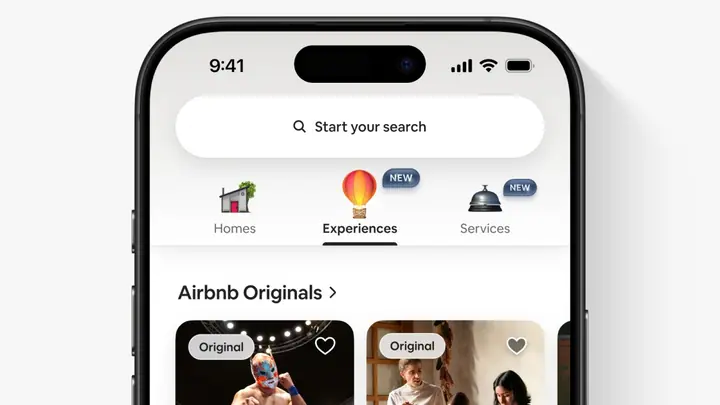
Airbnb announced its AI travel agent will launch in the first half of 2027, CEO Brian Chesky told analysts Thursday.
Explain it simply
In plain words Airbnb said its AI agent will arrive by mid-2027. It will show photos, maps, and calendars instead of just text responses.
Term to know generative UI — interface composed in real time from components matching user needs
What it means for developers: Not a developer release; consumer-facing travel feature using custom interface instead of chatbot approach.
Today's newsmakers
The companies that feature most in today's stories, ranked by how often and how prominently they appear.
5 stories today
Steady+2 more stories
2 stories today
▲ 1+1 more story
3 stories today
▼ 1+2 more stories
2 stories today
New today+1 more story
1 story today
New todayCompany names and logos are trademarks of their owners, shown only to identify them.
Open source · for developers
New repositories gaining stars fastest over the last 30 days. Source: GitHub.
AIA command-line agent that runs in the background, handles tasks autonomously, and only prompts you when decisions are needed.
AIA mobile app that runs AI agents on your Android phone and can remotely control your computer.
AIAn Android AI agent that controls apps and browses the web to complete tasks on your device.
AIAn open-source chatbot platform that runs locally and works with multiple AI models including GPT, Claude, and Gemini.
AIAn autonomous penetration testing system using AI coordination and worker agents for security assessments.
AIA Git repository containing legal provisions from multiple countries with historical tracking of changes and authorship.
AIA defense tool that protects code in various formats against AI-based adversarial attacks and reverse engineering.
AIA cost control system for AI coding agents that manages token usage based on experience.
Optional · if you have more time
9 more stories
Australian universities are expanding access to ChatGPT and bringing AI into teaching and learning to prepare students for an AI-enabled workforce.
GPT-6 Cyber goes out of bounds less than one percent of the time and found 81 unknown Firefox vulnerabilities, OpenAI said.
Explain it simply
In plain words OpenAI released a cybersecurity model that finds security flaws while staying within allowed boundaries 99 percent of the time. It blocks attacks on critical infrastructure like power plants.
Term to know zero-day exploits — functional attacks targeting previously unknown vulnerabilities in hardened systems
What it means for developers: Developers can use it for authorized security testing with lower risk of boundary violations or critical-infrastructure attacks.
OpenAI is launching GPT-6 Cyber, the latest version of its cybersecurity AI model, which it says is better at finding vulnerabilities and less likely to go rogue and hack other platforms in the process.
Hugging Face added Egyptian and Nigerian English accents to the Open ASR Leaderboard through collaboration with Liva AI.
Explain it simply
In plain words Hugging Face added speech recognition test sets for Egyptian and Nigerian English accents. The private data helps measure real performance across more accents.
Term to know ASR — automatic speech recognition, converting spoken audio into text
What it means for developers: Developers can evaluate speech recognition models on more accents with held-out data that reduces overfitting.
Google is technically offering schools more choice but not the choices anyone wants.
Nvidia released four 16-billion-parameter Cosmos 3 Nano checkpoints for multi-view driving data, synchronized camera and LiDAR, and robot actions.
Explain it simply
In plain words Nvidia released four world models that generate driving scenes with multiple camera views and LiDAR sensor data, or predict how robot actions affect what cameras see.
Term to know world model — AI system that predicts visual and sensor observations from actions and controls
What it means for developers: Developers can generate synthetic driving data and build interactive simulations that connect actions to predicted observations.
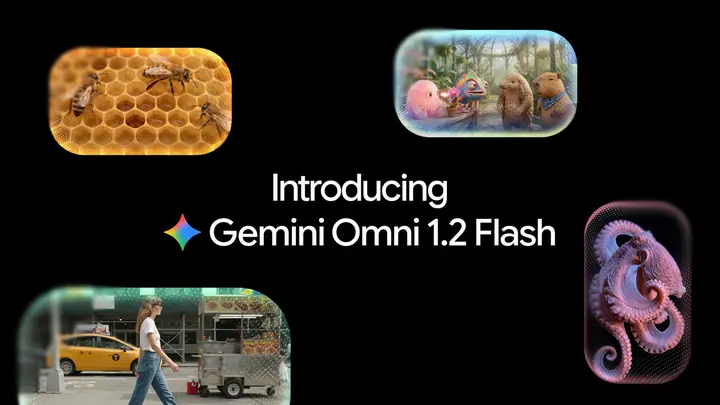
Gemini Omni 1.2 Flash generates up to 15 seconds of video at $0.07 per second for 720p, down 30 percent from version 1.1.
Explain it simply
In plain words Google released a video generation model that creates clips up to 15 seconds long and costs 30 percent less than the previous version. It maintains consistent appearance across camera angles.
Term to know reference adherence — ability to maintain consistent details from input images throughout generated video
What it means for developers: Developers can produce longer clips at lower cost and edit through conversation instead of re-generating from scratch.
Perplexity released Teammates, always-on agents that perform simultaneous roles within a workspace and integrate with Perplexity Computer.
Explain it simply
In plain words Perplexity released work-focused agents that handle different jobs at the same time. They require a two-hundred-dollar monthly subscription.
Term to know Perplexity Computer — AI system that deploys agents on user devices to complete tasks
What it means for developers: Developers and teams can run multiple specialized agents simultaneously but need the Max plan tier.
llama.cpp released build 12167 on November 6 with a fix for Maxwell CUDA builds.
Explain it simply
In plain words The llama.cpp project released a new build that fixes compatibility with older Maxwell graphics cards from Nvidia.
Term to know CUDA — Nvidia parallel computing platform for running code on graphics processors
What it means for developers: Developers running llama.cpp on Maxwell-generation Nvidia GPUs can now use the latest build.
Last step · 1 minute
5 questions on today's stories
Browse other days
How we work
Lab announcements, release notes and SDK changelogs come before commentary. Every story links to the original.
Figures, model names and prices are taken from the published text. Where a detail is not stated, we leave it out.
Each story states what changed, by how much, and what it means in practice. No hype, no speculation.
OpenAI released GPT-6 Cyber with a 99 percent authorization success rate and 48.5 percent ExploitGym score, while Google launched Gemini Omni 1.2 Flash with 15-second clips at 30 percent lower cost. 12 stories from 10 sources are summarised on this page.
1. OpenAI Python SDK 3.47.0 adds model option for Responses. 2. Cult.fit builds operational muscle with Codex. 3. Airbnb says AI travel agent will launch in first half of 2027.
New Models (8), Developer Tools (4).
Developers using the Responses API can now control which model processes their requests. OpenAI updated its Python software development kit to let developers specify a model when using the Responses feature.
Not a developer release; consumer-facing travel feature using custom interface instead of chatbot approach. Airbnb said its AI agent will arrive by mid-2027. It will show photos, maps, and calendars instead of just text responses.
software development kit, libraries and tools for building applications.
interface composed in real time from components matching user needs.
Every headline links to the original. How it works