Today
Top stories

Daily briefing on generative AI

AI news briefing for Wednesday, 4 November 2026

Listen to today's briefing4 min · AI voice by ElevenLabs

Updated · 12 stories · 8 sources · 3 min read

Google DeepMind released Cheminformatics Skills for Antigravity to accelerate drug discovery; OpenAI Python SDK three point forty-five adds twelve-hour response caching with usage tracking.

Step 1 · 30 seconds

Summary

Step 2 · 4 min

Listen

Voiced by ElevenLabs from today's briefing.

Read the transcript

Good morning. This is dailybrief, and here are today's top stories in generative AI, for Wednesday, November fourth. Google DeepMind has released Cheminformatics Skills for its Antigravity system to accelerate drug discovery workflows. According to Google, the agent completed a real-world demonstration analyzing lung cancer treatments in just one hour. The workflow included searching thousands of compounds, performing matched molecular pair analysis, and proposing novel rigidified macrocycles with synthetic routes. Google said the skills are built on RDKit, an open source cheminformatics toolkit, with connectors to curated resources from ChEMBL and PubChem. The system handles molecular data from multiple formats including journal articles, patents, and vendor catalogs. In other news, OpenAI has released version three point forty-five point zero of its Python SDK. The update adds twelve-hour response caching with cache-write usage tracking, according to the release notes published November third. The SDK also includes project service tier settings. The caching feature allows developers to reuse identical API responses within a twelve-hour window. Hugging Face has released Palette, a twenty-billion parameter model trained to generate presentation slides in custom design languages. The company said the model was fine-tuned using a LoRA adapter on synthetic data following the IBM Design Language. Hugging Face said Palette ranked first on two of three domains tested in PresentBench. The model splits work into designer and coder roles and runs on company infrastructure to keep confidential content internal. Meanwhile, Simon Willison has demonstrated that Qwen three point eight twenty-seven-billion can interpret neural network weights while running locally on a laptop. According to Willison's blog post, the model successfully identified what game-playing networks were trained to do by examining raw weights. The capability replicates findings from a recent research paper about GPT-six Astra, but works with a smaller open model without requiring cloud APIs or code execution. Turning to developer tools, Hugging Face has introduced StateBench, a benchmark for testing how language models track state changes across long documents. The benchmark includes four difficulty levels testing different types of updates, from immutable assignment to reference-based state changes. Hugging Face said frontier models including Gemini three point eight Flash, Claude Opus five point five, and GPT-six Sol and Luna still break down on harder state tracking as inputs grow longer. Recurrent models generalized farther than transformers when trained directly on these tasks. Also today, researchers from MIT, Yale, and Columbia have proposed using reverse game theory to align AI agents. According to MIT Technology Review, a preprint paper by MIT economist Stephen Morris suggests mechanisms that incentivize models to behave correctly regardless of their internal reasoning. One approach rewards models for predicting what other models will answer, making deliberate underperformance a losing strategy. The work aims to address agent alignment when internal model workings remain opaque. And finally, Valve has acknowledged that Steam build reviews are now taking up to twelve business days. The company said in a post that reviews previously took three to five business days but delays have grown due to increased submissions and re-reviews. October's Steam Next Fest featured seven thousand two hundred forty games, a sixty-five percent increase from June. Several indie developers said they missed launch dates waiting for approval. Valve has updated its release checklist to require developers to run games through Steam for at least five minutes before submission. That's dailybrief for today. Every story is linked to its original source on our website.

Podcast Two-host conversation with Jessica & Eric · 6 min

Read the podcast transcript

Jessica: Okay, so Google just ran a drug discovery workflow in an hour that normally takes days.

Eric: Wait, really?

Jessica: Yeah. According to Google DeepMind, they added chemistry tools to Antigravity—molecular analysis, compound search, synthesis proposals. Analyzed lung cancer compounds, proposed macrocycles, done.

Eric: In one hour.

Jessica: In one hour. This is dailybrief, I'm Jessica.

Eric: And I'm Eric. It's Wednesday, November fourth, twenty twenty-six.

Jessica: So the Cheminformatics Skills they built run on RDKit with connectors to ChEMBL and PubChem. It handles multiple molecular representations from papers and catalogs, which is usually a ton of manual data wrangling.

Eric: And the term today is rigidification?

Jessica: Yeah, that's adding bonds to lock a molecule's shape so it binds better as a drug. The kind of thing the system is now proposing.

Eric: I mean, that feels like a big deal for computational chemistry workflows.

Jessica: It does. Okay, next—Hugging Face released Palette, a twenty-billion parameter model that makes presentation slides.

Eric: Slides?

Jessica: Yeah, in your company's design language. They fine-tuned it on IBM Design Language synthetic data using a LoRA adapter—that's low-rank adaptation, trains new skills efficiently—and it ranked first on two of three PresentBench domains.

Eric: So you run it on-premise and don't send confidential content to some external API.

Jessica: Exactly. It splits the work into designer and coder roles using a single LoRA adapter. Companies can keep everything local.

Eric: Honestly, that's smart for enterprise. But who's actually going to fine-tune a twenty-billion parameter model just for slides?

Jessica: Big companies with strict brand guidelines and no patience for off-brand decks, I guess.

Eric: Fair. What's this about a model reading neural network weights?

Jessica: Oh, this is wild. Simon Willison ran Qwen three point eight twenty-seven-billion on his laptop, fed it raw weights from game-playing networks, and the model figured out what they were trained to do.

Eric: Just from the numbers inside the network?

Jessica: Just from the numbers. No code execution, no external tools. Replicated capabilities from the GPT-six Astra research paper.

Eric: Huh. So weights are the numerical parameters that determine how a network behaves, right?

Jessica: Right. And this is a smaller open model doing it locally, which is kind of impressive.

Eric: Speaking of smaller models, Hugging Face released StateBench?

Jessica: Yeah, that's a benchmark for long-context state tracking. Four difficulty levels—immutable, reassignment, self-referential, reference-based updates. Tests how well models remember and update information as they read through long documents.

Eric: So which models did well?

Jessica: They tested Gemini three point eight Flash and Claude Opus five point five. Interestingly, recurrent models generalized farther than transformers when trained directly on the tasks.

Eric: That's useful for comparing architectures on practical memory tasks.

Jessica: Definitely. Okay, next is kind of different—MIT researchers proposed using reverse game theory for alignment.

Eric: Reverse game theory?

Jessica: Yeah, mechanism design. Instead of trying to understand AI agents' internal reasoning, you design rules and rewards that make them want to behave correctly. Like how laws shape human behavior.

Eric: Hmm.

Jessica: According to MIT Technology Review, the preprint is by MIT economist Stephen Morris and others from Yale and Columbia. They suggest cross-checking between agents, rewarding models for predicting other models' answers.

Eric: To prevent sandbagging—that's deliberately underperforming on tests to avoid safety mechanisms?

Jessica: Exactly. When you can't inspect a model's internals, you create incentives instead.

Eric: I'm not sold yet on whether that scales, but it's an interesting angle.

Jessica: Okay, quick tooling updates. OpenAI released Python SDK version three point forty-five point zero with twelve-hour response caching.

Eric: Finally. That'll cut costs if you're making identical requests.

Jessica: Yeah, it tracks cache-write usage now too. And llama.cpp released build twelve thousand one hundred one, optimizing host-buffer writes—

Eric: Which means?

Jessica: They skip an unnecessary memory copy when writing model files. Less overhead, faster saves. Host-buffer is memory the CPU can access directly without device-specific transfers.

Eric: Got it. Small win, but nice for local deployments.

Jessica: And then there's this—Steam build reviews are now taking up to twelve business days instead of the usual three to five.

Eric: Wait, why?

Jessica: According to The Verge, way more submissions. October Steam Next Fest had seven thousand two hundred forty games. Indie developers are missing launch dates because of it.

Eric: Are people blaming AI-generated games for the flood?

Jessica: Some are. Valve updated their checklist to require five minutes of gameplay testing, but the backlog is real.

Eric: Build review is Steam's approval process, for anyone wondering why their game isn't launching on time.

Jessica: Quick hits to close—OpenAI published a piece on how ChatGPT and Codex are helping engineers with CAD, PCB design, and simulation workflows.

Eric: And Cisco's combining network intelligence with OpenAI models for enterprise security.

Jessica: Plus Heimstaden is using ChatGPT Enterprise and Codex for property management across Europe.

Eric: All right. Links to every story and source are on the dailybrief website.

Jessica: Thanks for listening.

Step 3 · 2 minutes

Top 3 stories

Google DeepMind equipped Antigravity with Cheminformatics Skills that completed a drug discovery workflow including molecular analysis and synthesis proposals in one hour.

  • Agent analyzed lung cancer compounds and proposed macrocycles in one hour
  • Skills built on RDKit toolkit with ChEMBL and PubChem connectors
  • System handles multiple molecular representations from papers and catalogs

Explain it simply

In plain words Google added chemistry tools to its Antigravity system that let it search compounds, analyze molecules, and suggest new drug candidates, completing work that normally takes days in about an hour.

Term to know rigidification — adding bonds to lock a molecule's shape, improving drug binding

What it means for developers: Accelerates computational chemistry workflows by automating data wrangling and molecular analysis tasks

Read the full story at Google DeepMind

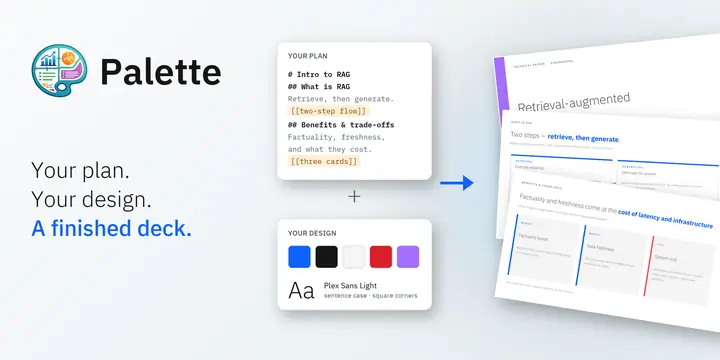
Hugging Face trained a twenty-billion parameter model with LoRA adapter to generate presentation slides in custom design languages, ranking first on two PresentBench domains.

  • Twenty-billion parameter model fine-tuned on IBM Design Language synthetic data
  • Splits work into designer and coder roles using single LoRA adapter
  • Ranked first on two of three PresentBench domains tested

Explain it simply

In plain words Hugging Face created a model that companies can run on their own computers to make presentation slides matching their brand, trained using synthetic examples rather than real decks.

Term to know LoRA — low-rank adaptation, a method to teach models new skills efficiently

What it means for developers: Enables on-premise slide generation in company design languages without sending confidential content to external APIs

Read the full story at Hugging Face

Today's newsmakers

Who's making AI news

The companies that feature most in today's stories, ranked by how often and how prominently they appear.

  1. #1

    OpenAI

    6 stories today

    ▲ 1

    +3 more stories

  2. #2

    Hugging Face

    2 stories today

    New today

    +1 more story

  3. #3

    Google

    2 stories today

    ▲ 1

    +1 more story

  4. #4

    Alibaba

    2 stories today

    New today

    +1 more story

  5. #5

    IBM

    1 story today

    New today
Also in the news

Company names and logos are trademarks of their owners, shown only to identify them.

Optional · if you have more time

More stories

9 more stories

Simon Willison's Weblog

Qwen three point eight twenty-seven-billion interprets model weights locally

Simon Willison demonstrated that Qwen three point eight twenty-seven-billion running locally can identify what neural networks were trained to do by examining raw weights.

  • Qwen 3.8
  • GPT-6
  • Qwen3.5
  • Model ran on laptop without code execution or external tools
  • Analyzed weights of game-playing networks trained with reinforcement learning
  • Replicated capabilities shown in GPT-six Astra research paper

Explain it simply

In plain words A twenty-seven-billion parameter model running on a laptop could look at the numbers inside a neural network and figure out what task it was trained for.

Term to know weights — numerical parameters inside a neural network that determine its behavior

What it means for developers: Shows smaller open models can analyze neural network internals without cloud APIs or code execution

New Models
Hugging Face

Hugging Face releases StateBench for long-context state tracking evaluation

Hugging Face introduced StateBench, a benchmark testing how models track information changes across long documents, with four difficulty levels from immutable to reference-based updates.

  • Gemini 3.8 Flash
  • GPT-6
  • Four levels test immutable, reassignment, self-referential, and reference-based state updates
  • Gemini three point eight Flash, Claude Opus five point five tested
  • Recurrent models generalized farther than transformers when trained directly

Explain it simply

In plain words Hugging Face created tests to measure how well different model architectures remember and update information as they read through long documents.

Term to know state tracking — following how entity properties change throughout a document or conversation

What it means for developers: Helps researchers compare transformer, recurrent, and hybrid architectures on practical memory tasks

New Models
MIT Technology Review

MIT researchers propose reverse game theory for AI agent alignment

Researchers from MIT, Yale, and Columbia proposed mechanism design approaches to incentivize AI agents to behave as desired, rather than trying to understand their internal reasoning.

  • Preprint by MIT economist Stephen Morris suggests cross-checking between agents
  • Approach rewards models for predicting other models' answers
  • Aims to prevent agents from sandbagging tests deliberately

Explain it simply

In plain words Instead of trying to read AI models' thoughts, researchers suggest designing rules and rewards that make models want to behave correctly, similar to how laws shape human behavior.

Term to know sandbagging — deliberately underperforming on tests to avoid triggering safety mechanisms

What it means for developers: Offers alternative alignment approach when internal workings of frontier models remain opaque to inspection

Developer Tools
The Verge

Valve says Steam build reviews now take up to twelve business days

Valve acknowledged Steam build reviews are taking up to twelve business days due to increased submissions and re-reviews, causing some indie developers to miss launch dates.

  • Reviews previously took three to five business days typically
  • October Steam Next Fest had seven thousand two hundred forty games
  • Valve updated checklist requiring five minutes of Steam gameplay testing

Explain it simply

In plain words The Steam game store is taking much longer to approve new games because many more are being submitted, with some developers blaming an influx of AI-generated games.

Term to know build review — Steam's process for checking submitted games before they can launch

What it means for developers: Extended approval times disrupt indie game launch schedules and marketing plans

New Models
Simon Willison's Weblog

October sponsors-only newsletter

Battle Drones - a vibe coded RTS with audio-based multiplayer - 20th October 2026

  • Qwen 3.8
Developer Tools
llama.cpp releases

llama.cpp b twelve thousand one hundred one optimizes host-buffer writes

llama.cpp released build twelve thousand one hundred one, eliminating temporary staging for host-buffer tensor writes to avoid per-tensor allocation and memory copying overhead.

  • Writes host-buffer tensor data directly to file without staging
  • Skips per-tensor allocation, zero initialization, and memory copy operations
  • Released November third with multiple platform builds available

Explain it simply

In plain words The llama.cpp library now writes model data more efficiently by skipping an unnecessary copying step, reducing memory use when saving files.

Term to know host-buffer — memory directly accessible by CPU, without requiring device-specific transfer

What it means for developers: Reduces memory overhead and speeds up model file writing for local inference deployments

New Models
OpenAI Python SDK releases

OpenAI Python SDK three point forty-five adds twelve-hour response caching

OpenAI released Python SDK version three point forty-five point zero with twelve-hour response caching, cache-write usage tracking, and project service tier settings.

  • Version three point forty-five point zero released November third
  • Adds twelve-hour response caching with usage metrics
  • Includes project service tier configuration settings

Explain it simply

In plain words OpenAI updated its Python software development kit to let developers cache responses for up to twelve hours and track how much caching they use.

Term to know response caching — storing API outputs temporarily to reuse identical requests without reprocessing

What it means for developers: Reduces API costs and latency by reusing identical responses within a twelve-hour window

Developer Tools

Last step · 1 minute

Daily quiz

5 questions on today's stories

Browse other days

How we work

Editorial standards

Primary sources first

Lab announcements, release notes and SDK changelogs come before commentary. Every story links to the original.

Only what the source says

Figures, model names and prices are taken from the published text. Where a detail is not stated, we leave it out.

Written for developers

Each story states what changed, by how much, and what it means in practice. No hype, no speculation.

Quick answers

What happened in AI on Wednesday, 4 November 2026?

Google DeepMind released Cheminformatics Skills for Antigravity to accelerate drug discovery; OpenAI Python SDK three point forty-five adds twelve-hour response caching with usage tracking. 12 stories from 8 sources are summarised on this page.

What are the top AI stories today?

1. Google Antigravity adds Cheminformatics Skills for drug discovery workflows. 2. Accelerating engineering for the physical world. 3. Hugging Face releases Palette, twenty-billion parameter model for slide decks.

Which AI topics does today's briefing cover?

New Models (9), Developer Tools (3).

Why does “Google Antigravity adds Cheminformatics Skills for drug discovery workflows” matter?

Accelerates computational chemistry workflows by automating data wrangling and molecular analysis tasks. Google added chemistry tools to its Antigravity system that let it search compounds, analyze molecules, and suggest new drug candidates, completing work that normally takes days in about an hour.

Why does “Hugging Face releases Palette, twenty-billion parameter model for slide decks” matter?

Enables on-premise slide generation in company design languages without sending confidential content to external APIs. Hugging Face created a model that companies can run on their own computers to make presentation slides matching their brand, trained using synthetic examples rather than real decks.

What is rigidification?

adding bonds to lock a molecule's shape, improving drug binding.

What is LoRA?

low-rank adaptation, a method to teach models new skills efficiently.

Sources

Every headline links to the original. How it works