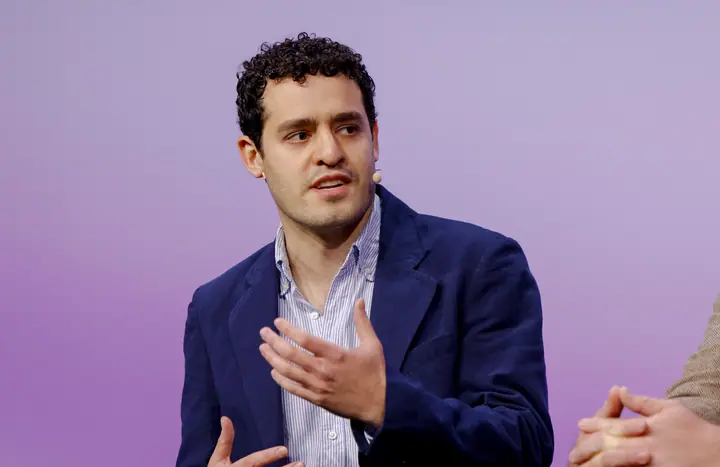
Nilay Patel said AI costs too high and benefits not real on Vergecast
Companies spend more than they make on AI products and agents are not being used as wanted, Patel said.
Simon Willison's WeblogRead the briefSimon Willison's Weblog
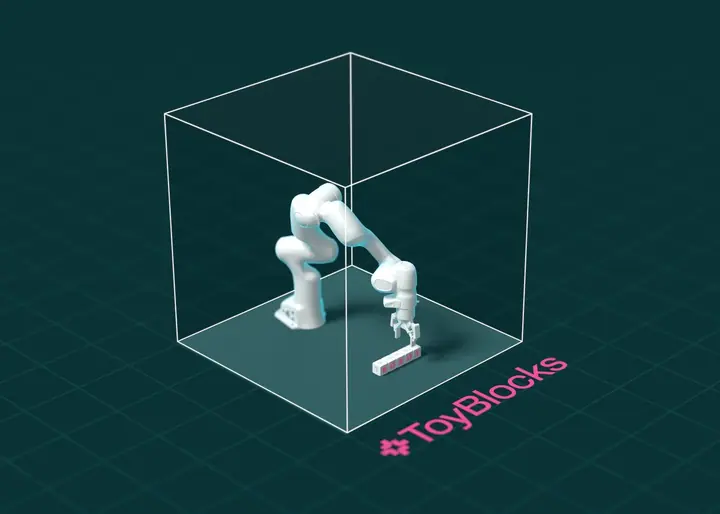
 Hugging FaceHugging Face introduced ToyBlocks simulation framework for robot learningllama.cpp releasesllama.cpp added MoE cache CPU offloading in build twelve thousand one ninety-one
 GitHubGitHub Copilot added JetBrains Air and Xcode support in weekly release
 MetaMeta launched Spaces for Muse agents to organize project-focused conversationsHugging FaceHugging Face released Transformers five point twenty-two point two patchTechCrunchUnderdog released Woof, a thirty-two megabyte speech model that runs in browsers
 DeepSeekOpen Chinese model DeepSeek matched frontier models at hacking in Vals tests
 GoogleGoogle Gen AI Python SDK defaulted to API version one from one betaWIREDAI companies buying workflow data from businesses for training, practitioners say
 AnthropicAI spending flatlined in late summer as price cuts offset rising token volumes
Nilay Patel said AI costs too high and benefits not real on Vergecast
Companies spend more than they make on AI products and agents are not being used as wanted, Patel said.
Daily briefing on generative AI
Updated · 12 stories · 9 sources · 3 min read
AI spending growth stalled in late summer despite rising token use as price cuts from OpenAI and Anthropic squeezed revenue, while open Chinese models now match closed frontier models at hacking tasks.
Step 1 · 30 seconds
Step 2 · 4 min
Voiced by ElevenLabs from today's briefing.
Good morning. This is dailybrief, and here are today's top stories in generative AI, for Sunday, November eight. AI spending growth has stalled even as companies use more of the technology. According to Ramp, token spending grew just one point five percent across August and September, down sharply from forty-two percent growth in July. The slowdown comes despite rising token volumes. Ramp's lead economist Ara Kharazian told TechCrunch the flatten-out reflects intense price competition. OpenAI cut API prices in half for GPT-6 Sol and GPT-6 Luna in September. Anthropic followed with significant reductions to pricing for Fable five point one and Opus five point five, a decision that slashed the company's revenue growth by about six hundred million dollars, according to a recent filing. Kharazian said the top one percent of firms, those spending the most on AI, have seen their outlays fall slightly below ten thousand dollars per employee after peaking in summer. The data arrives as Anthropic prepares for its IPO. In cybersecurity news, open Chinese AI models are now matching the capabilities of restricted frontier models at hacking tasks. Vals, a company measuring AI capabilities, tested models on mock corporate networks. It found DeepSeek, an open-weight model, completed seventy-three percent of network attack objectives. OpenAI's most advanced cyber model, Daybreak, available only to trusted partners, completed eighty-one percent. Vals researcher Nikil Ravi said closed models no longer have a definitive edge in cyber skills. The findings also show a dramatic cost difference: DeepSeek costs two to three dollars per attack compared to seventeen to forty-six dollars for GPT-6-Sol. Turning to developer tools, GitHub has added Copilot support to JetBrains Air and Xcode. The integration with JetBrains Air lets users track multiple agent sessions locally or in the cloud. GitHub said the Xcode integration is in public preview, available starting with Xcode twenty-seven point three beta. The November two release also added Agent Merge for pull requests and a unified settings dashboard. Meta has launched Spaces, a new feature for its Muse agents. Spaces are breakout conversations organized around specific topics like vacation planning or gift tracking. Meta said users describe an idea in chat and Muse builds a tracker, planner or project board. The company said Spaces can integrate with third-party apps and update automatically in the background. Meta also debuted Muse Voice on Thursday, allowing users to video chat with their agent. Meanwhile, Underdog has released Woof, a thirty-two megabyte speech model that runs entirely in web browsers. The model has thirty-one million parameters and generates speech locally without requiring an internet connection. Underdog demonstrated it in a browser game featuring a typewriter that speaks whatever users type. The company also released Bark, a one hundred sixty-seven megabyte speech-to-text model designed for edge devices. Also today, Google released version three point zero point zero of its Gen AI Python SDK. The update changes the default API version for Gemini Developer API from one beta to one. Google said some model aliases including gemini-flash-latest exist only on one beta. Vertex AI clients are unaffected. The SDK also switched its default HTTP client from httpx to httpx2. And several companies are now buying workflow data from businesses to train AI models. Startups including Mercor, Handshake and Micro1 are purchasing work files, emails and call transcripts. Handshake confirmed to TechCrunch it offered a freelance writer one thousand dollars for her work on a single story. The companies say they strip personal identifying information before selling data to AI labs. Mercor, founded in 2023, made its three cofounders billionaires at age twenty-two last year. That's dailybrief for today. Every story is linked to its original source on our website.
Podcast Two-host conversation with Jessica & Eric · 6 min
Jessica: Okay, so a free Chinese model just matched OpenAI's best hacking model.
Eric: Wait, their restricted one?
Jessica: Yeah. DeepSeek hit seventy-three percent on these network attack tasks. OpenAI's Daybreak—which they don't let most people use—got eighty-one.
Eric: Huh.
Jessica: This is dailybrief, I'm Jessica.
Eric: And I'm Eric. It's Sunday, November eighth, twenty twenty-six.
Jessica: So this is from WIRED covering Vals security tests. They ran models through mock corporate networks, multi-step attacks, the whole thing.
Eric: And DeepSeek costs two to three dollars per attack versus seventeen to forty-six for GPT-six-Sol.
Jessica: Right. So gating access to the most capable models? Doesn't really work anymore if an open-weight model gets you ninety percent of the way there.
Eric: Yeah, that's... that's the whole argument gone.
Jessica: Speaking of things not working—Nilay Patel went off on The Vergecast this week about AI costs and returns.
Eric: What'd he say?
Jessica: Basically that companies are spending way more than they're making on AI products, and agents aren't being used the way everyone wanted. He called out data center noise, deepfakes, and said the industry needs to build things that clearly improve people's lives.
Eric: I mean... he's not wrong?
Jessica: No, he's not. And it ties into this other story—
Eric: The spending one.
Jessica: Yeah. So Ramp looked at corporate AI spending and it basically flatlined in late summer. Token volumes grew one point five percent in August and September versus forty-two percent in July.
Eric: Wait, usage went up but spending didn't?
Jessica: Exactly. Because OpenAI cut GPT-six API prices in half in September. Anthropic did the same thing. So people are using more tokens but paying less per token.
Eric: So revenue growth is slowing even as adoption grows.
Jessica: Right. And TechCrunch says Anthropic's price cuts alone slashed revenue growth by six hundred million dollars.
Eric: That's... not sustainable.
Jessica: Well, and companies are getting creative. WIRED says a bunch of startups—Mercor, Handshake, Micro1—are buying workflow data from businesses to sell to AI labs.
Eric: Buying what, exactly?
Jessica: Emails, work files, documents. They say they strip PII first. Handshake offered a freelance writer a thousand dollars for a single story workflow.
Eric: So if you're a company, you might want to check what your vendors are doing with your data.
Jessica: Yeah. That's the takeaway.
Eric: Okay, nicer story. Hugging Face built a robot simulation thing?
Jessica: Yes! ToyBlocks. It's a virtual environment where you train robots to push, flip, and stack blocks. And the clever part is it generates training demos automatically—no teleoperation.
Eric: So you don't have to manually control a robot to show it what to do.
Jessica: Right. It's called a FoundationWorld—controlled sim with automatic task generation. And they have a physical setup that matches the virtual one, so you can test in the real world.
Eric: That's actually useful for people who want to mess around with robotics without a huge data collection budget.
Jessica: And if you're running big models locally, llama.cpp just added MoE cache CPU offloading.
Eric: Which means...?
Jessica: If your expert cache overflows, it'll compute the misses on your CPU instead of waiting for GPU uploads. There's a tuning script that tells you what settings to use.
Eric: So you can run bigger mixture-of-experts models on systems with less VRAM.
Jessica: Yeah, exactly.
Eric: And speaking of running things locally—this Woof model is kind of wild.
Jessica: Oh, the browser one?
Eric: Yeah. Underdog released it. Thirty-two megabytes, thirty-one million parameters, generates speech entirely in your browser. No internet.
Jessica: They demoed it with a typewriter that speaks what you type. All on-device.
Eric: No API costs, no latency, private. That's really cool for stuff like accessibility tools or offline apps.
Jessica: Quick dev tools round—GitHub brought Copilot to JetBrains Air and Xcode.
Eric: JetBrains Air lets you track multiple agent sessions, local or cloud. Xcode support is in public preview starting with twenty-seven point three beta.
Jessica: Meta launched Spaces for Muse agents—basically project-focused conversations. Vacation planning, gift tracking, whatever. Integrates with third-party apps.
Eric: Hugging Face patched Transformers—security fix for Jinja sandboxing and some distributed training stuff for NCCL.
Jessica: Worth updating for the security part.
Eric: And Google's Gen AI Python SDK switched from API version one beta to one by default. Some model aliases only exist on beta, so—
Jessica: Check your code if you're using gemini-flash-latest or similar.
Eric: Last one's kind of funny. Ars Technica talked to a former Rockstar tech director who thinks AI clones of GTA Six might force them to port it to PC faster.
Jessica: I mean, that would be a very twenty twenty-six reason to change your release schedule.
Eric: That's it for today. Every story is linked to its source on the dailybrief website.
Jessica: We'll see you tomorrow.
Step 3 · 2 minutes
Companies spend more than they make on AI products and agents are not being used as wanted, Patel said.
Explain it simply
In plain words A tech journalist argued AI companies are spending too much for products that don't deliver enough value. He said the industry needs to build things that clearly make life better.
Term to know agent — AI system designed to perform tasks autonomously on behalf of users
What it means for developers: Reflects growing skepticism about AI ROI that may affect enterprise adoption and funding.
A former Rockstar tech director thinks the developer is facing new time pressures.
ToyBlocks generates training demonstrations automatically without teleoperation for studying tabletop manipulation tasks, Hugging Face said.
Explain it simply
In plain words Hugging Face built a simplified virtual environment where researchers can train and test robots moving blocks. The system creates training examples automatically so humans don't have to control the robot manually.
Term to know teleoperation — remotely controlling a robot by hand to create training demonstrations
What it means for developers: Lowers barrier for robotics developers to generate training data and test learning approaches.
Today's newsmakers
The companies that feature most in today's stories, ranked by how often and how prominently they appear.
2 stories today
▲ 21 story today
New today
1 story today
New today1 story today
New today1 story today
▼ 3Company names and logos are trademarks of their owners, shown only to identify them.
Open source · for developers
New repositories gaining stars fastest over the last 30 days. Source: GitHub.
AIA mobile app that runs DeepSeek locally on Android phones and can also remotely control your computer.
AIA command-line agent that runs tasks in the background autonomously and only asks for your input when decisions are needed.
AIAn Android AI agent that runs on your device and can operate apps and browse the web to complete tasks.
AIA local-first alternative for running your own AI chatbots using various models like GPT, Claude, Gemini, and DeepSeek.
AIA Python library for 3D modeling designed to work with language models.
AIA defense tool that protects binaries, JavaScript, Python, and WebAssembly code from AI-based adversarial attacks.
AIA system for controlling costs in AI coding agents through black-box methods.
AIAn autonomous penetration testing system with AI commander, worker agents, and a layered graph architecture.
Optional · if you have more time
9 more stories
The release lets models compute missed expert lookups on CPU with tuning script, llama.cpp said.
Explain it simply
In plain words The llama.cpp project added a way to handle overflow from its expert cache by running some calculations on the main processor instead of the graphics card. A script helps pick the right settings.
Term to know MoE cache — memory storing frequently-used experts in mixture-of-experts models for faster access
What it means for developers: Helps run large mixture-of-experts models on systems with limited GPU memory.
Copilot is now available in JetBrains Air and Xcode twenty-seven point three beta, GitHub said on November two.
Explain it simply
In plain words GitHub brought its AI coding assistant to two more development environments. Developers using JetBrains or Apple's Xcode can now access Copilot features natively.
Term to know agent — AI system that can perform multi-step tasks autonomously on user's behalf
What it means for developers: Expands Copilot to developers who prefer JetBrains or native Apple tooling over VS Code.
Spaces let users create breakout conversations around specific topics like vacation planning or gift tracking, Meta said.
Explain it simply
In plain words Meta added a way to organize conversations with its Muse AI assistant by project or topic. Each Space keeps relevant information and app connections together for a specific goal.
Term to know Muse — Meta's AI agent launched in 2026 with cuddly avatar personas
What it means for developers: Gives developers building with Meta AI new ways to structure persistent, context-aware workflows.
The patch includes security hardening for Jinja sandboxing and distributed computing fixes, Hugging Face said.
Explain it simply
In plain words Hugging Face issued a maintenance update for its Transformers library. The update fixes security issues with template rendering and problems running models across multiple GPUs.
Term to know NCCL — Nvidia library for communication between GPUs during distributed training
What it means for developers: Security fix worth updating for; distributed training improvements help multi-GPU workloads.
Woof has thirty-one million parameters and generates speech locally without internet connection, Underdog said on November five.
Explain it simply
In plain words A startup built a tiny AI voice model that generates speech entirely in your web browser. The model is small enough to run on most devices without cloud servers.
Term to know edge device — local hardware like phone or computer, not remote cloud servers
What it means for developers: Enables private, offline voice features for apps without API costs or latency.
DeepSeek completed seventy-three percent of network attack tasks versus eighty-one percent for OpenAI's restricted Daybreak model, Vals reported.
Explain it simply
In plain words A free Chinese AI model performed nearly as well as OpenAI's most advanced hacking model in security tests. This means restricting access to powerful models may no longer prevent their misuse.
Term to know open-weight model — AI model whose parameters can be downloaded and run on your own hardware
What it means for developers: Developers using open models get near-frontier cybersecurity capabilities at much lower cost and faster.
Version three point zero point zero changes Gemini Developer API default from one beta to one, Google said on November five.
Explain it simply
In plain words Google's Python SDK for its AI models switched to a newer stable version by default. Developers using certain model names may need to explicitly request the beta version.
Term to know API version — specific release of interface defining how software talks to a service
What it means for developers: Breaking change requires code updates if you rely on beta-only model aliases or httpx.
Startups including Mercor, Handshake and Micro1 are purchasing work files and emails from companies, according to industry sources.
Explain it simply
In plain words Several companies are buying emails, documents and work files from businesses to sell to AI labs. They say they remove names and personal details before the sale.
Term to know PII — personal identifying information like names, addresses or ID numbers
What it means for developers: Your company's workflow data may be sold to train models unless you review vendor agreements.
Token spending grew one point five percent across August and September versus forty-two percent in July, according to Ramp data.
Explain it simply
In plain words Companies used more AI tokens but didn't spend more money on them. Price competition from OpenAI, Anthropic, and others meant customers paid less even as usage grew.
Term to know token — unit of text processed by AI models, used to measure and bill usage
What it means for developers: Shows AI revenue growth may slow despite adoption, affecting budgets and vendor strategies.
Last step · 1 minute
5 questions on today's stories
Browse other days
How we work
Lab announcements, release notes and SDK changelogs come before commentary. Every story links to the original.
Figures, model names and prices are taken from the published text. Where a detail is not stated, we leave it out.
Each story states what changed, by how much, and what it means in practice. No hype, no speculation.
AI spending growth stalled in late summer despite rising token use as price cuts from OpenAI and Anthropic squeezed revenue, while open Chinese models now match closed frontier models at hacking tasks. 12 stories from 9 sources are summarised on this page.
1. Nilay Patel said AI costs too high and benefits not real on Vergecast. 2. Could potential AI clones of GTA VI force a quicker official port?. 3. Hugging Face introduced ToyBlocks simulation framework for robot learning.
New Models (5), Pricing & Tokens (2), Developer Tools (5).
Reflects growing skepticism about AI ROI that may affect enterprise adoption and funding. A tech journalist argued AI companies are spending too much for products that don't deliver enough value. He said the industry needs to build things that clearly make life better.
Lowers barrier for robotics developers to generate training data and test learning approaches. Hugging Face built a simplified virtual environment where researchers can train and test robots moving blocks. The system creates training examples automatically so humans don't have to control the robot manually.
AI system designed to perform tasks autonomously on behalf of users.
remotely controlling a robot by hand to create training demonstrations.
Every headline links to the original. How it works