datasette-llm 0.1a11 adds support for OpenAI-compatible endpoints
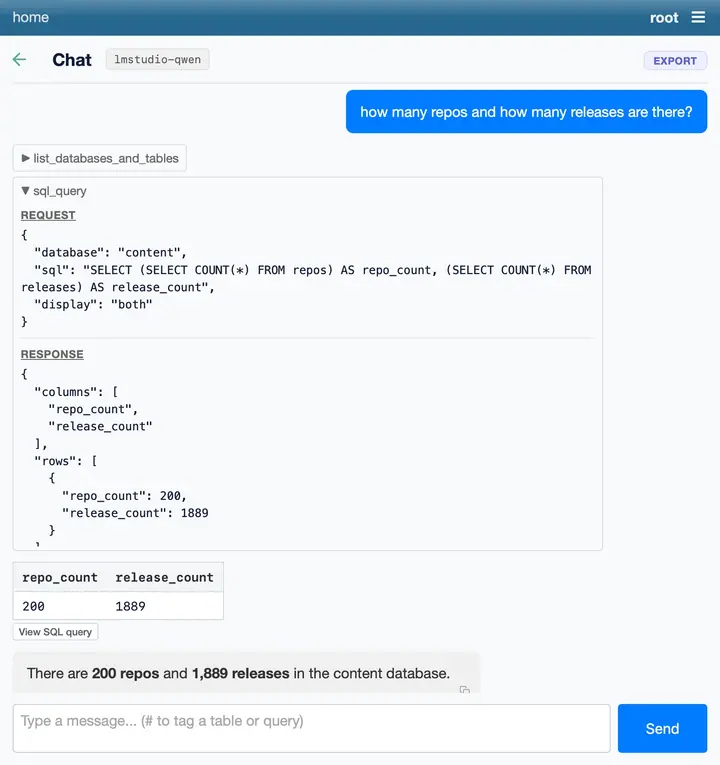
The Datasette plugin now supports configuring LLMs from any service using OpenAI's API protocol.
- Qwen 3.8
Simon Willison's WeblogRead the briefSimon Willison's Weblog
 OpenAIdatasette-llm 0.1a11 adds support for OpenAI-compatible endpointsllama.cpp releasesllama.cpp released build b12412 with updated vendor dependencies
 GoogleGoogle Gen AI Python SDK 3.0 switches default API to v1, drops httpxWIREDYouTube Music and Spotify offer AI DJ features with synthetic commentaryWIREDCarnegie Mellon researcher creates OATs AI avatars for household objects
 NvidiaNvidia's open-source AI support at risk without Jensen Huang's leadershipNvidiaNvidia CSO stepped down in August, two months before Huang resignationNvidiaPetition with 115,000 signatures calls for Huang's reinstatement at NvidiaTechCrunchCharacter.ai filed for bankruptcy five years after launching chatbot platformNvidiaJensen Huang departure ends era of visionary showman founder CEOs in techWIREDRansomware attacks rose 20 to 40 percent as criminals use AI for phishingLatent SpaceNo AI Slop Manifesto launched at AIE CODE conference with speaker support
datasette-llm 0.1a11 adds support for OpenAI-compatible endpoints
The Datasette plugin now supports configuring LLMs from any service using OpenAI's API protocol.
Daily briefing on generative AI
Updated · 12 stories · 8 sources · 3 min read
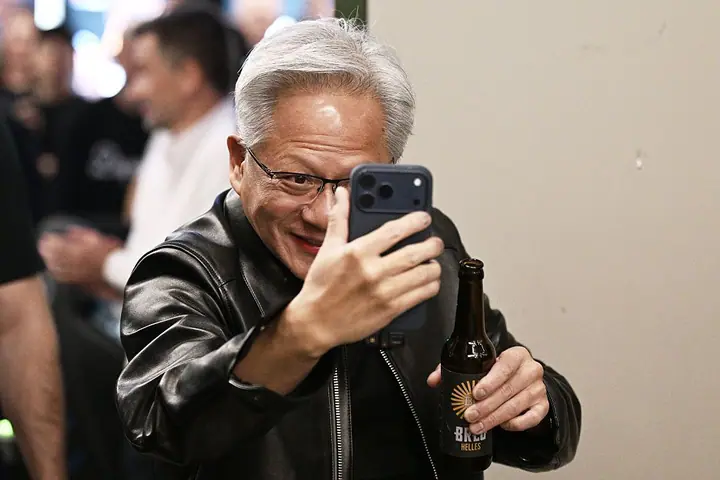
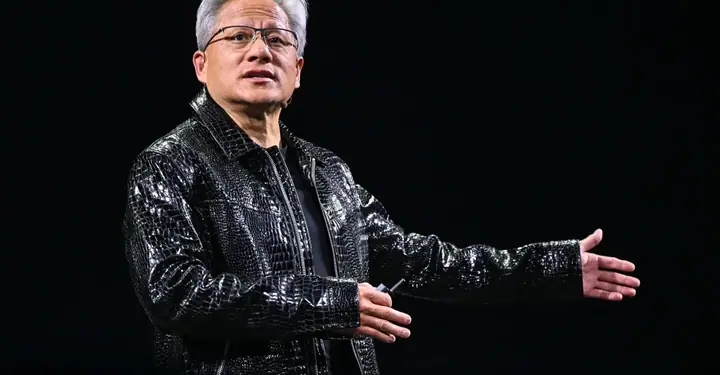
Nvidia CEO Jensen Huang resigned amid alleged affairs and chip-smuggling inquiries, prompting an employee petition with over 115,000 signatures and leaving the AI industry's most influential hardware leader suddenly absent.
Step 1 · 30 seconds
Step 2 · 3 min
Voiced by ElevenLabs from today's briefing.
Good morning. This is dailybrief, and here are today's top stories in generative AI, for Sunday, November 15. Nvidia CEO Jensen Huang has resigned following allegations of extramarital affairs and ties to a chip-smuggling investigation. Huang left the company he cofounded 33 years ago, ending an era in which he built the world's first five trillion dollar company. Around 60 employees reported directly to him with no deputies in place. Chief financial officer Colette Kress now serves as interim CEO while the board searches for a permanent replacement. Nvidia's stock price fell sharply through the week. Meanwhile, a petition calling for Huang's reinstatement has gathered over 115,000 signatures. According to the petition website, signers include 5,965 current Nvidia employees, 1,108 former employees, and 63,063 shareholders. Notable supporters include Tesla CEO Elon Musk, Replit CEO Amjad Masad, Epic Games CEO Tim Sweeney, and Y Combinator CEO Garry Tan. The petition demands the board bring Huang back while an independent investigation establishes the facts. In other news, Nvidia's chief security officer David Reber stepped down in August, two and a half months before Huang's departure. TechCrunch reported that Reber cited a young-onset Parkinson's diagnosis from over two years earlier. His replacement, Saša Zdjelar, previously spent 17 years at ExxonMobil before joining Salesforce and cybersecurity firm ReversingLabs. It remains unclear whether the security team knew about government scrutiny of Megaspeed or Huang's relationships. Turning to developer releases, Google released Gen AI Python SDK version 3.0 with breaking changes. The SDK now defaults to API version v1 instead of v1beta for Gemini Developer API. Google also switched the default HTTP client from httpx to httpx2. Some models including gemini-flash-latest aliases remain available only on v1beta. Developers can set the environment variable GOOGLE_GENAI_API_VERSION to restore previous defaults. Also today, llama.cpp released build b12412 with updated vendor dependencies. The release includes builds for macOS, Linux, Android and Windows platforms. Support includes CUDA 12.8 and 13.5 libraries along with multiple GPU acceleration options including Vulkan, ROCm, OpenVINO and SYCL. And datasette-llm version 0.1a11 now supports OpenAI-compatible endpoints. According to Simon Willison's weblog, the Datasette plugin allows developers to configure LLMs from any service using OpenAI's API protocol. This works with local models from LM Studio, Ollama or llama.cpp, which recently reached version 1.0. Finally, ransomware attacks rose 20 to 40 percent over the summer as criminals use AI for phishing. WIRED reported nearly 3,000 claimed attacks on leak sites over recent months. Researchers say AI helps attackers write more convincing phishing emails and target victims internationally. Around 111 ransomware groups made attack claims between July and September. That's dailybrief for today. Every story is linked to its original source on our website.
Podcast Two-host conversation with Jessica & Eric · 7 min
Jessica: So Jensen Huang is out at Nvidia.
Eric: Wait, the Jensen Huang?
Jessica: Thirty three years. Cofounder. First five trillion dollar company. And now he's gone.
Eric: Okay, that's wild.
Jessica: This is dailybrief, I'm Jessica.
Eric: And I'm Eric. It's Sunday, November fifteenth, twenty twenty six.
Jessica: So according to The Verge, analysts were literally saying 'Jensen is Nvidia, and Nvidia is Nvidia.'
Eric: Was this expected at all?
Jessica: No. He had sixty people reporting directly to him, no deputies, no succession plan. The article says he's the last visionary showman founder CEO in tech, like the closest thing we had to Steve Jobs.
Eric: And TechCrunch is saying their chief security officer left two months earlier in August, citing Parkinson's diagnosis.
Jessica: Right, David Reber. Then in November, Huang resigns over relationship concerns.
Eric: That timeline feels... unfortunate.
Jessica: Well, a hundred and fifteen thousand people signed a petition demanding he come back and calling for an independent investigation.
Eric: Who signed it?
Jessica: Nearly six thousand current employees, over a thousand former staff, and then Elon Musk, Tim Sweeney, a bunch of tech execs. Colette Kress is interim CEO while the board searches.
Eric: That's a lot of pressure.
Jessica: And here's the developer angle. Interconnects is worried that without Huang, Nvidia's funding for open source AI could dry up just when the open model ecosystem needs it most.
Eric: Why was he funding that in the first place?
Jessica: To prevent customer concentration and keep competition healthy. But the open model economy is still figuring out revenue and use cases. If that support disappears now—
Eric: —that shifts a lot of leverage to closed providers.
Jessica: Exactly.
Eric: Speaking of things not working out, Character dot ai filed for bankruptcy.
Jessica: Five years after launch. They raised a hundred and fifty million at a one billion dollar valuation in twenty twenty three. Google paid two point seven billion to license the tech in twenty twenty four.
Eric: And now they're in the AI graveyard.
Jessica: TechCrunch says forty two percent of corporate AI initiatives get abandoned. Nearly half.
Eric: That's a pretty high failure rate for something everyone's betting on.
Jessica: Well, some folks at the AIE CODE conference are pushing back. They launched something called the No AI Slop Manifesto.
Eric: What's the ask?
Jessica: Opposing low quality AI generated content. It came out of conference discussions, got cosigned by a bunch of speakers, and hit the Hacker News front page on Saturday.
Eric: Okay, but at the same conference llama dot cpp and ggml both hit version one point zero, declaring API stability. SGLang also announced one point zero.
Jessica: So the infrastructure tools are maturing right as people are getting louder about quality problems.
Eric: Yeah, that tracks.
Jessica: And Simon Willison's datasette hyphen llm plugin now supports OpenAI compatible endpoints, which means you can point it at anything using that API protocol.
Eric: So local models from LM Studio, Ollama, llama dot cpp?
Jessica: Yep. Which means you can run a private Datasette Agent instance powered entirely by local models. No cloud dependencies.
Eric: That's actually really useful if you're working with sensitive data.
Jessica: And llama dot cpp just released build b twelve four one two with updated vendor dependencies. It supports Apple Silicon, Intel, Ubuntu, Android, Windows, CUDA twelve point eight and thirteen point five, plus Vulkan, ROCm, OpenVINO, SYCL—
Eric: —so basically everything.
Jessica: Phones, desktops, every GPU type you can think of.
Eric: Google's Gen AI Python SDK hit version three point zero and switched the default API from v one beta to v one.
Jessica: Which is a breaking change. Some models are only on v one beta, including gemini flash latest aliases.
Eric: So if you're using those, you need to set an environment variable?
Jessica: GOOGLE underscore GENAI underscore API underscore VERSION equals v one beta. And they also switched to httpx two as the default HTTP client, so httpx isn't installed by default anymore.
Eric: That's going to break some pipelines.
Jessica: Quick consumer stuff. YouTube Music and Spotify both have AI DJ features now with synthetic commentary between songs.
Eric: How's that going?
Jessica: Mixed. YouTube launched Beyond the Beat last year with thirty second context clips. Spotify says eighty percent of listeners return to the DJ weekly, but both keep it optional because some people find it annoying or inaccurate.
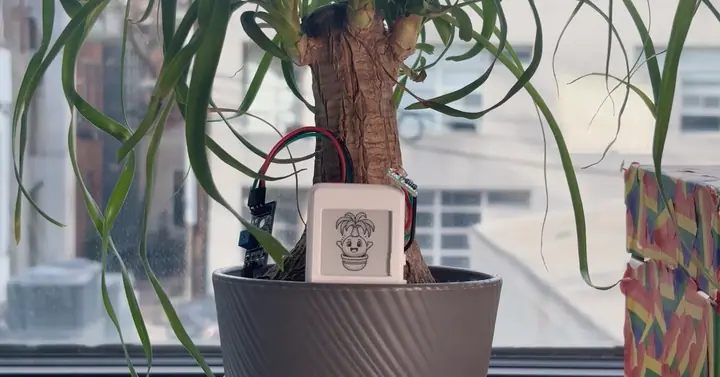
Eric: And a Carnegie Mellon researcher built AI avatars for household objects.
Jessica: OATs, Object Agent Twins. Little E Ink displays with sensors for moisture, temperature, light, motion. The sprites are generated with Google Gemini's Nano Banana image service.
Eric: So your plant gets a sad face when you forget to water it?
Jessica: Basically. Battery lasts three to four days, one day if you turn on the sound sensor. It's a proof of concept, won Honorable Mention awards at an ACM symposium.
Eric: Cute, but that battery life is rough.
Jessica: Last one. WIRED reports ransomware attacks are up twenty to forty percent, nearly three thousand claimed attacks over the summer.
Eric: How much of that is AI?
Jessica: A lot. Criminals are using it to write better phishing emails and target victims in languages they don't speak. Japan saw a big spike because AI enabled consistent Japanese language content.
Eric: So it's lowering the barrier for international attacks.
Jessica: Yeah. More lone wolf operators, more fragmented groups. Around a hundred and eleven ransomware groups made claims between July and September.
Eric: That's a problem.
Jessica: That's it for today. Every story is linked to its source on the dailybrief website.
Eric: Thanks for listening.
Step 3 · 2 minutes
The Datasette plugin now supports configuring LLMs from any service using OpenAI's API protocol.
Explain it simply
In plain words A plugin for Datasette now works with any AI service that uses OpenAI's standard. This includes local models running on your computer.
Term to know OpenAI-compatible endpoint — API service matching OpenAI's interface standard for model requests
What it means for developers: Developers can run private AI agents locally without cloud dependencies using standard protocols
The release synchronizes stb_image vendor library and includes builds for macOS, Linux, Android and Windows platforms.
Explain it simply
In plain words llama.cpp released a new build with updated image handling. It supports many platforms including phones, desktops and various GPU types.
Term to know vendor sync — updating bundled third-party library code to match upstream version
What it means for developers: Broad platform support enables local model inference across desktop, mobile and diverse GPU configurations
The SDK now defaults to v1 API instead of v1beta and uses httpx2 as default HTTP client.
Explain it simply
In plain words Google's AI SDK changed its default settings. Developers may need to adjust their code if using beta features or specific HTTP libraries.
Term to know API version — numbered release of interface defining how software components communicate
What it means for developers: Breaking changes require developers to update code or set environment variables to maintain compatibility
Today's newsmakers
The companies that feature most in today's stories, ranked by how often and how prominently they appear.
5 stories today
▲ 3+2 more stories
4 stories today
▼ 1+3 more stories
2 stories today
▼ 1+1 more story

1 story today
New today
1 story today
New todayCompany names and logos are trademarks of their owners, shown only to identify them.
Open source · for developers
New repositories gaining stars fastest over the last 30 days. Source: GitHub.
AIA Dart-based mobile app that runs DeepSeek AI locally on Android phones and can remotely control your computer.
AIAn Android AI agent that uses accessibility features to automate app and web interactions on your device.
AIA command-line agent system that handles tasks autonomously in the background and only asks for user input when uncertain.
AIA general-purpose AI agent system that runs various tools and operations inside a sandboxed environment for developers.
AIA cross-platform Electron app that records and transcribes meeting notes locally without sending data to external servers.
AIA general-purpose AI agent system that runs various tools and operations inside a sandboxed environment for developers.
AIA general-purpose AI agent system that runs various tools and operations inside a sandboxed environment for developers.
AIA general-purpose AI agent system that runs various tools and operations inside a sandboxed environment for developers.
Optional · if you have more time
9 more stories
According to WIRED, YouTube launched Beyond the Beat experimental feature in 2025, while Spotify expanded AI DJ personalities in November.
Explain it simply
In plain words Music streaming apps added AI voices that talk between songs. Some users find the commentary annoying or inaccurate, but both companies keep the feature optional.
Term to know synthetic commentary — computer-generated speech imitating human radio DJ voice and style
Why it matters: Optional AI features show streaming platforms testing engagement tools with mixed user reception
Daehwa Kim presented Object Agent Twins at ACM symposium in Detroit, earning two Honorable Mention awards.
Explain it simply
In plain words A researcher built tiny screens with AI pets that attach to everyday objects. The pet looks sad when you forget to water your plant.
Term to know E Ink display — low-power screen technology using electronic paper for static images
Why it matters: Proof-of-concept demonstrates AI agent interfaces beyond smartphones, though battery limits practical use
According to Interconnects, Huang's departure threatens funding for open model ecosystem during crucial early development years.
Explain it simply
In plain words Jensen Huang strongly supported open AI models to keep Nvidia competitive. His departure may reduce funding just as that ecosystem is starting to grow.
Term to know open model ecosystem — network of companies building with publicly available AI model weights
Why it matters: Reduced Nvidia support could slow open-weight model development and shift leverage to closed providers
David Reber left as chief security officer in August citing Parkinson's diagnosis, before Huang's November departure over relationship concerns.
Explain it simply
In plain words Nvidia's top security officer left in August for health reasons. Two months later, CEO Jensen Huang resigned over concerns about his relationships.
Term to know CSO — chief security officer, executive responsible for company security and risk
Why it matters: Security leadership gap raises questions about oversight of CEO risks affecting AI infrastructure
The petition demands Jensen Huang's return and independent investigation, attracting signatures from Elon Musk and other tech executives.
Explain it simply
In plain words Over 115,000 people signed a petition asking Nvidia to bring back CEO Jensen Huang after he resigned. The company's stock price fell sharply.
Term to know interim CEO — temporary chief executive appointed while searching for permanent replacement
Why it matters: Leadership uncertainty at world's dominant GPU supplier threatens AI industry funding and infrastructure
According to TechCrunch, the consumer AI app joined a growing AI graveyard as 42 percent of corporate AI initiatives are abandoned.
Explain it simply
In plain words A popular chatbot company went bankrupt after five years. Research shows nearly half of all corporate AI projects eventually get shut down.
Term to know AI graveyard — collection of failed or abandoned artificial intelligence products and projects
Why it matters: High failure rate signals persistent challenges in AI product-market fit and business sustainability
Huang left Nvidia after cofounding it 33 years ago, representing Big Tech's last example of a visionary founder CEO.
Explain it simply
In plain words Jensen Huang built Nvidia around himself over 33 years. Analysts say he was the closest thing tech has had to Steve Jobs.
Term to know founder CEO — company creator who remains chief executive, often for decades
Why it matters: Huang's irreplaceable leadership style and lack of succession planning creates unprecedented transition risk
Researchers reported nearly 3,000 claimed attacks over summer months, with AI enabling better phishing emails and international targeting.
Explain it simply
In plain words Ransomware attacks increased sharply this summer. Criminals are using AI to write more convincing fake emails and target victims in different languages.
Term to know ransomware-as-a-service — business model where hackers rent attack tools to other criminals
Why it matters: AI lowers barriers for international cybercrime, enabling more lone-wolf operators and fragmented attacks
According to Latent Space, the manifesto arose from conference discussions and received cosignatures from speakers including Dex's closing keynote.
Explain it simply
In plain words Conference attendees created a document opposing low-quality AI content. Meanwhile, several major AI development tools declared their first stable releases.
Term to know AI slop — low-effort or poor-quality content generated by artificial intelligence systems
Why it matters: Community pushback against AI-generated content quality emerges as infrastructure tools reach maturity
Last step · 1 minute
5 questions on today's stories
Browse other days
How we work
Lab announcements, release notes and SDK changelogs come before commentary. Every story links to the original.
Figures, model names and prices are taken from the published text. Where a detail is not stated, we leave it out.
Each story states what changed, by how much, and what it means in practice. No hype, no speculation.
Nvidia CEO Jensen Huang resigned amid alleged affairs and chip-smuggling inquiries, prompting an employee petition with over 115,000 signatures and leaving the AI industry's most influential hardware leader suddenly absent. 12 stories from 8 sources are summarised on this page.
1. datasette-llm 0.1a11 adds support for OpenAI-compatible endpoints. 2. llama.cpp released build b12412 with updated vendor dependencies. 3. Google Gen AI Python SDK 3.0 switches default API to v1, drops httpx.
New Models (1), Developer Tools (2), Industry & Policy (8), Chips & Infrastructure (1).
Developers can run private AI agents locally without cloud dependencies using standard protocols. A plugin for Datasette now works with any AI service that uses OpenAI's standard. This includes local models running on your computer.
Broad platform support enables local model inference across desktop, mobile and diverse GPU configurations. llama.cpp released a new build with updated image handling. It supports many platforms including phones, desktops and various GPU types.
API service matching OpenAI's interface standard for model requests.
updating bundled third-party library code to match upstream version.
Every headline links to the original. How it works