Today
Top stories

Daily briefing on generative AI

AI briefingThursday, 8 October

Listen to today's briefing3 min · AI voice by ElevenLabs

Updated · 12 stories · 9 sources · 3 min read

Mistral previewed a one trillion parameter model scoring competitively on benchmarks, Google released a 740 million parameter multimodal embedding model, and Liquid AI shipped two open decision models optimized for edge devices.

Step 1 · 30 seconds

Summary

Step 2 · 3 min

Listen

Voiced by ElevenLabs from today's briefing.

Read the transcript

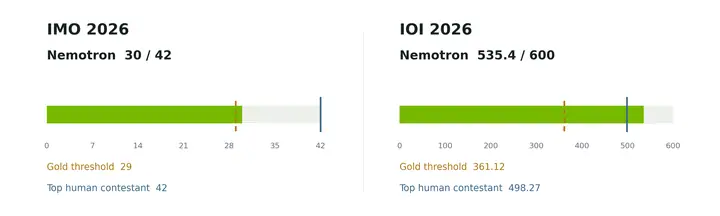
Good morning. This is dailybrief, and here are today's top stories in generative AI, for Thursday, October 8. Mistral has released a preview of Mistral Large 4, a one trillion parameter model with 49 billion active parameters. The company said it trained the model on its own cluster of 3,800 Nvidia Grace Blackwell GPUs. Mistral said the preview is available via its API now and promised to release the open weights model at the end of this month. On Artificial Analysis, the model scores 38, just behind DeepSeek 4.1 Flash, according to Simon Willison. That represents a significant improvement over December's Mistral Large 3, which scored 9. In other news, Google released EmbeddingGemma 2, a 740 million parameter model that creates embeddings for text, images, audio and video. Google said the model is released under an Apache 2.0 license and features an 8,000 token context window. That allows it to process up to 5.5 minutes of audio, 29 images or 58 video frames directly on local hardware. According to Google, the model requires as little as 191 megabytes of active RAM for text-only weights and 567 megabytes for the full multimodal model. Google said the model improved 9.92 points on code performance compared to the first EmbeddingGemma. Liquid AI has shipped two open decision models optimized for edge devices. The company said d1-3B scores 48.57 on Decision Index 0.2.1, the highest score under 10 billion parameters. Liquid AI said d1-3B answers a question in 16 milliseconds on an Nvidia Jetson AGX Thor and 50 milliseconds on a Jetson Orin Nano. Unlike generative models, these decision models answer questions in a single forward pass without producing tokens. The company also released d1-omni-600M as an experimental multimodal model. Turning to model capabilities, Nvidia said it fine-tuned versions of Nemotron 3 that reached gold medal level at both the International Olympiad in Informatics 2026 and the International Mathematical Olympiad 2026. According to Nvidia, the Ultra-CC system scored 535.4 out of 600 at IOI 2026 under the same time and submission constraints as human contestants. The company said it used 22,000 curated problems and applied supervised fine-tuning and reinforcement learning to create the specialist models. Meanwhile, OpenAI is rolling out a new interface called Intelligent UI with a new GPT-6 model. According to TechCrunch, the feature adds interactive visuals including tappable buttons, customized calculators and editable graphs to ChatGPT conversations. OpenAI said the feature rolls out Wednesday for Pro, Plus, Business and Enterprise users and arrives Thursday for free and Go tier users. The company said users can customize or reduce the visuals if they prefer. And finally, Google launched Playground, a browser-based platform that lets users create games by describing them in text prompts. Google said no coding experience is required and users can share games via link or publish them to a community gallery. The platform supports multiplayer and leaderboards in some genres. Google said a Unity Spark integration is coming soon for professional-level game mechanics. That's dailybrief for today. Every story is linked to its original source on our website.

Podcast Two-host conversation with Jessica & Eric · 6 min

Read the podcast transcript

Jessica: Okay, so Mistral just dropped a one trillion parameter model.

Eric: Wait, one trillion?

Jessica: One trillion. But only forty-nine billion active at a time.

Eric: Right, sparse model. That makes more sense.

Jessica: This is dailybrief, I'm Jessica—

Eric: and I'm Eric, it's Thursday, October eighth, twenty twenty-six.

Jessica: So this is Large 4. Simon Willison reported it, Ars and WIRED picked it up too. They trained it on thirty-eight hundred Nvidia Grace Blackwell GPUs, and it scored thirty-eight on Artificial Analysis.

Eric: That's… what, four times better than Large 3 from December?

Jessica: Large 3 scored nine, so yeah. Huge jump.

Eric: And they're releasing the weights end of month?

Jessica: End of October, according to Mistral. API preview is live now, though.

Eric: Okay, that's actually really cool. You get to test it now, deploy locally later.

Jessica: And it supports two reasoning levels via the API—none and high.

Eric: So you can dial up compute for harder tasks.

Jessica: Exactly.

Jessica: Meanwhile, OpenAI's launching what they're calling Intelligent UI with GPT-six.

Eric: Wait, GPT-six?

Jessica: Yeah, TechCrunch says it's rolling out Wednesday—well, yesterday by the time people hear this—and it adds interactive charts, calculators, editable graphs right into ChatGPT.

Eric: So not just text anymore.

Jessica: Nope. You get tappable buttons, customized calculators, diagrams. Pro and Plus users got it yesterday, free tier gets it today.

Eric: Honestly, that feels like a big shift. ChatGPT's been so text-first.

Jessica: Yeah, and you can dial it down if you want less visual stuff. It's customizable.

Eric: Okay, that's good. I don't need a chart for everything.

Jessica: Speaking of visual stuff, Google launched Playground.

Eric: Which is?

Jessica: You type a text prompt, it builds a game. No code. Just describe what you want.

Eric: Huh.

Jessica: It's at playground dot google. Some genres support multiplayer and leaderboards. You can keep games private, share a link, or publish to a community gallery.

Eric: And Unity Spark integration is coming soon, according to Google's blog.

Jessica: Right, for more professional-level mechanics.

Eric: I mean, that's a fun prototyping tool. I'm skeptical it replaces real game dev, but—

Jessica: Oh, definitely not. But for sketching out an idea fast? Super useful.

Eric: Okay, what's this Liquid AI decision model?

Jessica: So Liquid AI released d1-3B and d1-omni-600M. They're on Hugging Face. These models answer classification and decision tasks in a single forward pass—no token generation.

Eric: Wait, so they just… output a decision?

Jessica: Yeah. Sixteen milliseconds on Jetson Thor, fifty on Orin Nano.

Eric: That's ridiculously fast.

Jessica: Right? d1-3B scored forty-eight point five seven on the Decision Index, which is the highest under ten billion parameters.

Eric: And d1-omni supports text, images, and audio?

Jessica: Audio's experimental, but yeah. d1-3B does text and images.

Eric: So if you need intent detection or routing on edge hardware—

Jessica: This is built for that.

Jessica: Google also shipped EmbeddingGemma 2.

Eric: For embeddings?

Jessica: Multimodal embeddings. Seven hundred forty million parameters. It maps text, images, audio, and video into unified vectors.

Eric: And the license?

Jessica: Apache two point oh.

Eric: Okay, good.

Jessica: It's got an eight thousand token context window, processes five and a half minutes of audio or twenty-nine images. Runs in as little as one ninety-one megabytes of RAM for text, five sixty-seven for multimodal.

Eric: So this runs on a phone.

Jessica: Yep. On-device search, offline RAG pipelines.

Eric: And it improved almost ten points on code performance versus the first EmbeddingGemma?

Jessica: Nine point nine two points, according to Google DeepMind.

Jessica: Nvidia fine-tuned Nemotron 3 models to gold medal level at this year's International Olympiad in Informatics and the International Math Olympiad.

Eric: Wait, both competitions?

Jessica: Both. Ultra-CC scored five thirty-five point four out of six hundred at IOI twenty twenty-six under actual competition constraints.

Eric: How'd they train it?

Jessica: Twenty-two thousand curated problems, synthetic reasoning traces, supervised fine-tuning and reinforcement learning on top of Nemotron 3 base models.

Eric: So it's really just post-training on a strong base model.

Jessica: Yeah. And it shows you can reach expert-level performance in these domains with standard methods.

Jessica: Meta updated Muse.

Eric: iPad support?

Jessica: Yep, one month after iOS. Plus integrations with Canva, Dropbox, Figma, QuickBooks, GitHub, Zoom, Asana, Klaviyo.

Eric: That's a lot of integrations.

Jessica: And there's a new business goal feature that can autonomously plan marketing campaigns and product pages. The Verge and TechCrunch both covered it.

Eric: So this is Meta going after ChatGPT for business workflows.

Jessica: And Grok. Yeah.

Jessica: Quick ones—OpenAI's adding College Planner to ChatGPT for Teens.

Eric: For college apps?

Jessica: Yeah, plus flashcards and quizzes for studying. They're forming a teen AI council to help shape future features.

Eric: Interesting positioning.

Jessica: Atlassian and OpenAI expanded their partnership—frontier models connecting to enterprise knowledge.

Eric: Makes sense for Jira and Confluence workflows.

Jessica: And Radisson partnered with Accenture to build a ChatGPT plugin for hotel discovery and booking.

Eric: So ChatGPT's becoming a travel agent.

Jessica: Apparently.

Jessica: That's it for today. Every story's linked to its original source on the dailybrief website.

Eric: See you tomorrow.

Step 3 · 2 minutes

Top 3 stories

Simon Willison's Weblog

Mistral previews Large 4 with one trillion parameters, open weights coming

New Models

Mistral released an API preview of Large 4, a one trillion parameter model with 49 billion active parameters, and will release open weights end of month.

  • DeepSeek 4.1 Flash
  • Trained on 3,800 Nvidia Grace Blackwell GPUs, scores 38 on Artificial Analysis
  • Supports two reasoning levels via API: none and high
  • Significant improvement over December's Large 3 which scored 9 on Artificial Analysis

Explain it simply

In plain words Mistral released a preview of its newest large language model through its API. The company said it will share the model weights publicly by the end of October.

Term to know active parameters — the subset of parameters actually used during inference in a sparse model

What it means for developers: Developers get API access now to a competitive model, with open weights enabling local deployment later this month.

Also covered byArs TechnicaWIRED
Read the full story at Simon Willison's Weblog

OpenAI is adding College Planner to ChatGPT for Teens to help students manage applications, alongside new flashcards and quizzes.

  • College Planner helps manage college application process
  • New flashcards and quizzes added for study support
  • Teen AI council being formed

Explain it simply

In plain words OpenAI is expanding its teen-focused ChatGPT version with tools for college applications and studying. A council of teen users will help shape future AI features.

Term to know ChatGPT for Teens — OpenAI's version of ChatGPT designed specifically for teenage users

What it means for developers: Targets education use cases, positions ChatGPT as academic planning and study tool for younger users.

Read the full story at OpenAI

Google released EmbeddingGemma 2, a 740 million parameter model that maps text, images, audio and video into unified embeddings under Apache 2.0 license.

  • 8K token context window
  • Gemma 4
  • Features 8,000 token context window, processes 5.5 minutes audio or 29 images
  • Requires as little as 191 megabytes RAM for text, 567 megabytes for multimodal
  • Improved 9.92 points on code performance versus first EmbeddingGemma model

Explain it simply

In plain words Google shipped a model that turns text, images, audio and video into numerical representations for search and retrieval. It runs on phones and other edge devices.

Term to know embeddings — numerical vector representations of data used for search and similarity comparison

What it means for developers: Enables on-device multimodal search and RAG pipelines with low memory footprint and offline capability.

Read the full story at Google DeepMind

Today's newsmakers

Who's making AI news

The companies that feature most in today's stories, ranked by how often and how prominently they appear.

  1. #1

    OpenAI

    4 stories today

    Steady

    +1 more story

  2. #2

    Google

    2 stories today

    New today

    +1 more story

  3. #3

    Nvidia

    2 stories today

    ▲ 3

    +1 more story

  4. #4

    Mistral AI

    1 story today

    ▼ 1
  5. #5

    Hugging Face

    2 stories today

    Steady

    +1 more story

Company names and logos are trademarks of their owners, shown only to identify them.

Optional · if you have more time

More stories

9 more stories

The Verge

Meta's Muse adds iPad support and small business integrations

Meta released an iPad version of Muse and added integrations with Canva, Dropbox, Figma, QuickBooks, GitHub, Zoom and other business tools.

  • iPad support launched one month after iOS debut
  • New business goal feature for autonomous marketing and product page planning
  • Connects to Canva, Dropbox, Figma, QuickBooks, GitHub, Zoom, Asana, Klaviyo

Explain it simply

In plain words Meta updated its Muse AI assistant to work on iPads and connect to business software. The app can now autonomously plan marketing and client pitches.

Term to know agentic AI tool — AI software that can independently perform multi-step tasks toward user goals

What it means for developers: Expands Muse to iPad workflows and business use cases, competing directly with ChatGPT and Grok.

Also covered byTechCrunch
New Models
Hugging Face

Nvidia Nemotron specialists reached gold level at IOI and IMO 2026 competitions

Nvidia fine-tuned Nemotron 3 models to gold medal level at International Olympiad in Informatics 2026 and International Mathematical Olympiad 2026.

  • Ultra-CC scored 535.4 out of 600 at IOI 2026 under competition constraints
  • Used 22,000 curated problems and synthetic reasoning traces for programming training
  • Applied supervised fine-tuning and reinforcement learning to Nemotron 3 base models

Explain it simply

In plain words Nvidia trained specialized versions of its Nemotron model for competitive programming and math olympiads. Both systems reached gold medal performance at international competitions.

Term to know supervised fine-tuning — training a model on labeled examples to adapt it for specific tasks

What it means for developers: Demonstrates that strong base models can be adapted to expert domains with standard post-training methods.

New Models
Google AI Blog

Google launches Playground for creating games from text prompts

Google released Playground, a browser-based platform that lets users create, play and share games by describing them in text prompts without coding.

  • Available now at playground.google, supports multiplayer and leaderboards in some genres
  • Games can be kept private, shared via link, or published to community gallery
  • Unity Spark integration coming soon for professional-level game mechanics

Explain it simply

In plain words Google launched a website where people type what kind of game they want and the system builds it. No programming knowledge is required.

Term to know agentic AI — AI systems that can take autonomous actions toward goals over time

What it means for developers: Lowers barrier to game creation, lets developers prototype game concepts rapidly without coding.

New Models
Hugging Face

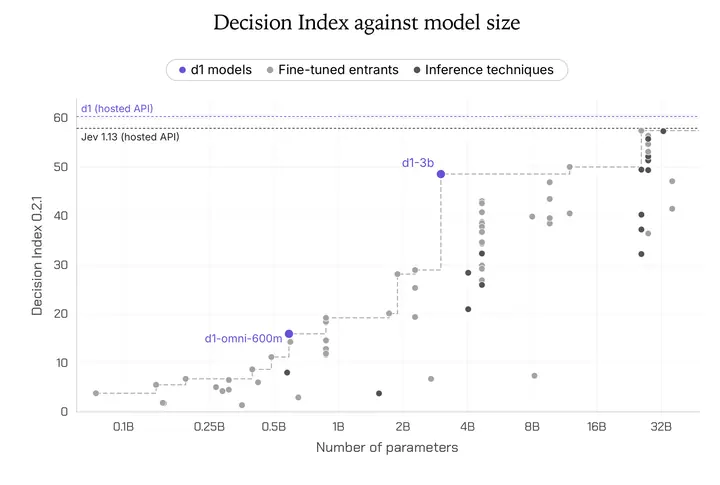
Liquid AI ships d1-3B decision model scoring 48.57 on Decision Index

Liquid AI released d1-3B and d1-omni-600M, open decision models that answer questions in a single forward pass with 16 millisecond inference on Jetson Thor.

  • d1-3B scores 48.57, highest under 10 billion parameters on Decision Index 0.2.1
  • d1-3B supports text and images, d1-omni-600M adds audio as experimental release
  • Answers in 16 milliseconds on Jetson Thor, 50 milliseconds on Orin Nano

Explain it simply

In plain words Liquid AI released models that answer classification and decision tasks without generating text tokens. They run very fast on edge hardware like Nvidia's Jetson boards.

Term to know single forward pass — one computation through the network, producing an answer without iterative token generation

What it means for developers: Offers sub-50 millisecond structured decisions on edge devices for classification and intent detection tasks.

New Models
Simon Willison's Weblog

Anti-Patterns in Software Blogging

(via) Some excellent writing advice from Michael Lynch. Michael warns against "meandering intros", misjudging your reader's existing knowledge, assuming they'll read your previous posts, and excessive formality.

  • He also warns against overreliance on links as an excuse not to explain terminology.
  • (In a Lobste.rs comment Michael clarifies that "My rule of thumb is that my article should still make sense to the reader even if they don't click…
  • Beginner software bloggers suffer from a mass delusion that you have to write in a stiff, overly formal way for people to take you seriously [...]…
Developer Tools
Simon Willison's Weblog

Quoting Jake Boggan

I was a graph theory junkie long ago and even moved to Budapest for awhile to study among the greats.

Developer Tools
TechCrunch

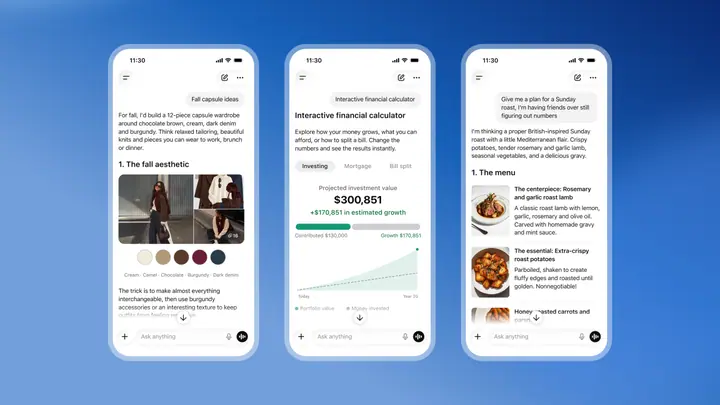
OpenAI launching Intelligent UI with GPT-6, adding interactive visuals to ChatGPT

OpenAI is rolling out Intelligent UI with a new GPT-6 model Wednesday, adding interactive charts, calculators and diagrams to ChatGPT conversations.

  • GPT-6
  • Includes tappable buttons, customized calculators, editable graphs and interactive charts
  • Available Wednesday for Pro, Plus, Business, Enterprise; Thursday for free, Go tiers
  • Feature is customizable, users can reduce visuals if preferred

Explain it simply

In plain words OpenAI is adding interactive visual elements like charts and calculators to ChatGPT responses. The company said this helps users learn complex topics more easily.

Term to know Intelligent UI — OpenAI's interface that integrates interactive visual elements into chat responses

What it means for developers: Changes ChatGPT from text-focused to visual-interactive, potentially broadening accessibility and use cases for learning.

New Models

Last step · 1 minute

Daily quiz

5 questions on today's stories

Browse other days

How we work

Editorial standards

Primary sources first

Lab announcements, release notes and SDK changelogs come before commentary. Every story links to the original.

Only what the source says

Figures, model names and prices are taken from the published text. Where a detail is not stated, we leave it out.

Written for developers

Each story states what changed, by how much, and what it means in practice. No hype, no speculation.

Quick answers

What happened in AI on Thursday, 8 October 2026?

Mistral previewed a one trillion parameter model scoring competitively on benchmarks, Google released a 740 million parameter multimodal embedding model, and Liquid AI shipped two open decision models optimized for edge devices. 12 stories from 9 sources are summarised on this page.

What are the top AI stories today?

1. Introducing Mistral Large 4: Le chonk. 2. Helping teens learn, plan, and shape the future of AI. 3. EmbeddingGemma 2: an open, lightweight multimodal embedding model.

Which AI topics does today's briefing cover?

New Models (10), Developer Tools (2).

Where does the information come from?

Headlines and short summaries come from the public feeds of 9 publishers, including Ars Technica, Google AI Blog, Google DeepMind, Hugging Face, OpenAI, Simon Willison's Weblog. Every story links to the original article.

Is there an audio version of this briefing?

Yes. A voice recording covering every story is at the top of this page and is published each day.

Sources

Every headline links to the original. How it works