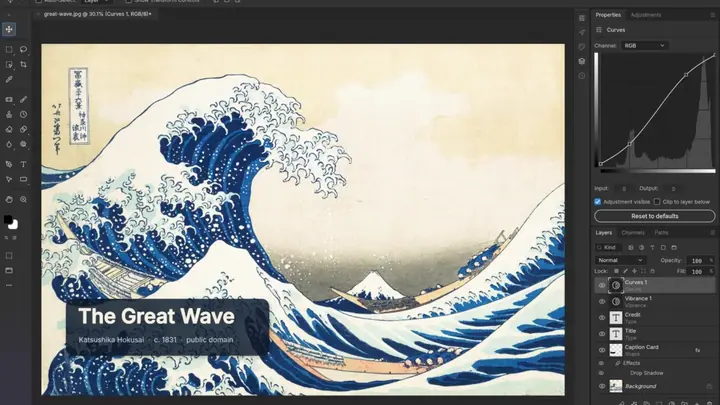
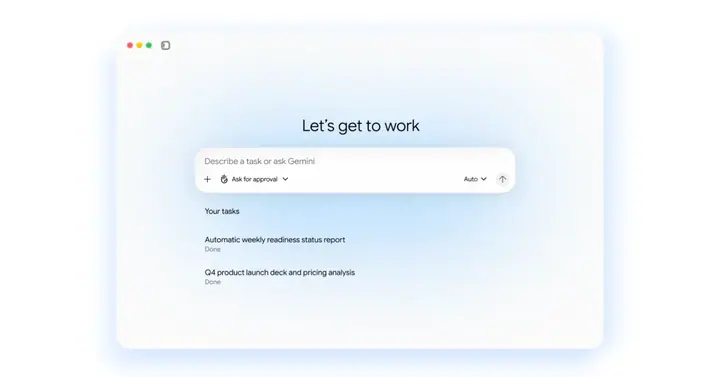
Oracle uses ChatGPT Work and Codex for recruiting and engineering
Oracle turns specialist knowledge into fast, repeatable workflows using ChatGPT Work and Codex across recruiting, engineering, and operations, OpenAI said.
OpenAIRead the briefOpenAI
 OpenAIOracle uses ChatGPT Work and Codex for recruiting and engineering
 Adobe“Software is over”: Bold AI developer takes aim at Adobe with open source clonesMIT Technology ReviewBuilding a safer path to autonomous industrial AIOpenAIPollo AI uses GPT-5.6, GPT-6 Astra, and GPT-Image-2.5 for video adsOpenAIDisrupting AI-enabled “false front” operations
 Hugging FaceHugging Face releases Falcon-ASR with 20.92% Arabic word error rate
 AnthropicAnthropic bans sustained abusive behavior toward Claude in policy update
 GoogleGoogle launches Gemini Enterprise agent working across apps and devicesSimon Willison's WeblogQuoting Ben AffleckGoogleGoogle releases AI Edge Foresight meeting note-taker for MacAnthropicAnthropic releases Claude Haiku 5.5 at $0.10 per million input tokensHugging FaceHugging Face ships d1-3B and d1-omni-600M decision models for edge
Oracle turns specialist knowledge into fast, repeatable workflows using ChatGPT Work and Codex across recruiting, engineering, and operations, OpenAI said.
Daily briefing on generative AI
Updated · 12 stories · 7 sources · 3 min read
Anthropic released Claude Haiku 5.5 at $0.10 per million input tokens, matching GPT-6 Luna's price, while Google launched Gemini Enterprise agents and Hugging Face shipped two new d1 decision models.
Step 1 · 30 seconds
Step 2 · 4 min
Voiced by ElevenLabs from today's briefing.
Good morning. This is dailybrief, and here are today's top stories in generative AI, for Friday, October ninth. Anthropic has released Claude Haiku 5.5 at ten cents per million input tokens and fifty cents per million output tokens for contexts up to one hundred thousand tokens, according to Simon Willison. That matches the price of OpenAI's GPT-6 Luna released last month. Beyond one hundred thousand tokens, Haiku's price increases five times to fifty cents input and two dollars fifty output per million tokens. The new model uses a different tokenizer that consumes around one point two five times as many tokens as the previous Haiku 4.5, representing a hidden price increase. Anthropic also announced it has halved cache read prices for Sonnet 5.5 and will provide monthly API credits to subscription plan holders. In other news, Hugging Face has shipped two new decision models designed for edge devices. The d1-3B model scored forty-eight point five seven on the Decision Index zero point two point one, the highest score for any model under ten billion parameters, according to the company. The model answers a question in sixteen milliseconds on an NVIDIA Jetson AGX Thor and in under fifty milliseconds on a Jetson Orin Nano. Unlike generative models, decision models answer in a single forward pass rather than producing tokens. The smaller d1-omni-600M model supports text with images or text with audio and is described as an early research release. Turning to enterprise tools, Google has launched a Gemini agent within the Gemini Enterprise app that works across apps and devices. The agent operates in Workspace apps including Gmail, Drive, and Docs, as well as third-party apps like Slack and Microsoft 365. Since it runs in the cloud, Google said the agent maintains the same context across all connected devices. The agent can work with job-specific sub-agents and operate as a coworker agent with its own company email address. Meanwhile, Hugging Face has released Falcon-ASR, a one point six billion parameter speech recognition model for Arabic. The model achieved an average word error rate of twenty point nine two percent across six Arabic test sets, compared with the best published result of twenty-three point one seven percent. On an internal Emirati dialect evaluation, it recorded twenty-two point seven three percent word error rate. The model also supports English, French, Spanish, and Portuguese using the same weights. Also today, Anthropic updated its usage policy for the first time in over a year. The company now prohibits sustained and needless abusive or cruel behavior toward Claude, with conversation termination as the primary enforcement mechanism. Anthropic said the policy applies only in extreme cases and does not cover common user frustration or model testing. The update also expands restrictions on weapons development to include control software and drone arming, and clarifies that tracking people without consent is prohibited. And finally, Google has released AI Edge Foresight, a Mac app that takes meeting notes completely offline. The app uses the on-device EmbeddingGemma 2 model with seven hundred forty million parameters, according to TechCrunch. It features a split-screen view with manual shorthand notes on one side and AI-generated notes on the other, similar to the note-taker Granola. The app is optimized for Apple Silicon and can work without an internet connection. That's dailybrief for today. Every story is linked to its original source on our website.
Podcast Two-host conversation with Jessica & Eric · 6 min
Jessica: So Claude Haiku five point five just undercut GPT six Luna.
Eric: Wait, really?
Jessica: Same price. Ten cents per million input tokens, fifty cents output.
Eric: Okay, that's wild.
Jessica: This is dailybrief, I'm Jessica.
Eric: And I'm Eric. It's Friday, October ninth, twenty twenty six.
Jessica: So yeah, Anthropic released Claude Haiku five point five, and according to Simon Willison, it matches GPT six Luna pricing exactly up to a hundred thousand tokens.
Eric: Up to a hundred thousand. What happens after that?
Jessica: Price jumps five times. Fifty cents input, two fifty output.
Eric: So it's competitive until it's not.
Jessica: Exactly. And there's a catch—the new tokenizer uses one point two five times more tokens than Haiku four point five.
Eric: So you're paying the same rate but using more tokens. That's... not actually cheaper.
Jessica: Right. Though they did halve cache read prices for Sonnet five point five, so there's some give and take.
Eric: Okay. Still, for short contexts this puts real pressure on OpenAI.
Jessica: Speaking of pressure—Google launched a Gemini Enterprise agent that works across all your apps and devices.
Eric: Like, actually across apps? Not just Workspace?
Jessica: Yeah. The Verge says it runs on mobile, desktop, Workspace, and third party apps like Slack. Keeps context in the cloud so it works the same everywhere.
Eric: That's the dream, right? One interface, agent does the work.
Jessica: And it gets a company email address. You can literally treat it like a coworker.
Eric: That's either really useful or deeply weird.
Jessica: It also picks the best model for each task automatically. So you're not stuck with one Gemini variant.
Eric: Okay, I like that. No manual model switching.
Jessica: Alright, two OpenAI case studies today. First one—Pollo AI uses GPT five point six, GPT six Astra, and GPT Image two point five for video ads.
Eric: Wait, GPT six is out?
Jessica: Astra variant. OpenAI announced the case study but gave almost no technical details.
Eric: So we know three model names and that they make video ads.
Jessica: Pretty much. It shows they're combining models for creative workflows, but yeah—light on substance.
Eric: Same vibe with the Oracle one?
Jessica: Yep. Oracle uses ChatGPT Work and Codex across recruiting, engineering, and operations. Turns specialist knowledge into repeatable workflows, according to OpenAI.
Eric: That's... vague.
Jessica: It is. But it does show enterprise deployment at scale, even if we don't know how.
Eric: Okay, something with actual numbers—Hugging Face released Falcon ASR.
Jessica: Yes. Speech recognition model, one point six billion parameters. Twenty point nine two percent average word error rate across six Arabic test sets.
Eric: That's good for Arabic?
Jessica: Hugging Face says it beats published alternatives, especially for Gulf dialects like Emirati. And it supports English, French, Spanish, and Portuguese with the same weights.
Eric: Multilingual in one model. That's efficient.
Jessica: And it gives word level timestamps, so you know where each word is in the audio.
Eric: Google also shipped something practical—AI Edge Foresight. It's a meeting note taker for Mac that runs completely offline.
Jessica: On device. Uses EmbeddingGemma two, seven hundred forty million parameters. Works across apps, even in person meetings.
Eric: So it competes with Granola, but you don't need internet.
Jessica: Right. TechCrunch says it's optimized for Apple Silicon and works with PDFs, Google Docs, Office, web bookmarks—
Eric: That's actually useful for travel or anywhere connectivity is spotty.
Jessica: And Hugging Face shipped two decision models—d one three B and d one omni six hundred M.
Eric: Decision models. Remind me?
Jessica: They answer in a single forward pass instead of generating text word by word. Way faster.
Eric: Okay. How fast?
Jessica: Sixteen milliseconds on Jetson AGX Thor for the three B version. Scores forty eight point five seven on Decision Index zero point two point one.
Eric: Sixteen milliseconds. That's edge inference speed.
Jessica: And the omni version supports text with images or text with audio.
Eric: Nice for classification or real time stuff where you don't need full generation.
Jessica: Quick hit—Anthropic updated its usage policy. You can't be sustained and needlessly abusive toward Claude anymore.
Eric: Wait, they had to ban that?
Jessica: The Verge says it only applies in extreme cases. They'll just terminate the conversation. Not for normal frustration or testing.
Eric: Okay, so it's not thought police. Just no repeated cruelty.
Jessica: They also expanded the weapons ban to include control software and drone arming, and they're clearer on fake political campaigns.
Eric: That all makes sense.
Jessica: And OpenAI disrupted two AI enabled influence operations that used false front journalists and a fake think tank for geopolitical messaging.
Eric: Yikes. So people are using AI to run fake news operations.
Jessica: Yeah. OpenAI didn't give details, but they shut them down.
Eric: Last one—Ars Technica covered a developer building open source Creative Cloud alternatives with Opus.
Jessica: The headline is quote software is over unquote.
Eric: Bold claim.
Jessica: The projects are ambitious and free, but according to Ars, nowhere near finished.
Eric: So it's a demo of what's possible, not a real Adobe competitor yet.
Jessica: Exactly.
Eric: Alright, that's it for today. Every story is linked to its source on the dailybrief website.
Jessica: We'll see you Monday.
Step 3 · 2 minutes
Oracle turns specialist knowledge into fast, repeatable workflows using ChatGPT Work and Codex across recruiting, engineering, and operations, OpenAI said.
Explain it simply
In plain words Oracle uses two OpenAI tools to speed up work in recruiting and engineering. OpenAI announced the case study but provided minimal detail.
Term to know Codex — OpenAI model designed to understand and generate computer code
What it means for developers: Demonstrates enterprise deployment of OpenAI tools, though specifics about implementation are not disclosed.
Opus-built Creative Cloud alternatives are ambitious, free, and nowhere near finished.
Today's newsmakers
The companies that feature most in today's stories, ranked by how often and how prominently they appear.
4 stories today
Steady+1 more story
2 stories today
▲ 3+1 more story
2 stories today
New today+1 more story
2 stories today
▼ 2+1 more story

1 story today
New todayCompany names and logos are trademarks of their owners, shown only to identify them.
Open source · for developers
New repositories gaining stars fastest over the last 30 days. Source: GitHub.
AIA framework that automatically finds trending topics and writes daily reports, customizable with your own sources and curation standards.
AIA Python tool that lets Claude Code perform reconnaissance and reverse engineering to mod PC games you own.
AIA menu bar application that lets you run different AI coding agents on alternative models in one place.
AIAn Android assistant that reads your chats, analyzes intent and risk, then drafts replies you can send with one tap.
AIA Mac and iPhone companion that monitors your AI coding agents like Claude Code, Cursor, and others.
AIWebGPU components for building shader effects in React, Vue, Svelte, Solid, vanilla JavaScript, and Framer.
AIAn agent skill that makes AI answer complex questions by generating a readable single-page HTML response.
AIA native MLX runtime for running typed decision models on Apple Silicon without text generation or cloud APIs.
Optional · if you have more time
9 more stories
Pollo AI uses three OpenAI models to help creators turn ideas into detailed images and cinematic video advertisements, OpenAI said.
Explain it simply
In plain words Pollo AI uses three OpenAI models to create image and video advertisements for creators. OpenAI announced the case study but provided few technical details.
Term to know GPT-Image — OpenAI model designed to generate or process images
What it means for developers: Shows OpenAI models being combined for commercial creative workflows, though details are limited.
OpenAI disrupted two AI-enabled influence operations that used false-front journalists and a think tank to spread geopolitical messaging.
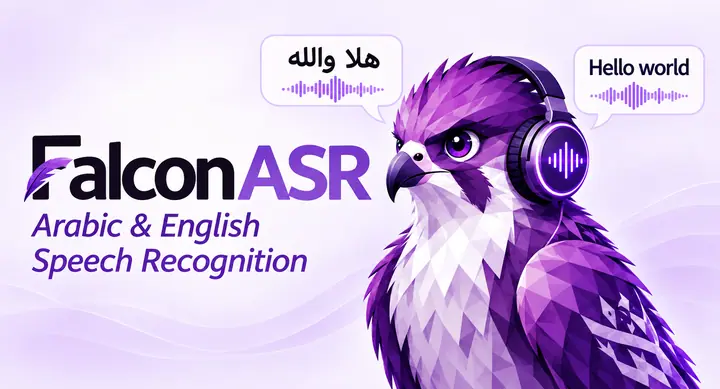
Falcon-ASR is a 1.6 billion parameter speech recognition model achieving 20.92% average word error rate across six Arabic test sets, Hugging Face said.
Explain it simply
In plain words Hugging Face released a speech recognition model focused on Arabic dialects, especially Emirati. It converts spoken words to text and also works with four other languages using the same model.
Term to know word error rate — percentage of transcribed words that are wrong, lower is better
What it means for developers: Falcon-ASR offers better Arabic dialect transcription than published alternatives, particularly for Gulf region speech.
Anthropic updated its usage policy to prohibit sustained and needless abusive or cruel behavior toward Claude, with conversation termination as primary enforcement.
Explain it simply
In plain words Anthropic changed its rules to ban people from being repeatedly cruel to its AI. The company also added clearer restrictions on using Claude for fake political campaigns and weapons.
Term to know model welfare — research into whether AI systems should be protected from harmful treatment
What it means for developers: Policy applies only in extreme cases and does not cover common user frustration or model testing.
Google announced a Gemini agent that works across Workspace apps, mobile, desktop, and third-party apps like Slack, maintaining context in the cloud.
Explain it simply
In plain words Google announced an AI agent that can handle tasks across different apps and devices while keeping track of what you're doing. It runs in the cloud so it works the same way everywhere.
Term to know agent — AI system that can take actions and complete tasks autonomously
What it means for developers: Enterprise users can assign multi-app tasks from one interface instead of switching between separate AI assistants.
I've always been kind of into computers since I was young. And then when film started to move from analog film to digital, I became more interested in that aspect of it.
Google released an offline meeting note-taker using the on-device EmbeddingGemma 2 model with 740 million parameters, working across apps including in-person meetings.
Explain it simply
In plain words Google released a Mac app that takes meeting notes completely offline using a small AI model that runs on your computer. It competes with tools like Granola.
Term to know on-device — AI model that runs locally on your computer without internet
What it means for developers: Offline operation means meeting notes work during travel or in places without internet connectivity.
Claude Haiku 5.5 matches GPT-6 Luna pricing at $0.10 input and $0.50 output per million tokens up to 100,000 tokens, according to Simon Willison.
Explain it simply
In plain words Anthropic released a new fast model called Claude Haiku 5.5 that costs the same as OpenAI's GPT-6 Luna for contexts up to 100,000 tokens, but uses more tokens than the previous version.
Term to know tokenizer — software that splits text into pieces an AI model processes and counts
What it means for developers: Haiku 5.5 is now price-competitive with Luna for shorter contexts but more expensive for long documents.
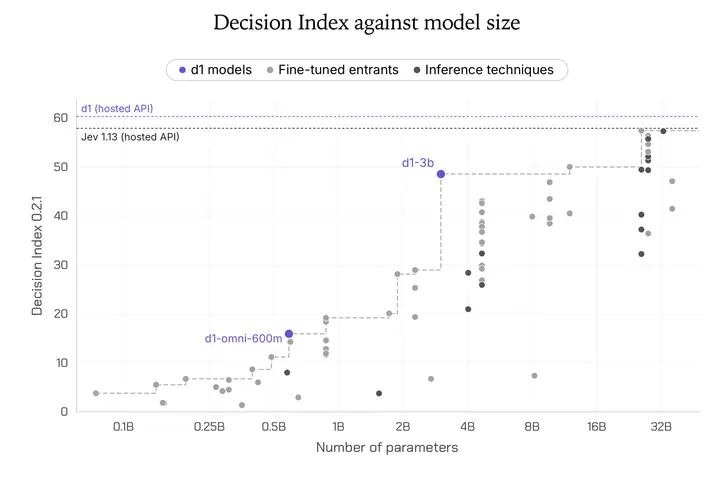
Hugging Face released two decision models that answer in a single forward pass: d1-3B scores 48.57 on Decision Index 0.2.1, according to the company.
Explain it simply
In plain words Hugging Face released two small models that give answers in one step instead of generating text word by word. The three billion parameter version runs in under 50 milliseconds on edge devices.
Term to know forward pass — single computation through a neural network to produce an output
What it means for developers: Decision models deliver structured answers faster than generative models, useful for classification and real-time edge applications.
Last step · 1 minute
5 questions on today's stories
Browse other days
How we work
Lab announcements, release notes and SDK changelogs come before commentary. Every story links to the original.
Figures, model names and prices are taken from the published text. Where a detail is not stated, we leave it out.
Each story states what changed, by how much, and what it means in practice. No hype, no speculation.
Anthropic released Claude Haiku 5.5 at $0.10 per million input tokens, matching GPT-6 Luna's price, while Google launched Gemini Enterprise agents and Hugging Face shipped two new d1 decision models. 12 stories from 7 sources are summarised on this page.
1. How Oracle turns days of work into minutes with ChatGPT and Codex. 2. “Software is over”: Bold AI developer takes aim at Adobe with open source clones. 3. Building a safer path to autonomous industrial AI.
New Models (10), Developer Tools (2).
Headlines and short summaries come from the public feeds of 7 publishers, including Ars Technica, Hugging Face, MIT Technology Review, OpenAI, Simon Willison's Weblog, TechCrunch. Every story links to the original article.
Yes. A voice recording covering every story is at the top of this page and is published each day.
Every headline links to the original. How it works