Today
Top stories

Daily briefing on generative AI

AI briefingMonday, 12 October

Listen to today's briefing3 min · AI voice by ElevenLabs

Updated · 11 stories · 7 sources · 3 min read

OpenAI added a new voice named Shida to its Live API and introduced billing error codes in Python SDK version three point two nine, while Ollama released version zero point four zero point three pausing background model upgrades.

Step 1 · 30 seconds

Summary

Step 2 · 3 min

Listen

Voiced by ElevenLabs from today's briefing.

Read the transcript

Good morning. This is dailybrief, and here are today's top stories in generative AI, for Monday, October twelve. OpenAI has released version three point two nine of its Python SDK. According to the release notes, the update adds a new voice called Shida to the Live API's named voices. The release also introduces a billing not active session error code, vault updates, and metadata filters. OpenAI documented several other changes including one hundred twenty-eight character safety identifiers and Files API rate-limit responses. Ollama released version zero point four zero point three of its local model runner. According to the release notes, the update pauses background model upgrades for embedding and other request performance. The release also removes warnings that previously appeared when launching Claude connectors and Codex service tiers. In other news, GitHub Actions now supports Python three point fifteen. The stable release of Python three point fifteen point zero has been added to actions slash python-versions. Developers can now add three point fifteen to their testing matrix to run tests against the new Python release. Turning to infrastructure, Amazon said it will stop using nondisclosure agreements when negotiating with local governments over data centers. According to TechCrunch, the announcement came in a blog post making the case that data centers benefit communities. Amazon is following Microsoft, which adopted the same policy earlier. The moves come amid a wave of data center moratoriums lasting one to two years in various communities. Microsoft CEO Satya Nadella posted his views on AI safety. According to The Verge, Nadella said the industry must assume all AI models are compromised and contain them from the start. He called for an emergency brake, saying an authorized person should always be able to pause or shut down a model mid-task. Nadella also called for timely incident disclosure, independent audits, and tamper-proof human readable evidence. The Verge noted that Nadella referred to AI as super intelligence throughout the post. Meanwhile, several technology leaders are adopting the Trump administration's preferred terminology for AI. According to The Verge, Salesforce CEO Marc Benioff renamed AIForce to SIForce, and Nadella used super intelligence repeatedly in his safety post. An executive order now requires government agencies to use the term super intelligence. The White House called anyone using the term artificial intelligence the enemy. And finally, llama dot cpp released build eleven five six zero. According to the release notes, the update adds IM2COL three D support for Hexagon processors. The build includes DMA paths for IM2COL three D and removes inefficient floating point conversions. That's dailybrief for today. Every story is linked to its original source on our website.

Podcast Two-host conversation with Jessica & Eric · 5 min

Read the podcast transcript

Jessica: So Microsoft's CEO just said we should assume every AI model is already compromised.

Eric: Wait, from the start?

Jessica: From the start. Nadella wants containment built in, with what he's calling emergency brakes.

Eric: Huh.

Jessica: This is dailybrief, I'm Jessica.

Eric: And I'm Eric. It's Monday, October twelfth, twenty twenty-six.

Jessica: So according to The Verge, Nadella is saying an authorized person should be able to pause or shut down a model mid-task. And he wants tamper-proof, human-readable evidence from the models themselves.

Eric: Okay, but like... what does that actually look like in practice?

Jessica: I mean, we don't know yet. But it feels like he's pushing for some kind of kill switch architecture and audit logs you can actually trust.

Eric: Yeah, I'm just not sure how you build tamper-proof logs when the model itself might be the thing you don't trust.

Jessica: Right, exactly. It's a hard problem.

Eric: Also, did you see the thing about super intelligence?

Jessica: Oh, yeah. So apparently after Trump's executive order telling government agencies to use the term super intelligence instead of AI—

Eric: Which is very normal.

Jessica: Right. Marc Benioff renamed Salesforce's AIForce to SIForce, and Nadella used super intelligence repeatedly in his post.

Eric: So we're just doing this now.

Jessica: I guess? The Verge is reporting it as a terminology shift. For developers it just means you might see super intelligence in docs and marketing from some of the big providers.

Eric: Great. Love a good rebrand.

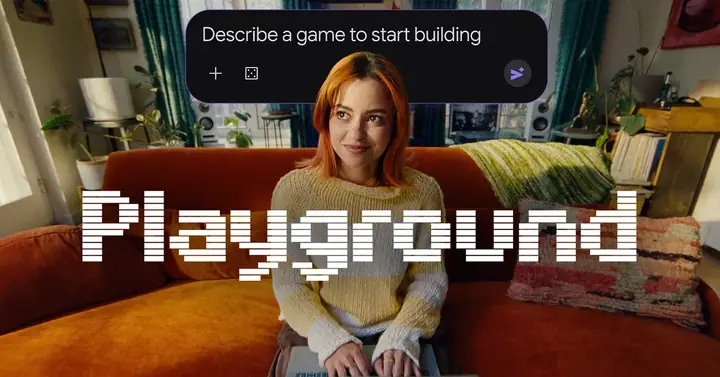
Jessica: Okay, but speaking of Google—they launched Playground this week. It's in Google Labs.

Eric: What does it do?

Jessica: You describe a game in plain language to a chatbot, and it generates a playable browser game. You can even upload photos or videos as reference assets.

Eric: Wait, like actually playable?

Jessica: According to WIRED, yeah. It's similar to what Meta announced with Horizon Create back in September.

Eric: Okay, that's actually kind of cool for prototyping. No-code game concepts.

Jessica: Exactly. It's an experiment, but I think it's clever engineering for rapid iteration.

Eric: There was also this fun one from The Verge where they're testing local AI.

Jessica: Yeah, Hermes Agent with the Qwen three point eight Flash Next model. One hundred twenty-five billion parameters.

Eric: How big is that download?

Jessica: About one hundred five gigabytes. They're running it on a Mac Studio with two hundred fifty-six gigs of unified memory.

Eric: So not exactly for your laptop.

Jessica: No, but it shows you can run these huge models locally if you've got the hardware. No cloud required.

Eric: Yeah, that's the dream for some use cases.

Jessica: Okay, quick developer tools round. OpenAI released Python SDK version three point two nine.

Eric: What's new?

Jessica: They added a voice called Shida to the named Live voices, and there's a new error code for billing not active session.

Eric: So you can handle billing errors more gracefully now.

Jessica: Exactly. It's a small update but useful.

Jessica: Ollama also updated to version zero point four zero point three. They paused background model upgrades to improve embedding and request performance.

Eric: Huh, so they were upgrading models automatically in the background?

Jessica: Apparently, and it was slowing things down. So now they stopped doing that.

Eric: Makes sense. You want predictable performance.

Jessica: And GitHub added Python three point fifteen point zero to actions slash python-versions, so you can test against it in your workflows now.

Eric: Oh, nice. So just add three point fifteen to your testing matrix.

Jessica: Yep. Automatic compatibility checks with the new Python release.

Eric: There was also a llama dot cpp update.

Jessica: Build eleven five six zero. It adds IM2COL 3D support for Hexagon processors—those are Qualcomm chips—and removes some inefficient floating point conversions.

Eric: So better performance if you're running models on devices with Hexagon.

Jessica: Right. It's pretty niche, but for the people who need it, it's a solid improvement.

Eric: Okay, last thing. Amazon announced they're dropping NDAs for data center negotiations with local governments.

Jessica: Following Microsoft, who did the same thing earlier. TechCrunch says Amazon kind of buried it in a blog post about data center benefits.

Eric: Yeah, that feels like they didn't want to make a big deal out of it.

Jessica: But it does mean more transparency around AI infrastructure projects. Communities can actually see what's being proposed.

Eric: Which is good. Those data centers use a ton of resources.

Jessica: Yeah, it's about time.

Jessica: That's it for today. Every story is linked to its source on the dailybrief website.

Eric: We'll see you tomorrow.

Step 3 · 2 minutes

Top 3 stories

Simon Willison's Weblog

Python three point fifteen now available in GitHub Actions testing matrix

Developer Tools

GitHub added Python three point fifteen point zero to actions slash python-versions, allowing developers to test against the new Python release in workflows.

  • Python three point fifteen point zero added to GitHub Actions
  • Developers can add three point fifteen to testing matrix
  • Enables testing against new Python release in workflows

Explain it simply

In plain words GitHub updated its automated testing tool to support Python three point fifteen, so developers can now check if their code works with the latest Python version.

Term to know testing matrix — Running tests across multiple versions or configurations to check compatibility

What it means for developers: Developers can now automatically test their code against Python three point fifteen in GitHub

Read the full story at Simon Willison's Weblog
llama.cpp releases

llama dot cpp b eleven five six zero adds IM2COL 3D support for Hexagon

New Models

llama dot cpp released build eleven five six zero with IM2COL 3D support for Hexagon processors, according to the release notes.

  • Build eleven five six zero released with Hexagon improvements
  • Adds IM2COL 3D support and DMA paths
  • Removes inefficient floating point conversions

Explain it simply

In plain words llama dot cpp, a tool for running AI models efficiently, updated to improve performance on Qualcomm Hexagon processors with new three-dimensional image processing support.

Term to know IM2COL — Image to column, a method for converting images for faster processing

What it means for developers: Better performance for developers running models on devices with Hexagon processors

Read the full story at llama.cpp releases

Apple will announce HomeView, a Siri-powered smart home hub with A eighteen chip and display, on Tuesday, according to Bloomberg's Mark Gurman.

  • HomeView launches Tuesday with A eighteen chip
  • Two models available: countertop and wall-mounted
  • Apple also unveiling updated Apple TV and HomePod mini

Explain it simply

In plain words Apple plans to announce a new device called HomeView on Tuesday that will control smart home products and includes Apple's A eighteen processor, according to a Bloomberg reporter.

Term to know smart home hub — A device that connects to and controls other smart home products

What it means for developers: Not directly relevant to generative AI developers beyond the A eighteen chip's AI capabilities

Read the full story at TechCrunch

Today's newsmakers

Who's making AI news

The companies that feature most in today's stories, ranked by how often and how prominently they appear.

  1. #1

    OpenAI

    2 stories today

    ▲ 1
  2. #2

    Microsoft

    3 stories today

    ▲ 3

    +2 more stories

  3. #3

    GitHub

    1 story today

    Steady
  4. #4

    Amazon

    2 stories today

    ▲ 4

    +1 more story

  5. #5

    Apple

    1 story today

    New today

Company names and logos are trademarks of their owners, shown only to identify them.

Optional · if you have more time

More stories

8 more stories

TechCrunch

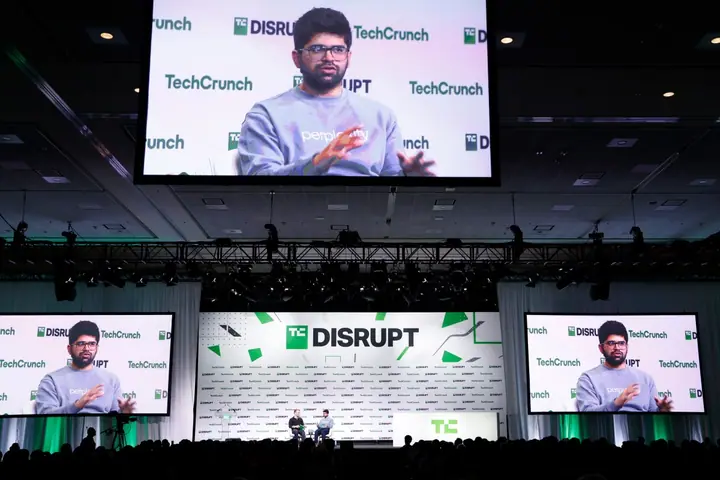
48 hours to TechCrunch Disrupt 2026 — hear directly from the people building what’s next

In less than 48 hours, the doors open for TechCrunch Disrupt 2026 at San Francisco’s Moscone West. Save up to $100 on your ticket before prices increase at the door.

  • On October 13-15, more than 10,000 founders, investors, and tech leaders will be showing up to make the connections that’ll change their trajectory.
  • If you’re coming for the conference program, 200+ sessions across six stages, roundtables, and breakouts will bring you closer to the people making…
  • Hear from leaders including RJ Scaringe of Rivian, Mark Wahlberg, Alexa von Tobel of Inspired Capital, Andrew Feldman of Cerebras Systems, Cat de…
Pricing & Tokens
OpenAI Python SDK releases

OpenAI Python SDK three point two nine adds Shida voice, billing error codes

OpenAI released Python SDK version three point two nine point zero with a new Live voice called Shida and a billing not active session error code.

  • Version three point two nine released October eleventh
  • Adds Shida to named Live voices in the API
  • Includes new billing not active session error code

Explain it simply

In plain words OpenAI updated its Python software development kit to version three point two nine, adding a voice named Shida for its Live feature and a new error code for billing problems.

Term to know SDK — Software development kit, tools developers use to build applications with a service

What it means for developers: Developers can now use the Shida voice and handle billing errors in their applications

Developer Tools
Ollama releases

Ollama zero point four zero point three pauses background model upgrades

Ollama released version zero point four zero point three, pausing background model upgrades for embedding and request performance, according to the release notes.

  • Version zero point four zero point three released
  • Paused background model upgrade for embedding and request performance
  • Removed warnings for Claude connectors and Codex service tiers

Explain it simply

In plain words Ollama, a tool for running AI models locally, updated to version zero point four zero point three and stopped automatically upgrading models in the background to improve performance.

Term to know embedding — Converting text into numerical vectors that AI models can process

What it means for developers: Performance improvements for developers running embedding and other requests with Ollama

Developer Tools
The Verge

The Verge tests local AI with Hermes agent and Qwen models on Mac Studio

The Verge is testing local AI using Hermes Agent and the one hundred twenty-five billion parameter Qwen three point eight Flash Next model.

  • Qwen 3.8 Flash
  • Testing Qwen three point eight Flash Next with one twenty-five billion parameters
  • Model requires about one hundred five gigabytes
  • Running on Mac Studio with two fifty-six gigabytes unified memory

Explain it simply

In plain words A technology reporter is experimenting with running large AI models on a Mac Studio computer without using cloud services, starting with a very large Qwen model.

Term to know parameters — Numbers in an AI model that determine its behavior, more usually means more capable

What it means for developers: Demonstrates feasibility of running large models locally for developers with high-memory hardware

New Models
The Verge

Nadella calls for assuming all AI models are compromised, wants emergency brakes

Microsoft CEO Satya Nadella said the industry must assume AI models are compromised and build containment with emergency brakes, according to The Verge.

  • Nadella says assume models are compromised from the start
  • Authorized person should pause or shut down models mid-task
  • Calls for tamper-proof human readable evidence from models

Explain it simply

In plain words Microsoft's CEO said developers should treat all AI models as potentially unsafe and build in the ability for people to stop them immediately if needed.

Term to know containment — Security measures to limit what an AI model can access or do

What it means for developers: May influence how developers build safety controls and monitoring into AI applications

New Models
The Verge

Tech leaders adopt Trump's super intelligence terminology for AI

Salesforce renamed AIForce to SIForce and Microsoft's Nadella used super intelligence terminology after Trump executive order, according to The Verge.

  • Marc Benioff renamed Salesforce AIForce to SIForce
  • Nadella repeatedly used super intelligence in recent post
  • Executive order requires government agencies use super intelligence term

Explain it simply

In plain words Some major technology company leaders are switching from saying AI to super intelligence after President Trump issued an order telling government agencies to use that term instead.

Term to know super intelligence — Trump administration's preferred term for what is commonly called artificial intelligence

Why it matters: May affect terminology in documentation and marketing materials from some major AI providers

Industry & Policy
TechCrunch

Amazon drops NDAs for data center negotiations following Microsoft

Amazon said it will no longer use nondisclosure agreements when negotiating with local governments over data centers, according to TechCrunch.

  • Amazon will stop using NDAs in data center negotiations
  • Follows Microsoft's earlier decision on the same issue
  • Announcement buried in blog post about data center benefits

Explain it simply

In plain words Amazon announced it will stop requiring local governments to sign secrecy agreements when discussing plans to build data centers, matching a policy Microsoft adopted earlier.

Term to know NDA — Nondisclosure agreement, a contract requiring parties to keep information secret

Why it matters: Could increase transparency around AI infrastructure projects and address community concerns about data centers

Chips & Infrastructure
WIRED

Google launches Playground for AI game generation in Google Labs

Google launched Playground this week, letting people describe games in plain language to generate playable browser games, according to WIRED.

  • Playground launched this week as Google Labs experiment
  • Users describe games in chatbot interface, AI builds working version
  • Can upload photos, videos or models as reference assets

Explain it simply

In plain words Google released an experimental tool that creates simple video games from text descriptions, similar to Meta's Horizon Create announced in September.

Term to know Google Labs — Google's landing page for AI experiments not yet in official apps or services

Why it matters: Offers developers a no-code way to prototype game concepts using generative AI

Industry & Policy

Last step · 1 minute

Daily quiz

5 questions on today's stories

Browse other days

How we work

Editorial standards

Primary sources first

Lab announcements, release notes and SDK changelogs come before commentary. Every story links to the original.

Only what the source says

Figures, model names and prices are taken from the published text. Where a detail is not stated, we leave it out.

Written for developers

Each story states what changed, by how much, and what it means in practice. No hype, no speculation.

Quick answers

What happened in AI on Monday, 12 October 2026?

OpenAI added a new voice named Shida to its Live API and introduced billing error codes in Python SDK version three point two nine, while Ollama released version zero point four zero point three pausing background model upgrades. 11 stories from 7 sources are summarised on this page.

What are the top AI stories today?

1. Python 3.15.0 added to actions/python-versions. 2. llama.cpp b11560: hexagon: add IM2COL_3D (#30305) released. 3. Will the HomeView be Apple’s first smart home success?.

Which AI topics does today's briefing cover?

New Models (4), Pricing & Tokens (1), Developer Tools (3), Industry & Policy (2), Chips & Infrastructure (1).

Where does the information come from?

Headlines and short summaries come from the public feeds of 7 publishers, including Ollama releases, OpenAI Python SDK releases, Simon Willison's Weblog, TechCrunch, The Verge, WIRED. Every story links to the original article.

Is there an audio version of this briefing?

Yes. A voice recording covering every story is at the top of this page and is published each day.

Sources

Every headline links to the original. How it works