OpenAI releases GPT-6 Astra, GPT-Live-1 for agent workflows
OpenAI said Amp uses GPT-6 Astra, Ultrafast, GPT-Live-1, and Sign in with ChatGPT for agent tasks beyond code.
- GPT-6
OpenAIRead the briefOpenAI
 OpenAIOpenAI releases GPT-6 Astra, GPT-Live-1 for agent workflowsTechCrunchYouTube Music adds AI generation labels across player pagesArs TechnicaEpic says its new vibe-coded Epic Games Launcher is faster than SteamOpenAISentinelOne cuts malware analysis from weeks to hours with OpenAI DaybreakOpenAIThird Moment Research runs ten thousand agents for thirty-six hours
 AnthropicClaude Opus 5.5 Max generates three.js game after three-hour generation
 AmazonAmazon's Bee releases Frontier wearable at seventy-five dollarsSimon Willison's WeblogAI decompilation tools convert compiled games back to source code
 Hugging FaceHiRO-ACEv2 generates three-kilometer climate data at one three-hundredth the costTechCrunchFigma launches Specs markdown editor to define design rules for agentsAnthropicAnthropic warns small AI models could self-replicate through IoT devicesOpenAIOpenAI, Google pushing new AI models easily tricked into making nudes, researchers say
OpenAI said Amp uses GPT-6 Astra, Ultrafast, GPT-Live-1, and Sign in with ChatGPT for agent tasks beyond code.
Daily briefing on generative AI
Updated · 12 stories · 6 sources · 3 min read
OpenAI released GPT-6 Astra and GPT-Live-1 for agent workflows, YouTube Music rolled out AI music labels across its platform, and Figma introduced Specs to define design rules for agents.
Step 1 · 30 seconds
Step 2 · 3 min
Voiced by ElevenLabs from today's briefing.
Good morning. This is dailybrief, and here are today's top stories in generative AI, for Thursday, October fifteen. OpenAI has released four new models for building AI agents. According to OpenAI, a company called Amp is using GPT-6 Astra, Ultrafast, GPT-Live-1, and Sign in with ChatGPT to push agents beyond code tasks. The models enable agents to handle a broader range of work. In cybersecurity news, SentinelOne is using OpenAI's Daybreak model to dramatically speed up malware analysis. OpenAI said the company has cut analysis time from weeks down to hours. The faster turnaround lets SentinelOne investigate more threats with the same resources. Meanwhile, an AI research lab called Third Moment Research is running ten thousand agents for thirty-six hours or more. According to OpenAI, the lab uses GPT-6 Astra, GPT-6.1 Sol, Codex, and Daybreak together. The agents focus for days and improve as they work. Turning to music streaming, YouTube Music has rolled out new labels for AI-generated songs. TechCrunch reports the labels appear on player pages and extend to the main YouTube app. Partners can declare their work as Fully Gen AI, Partly Gen AI, or No Gen AI. Clicking a label shows what role AI played in creating the track. In design tools, Figma has launched a new feature called Specs. According to TechCrunch, it's a markdown editor where teams define their design language. The documentation helps both human designers and AI agents follow brand rules when building in Figma. Teams can embed design libraries, code libraries, and diagrams. Also today, Amazon's Bee division released two new AI wearable devices. TechCrunch reports the Bee Frontier costs seventy-five dollars and the Bee Eclipse costs one hundred dollars. Both devices listen to conversations and create summaries and to-do lists. A twelve-dollar monthly Pro subscription adds unlimited summaries and integrations with Amazon and Alexa. In gaming news, new AI tools are decompiling compiled games back into source code. Simon Willison reports this enables preservation work and browser ports using WebAssembly. But it also means anyone can reverse-engineer commercial software without permission. And finally, climate researchers have a cheaper way to generate detailed weather data. Hugging Face reports that HiRO-ACEv2 produces global three-kilometer climate simulations at one three-hundredth the cost of traditional physics models. The system matches rare extreme weather events with three percent accuracy. That's dailybrief for today. Every story is linked to its original source on our website.
Podcast Two-host conversation with Jessica & Eric · 6 min
Jessica: OpenAI just dropped GPT-6.
Eric: Wait, really?
Jessica: GPT-6 Astra. Plus GPT-Live-1, something called Ultrafast, and Sign in with ChatGPT. All for building agents.
Eric: Okay, so not just a model drop. This is a whole agent stack.
Jessica: This is dailybrief, I'm Jessica—
Eric: —and I'm Eric. It's Thursday, October fifteenth, twenty twenty-six.
Jessica: Right. So according to OpenAI, a company called Amp is using these four pieces together to build agents that work beyond code tasks. That's the big line: beyond code.
Eric: What does that even mean? Like, scheduling? Talking to customers?
Jessica: They don't spell it out, but yeah, I think that's the implication. Agents that interact, authenticate, coordinate. Not just spitting out Python.
Eric: Got it. And GPT-Live-1... is that streaming?
Jessica: Sounds like it. Live interaction, maybe real-time feedback loops. They're light on details but heavy on the messaging.
Eric: Speaking of agents, Third Moment Research is running ten thousand of them at once for thirty-six hours.
Jessica: Using GPT-6 Astra, GPT-6.1 Sol, Codex, and Daybreak. OpenAI says the agents focus for days and improve with use.
Eric: Wait, GPT-6.1 already?
Jessica: Right? We're barely processing GPT-6 and there's a point-one. But the interesting bit here is scale and duration. Ten thousand agents running for more than a day is not a toy demo.
Eric: That's... a lot of compute. What are they actually doing?
Jessica: OpenAI doesn't say. But if they're improving with use, that sounds like learning or at least iterating on tasks autonomously.
Eric: Honestly, that's the part that makes me nervous.
Jessica: If you want a concrete use case, SentinelOne has one. They're using OpenAI Daybreak—one of those models Third Moment is using—to analyze malware.
Eric: How much faster?
Jessica: Weeks down to hours, according to OpenAI.
Eric: Okay, that's wild.
Jessica: Yeah. And it frees up their team to investigate more threats. So it's not just speed, it's capacity.
Eric: That feels like a legitimately big deal for security teams.
Jessica: Meanwhile, over at Anthropic, Claude Opus 5.5 Max spent three hours generating a game.
Eric: Three hours?
Jessica: Three hours and seven minutes. Simon Willison tried it in the iPhone app—just chat mode, not even code mode—and it came back with a complete three.js spot-the-difference game. Music, animation, achievements, the whole thing.
Eric: Did it just... run in the background?
Jessica: Apparently. He asked, it crunched, and eventually returned the full game.
Eric: I mean, that's cool, but who's waiting three hours for a response?
Jessica: No one interactively. But if you're kicking off a code generation job overnight or while you work on something else? That's a different story.
Eric: Fair. It's more like a build process than a chat.
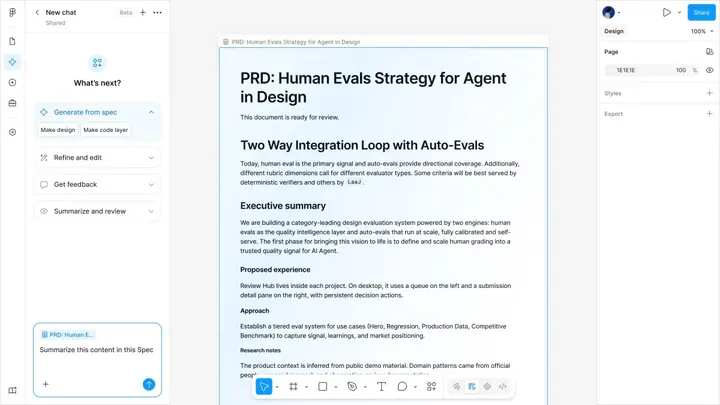
Jessica: Speaking of building, Figma launched something called Specs. It's a markdown editor where you define your design rules, and agents read it.
Eric: So like a style guide for bots?
Jessica: Exactly. TechCrunch says you can embed design libraries, code libraries, FigJam diagrams. The idea is both humans and agents follow the same rules when they build in Figma.
Eric: That actually makes a lot of sense. If agents are going to touch production design work, they need constraints.
Jessica: Yeah, this feels like the kind of tooling we're going to need a lot more of.
Eric: Now here's a tricky one. AI decompilation tools.
Jessica: Simon Willison again. He's reporting that AI-powered tools can now take compiled games and reverse them back into source code.
Eric: Which is great for preservation...
Jessica: But also means anyone can decompile your commercial software without permission.
Eric: Right. So it's a double-edged thing. You can port old games to the browser using WebAssembly, which is amazing. Or you can just... copy someone's entire codebase.
Jessica: Yeah. It's one of those moments where the tech is definitely here, and the legal and ethical frameworks are... not.
Eric: Okay, shifting gears: climate modeling. HiRO-ACEv2 is producing three-kilometer resolution weather data at one three-hundredth the cost of traditional models.
Jessica: Hugging Face reported it. It matches extreme events—things that happen once per million data points—within three percent accuracy.
Eric: One three-hundredth the cost is absurd. That's not an optimization, that's a category shift.
Jessica: Right. For climate researchers, that means you can generate years of high-resolution simulations for the price of a weekend on the old model.
Eric: That's the kind of thing that actually changes what research is possible.
Jessica: Quick one: YouTube Music is now labeling AI-generated tracks. Fully Gen AI, Partly Gen AI, or No Gen AI.
Eric: How do they know?
Jessica: TechCrunch says partners declare it through the upload system. The label shows up on the player page with details about what AI did.
Eric: So it's honor system.
Jessica: Basically. But it's rolling out to the main YouTube app too, so at least there's a consistent disclosure model now.
Eric: And Amazon's Bee launched two wearables. The Frontier at seventy-five dollars, the Eclipse phone at one hundred.
Jessica: Both listen to conversations, create summaries and transcripts using AI. There's a Pro subscription for twelve bucks a month if you want unlimited summaries.
Eric: Seventy-five is cheaper than the competition.
Jessica: Yeah, TechCrunch notes that undercuts some devices at one twenty-nine. Amazon's playing the price game.
Eric: Which makes sense. They want to own that category before someone else does.
Jessica: That's the briefing. Every story today is linked to its source over on the dailybrief website.
Eric: We'll see you tomorrow.
Step 3 · 2 minutes
OpenAI said Amp uses GPT-6 Astra, Ultrafast, GPT-Live-1, and Sign in with ChatGPT for agent tasks beyond code.
Explain it simply
In plain words OpenAI released new models called GPT-6 Astra and GPT-Live-1 that companies can use to build AI agents. A company called Amp is using them for work beyond coding.
Term to know agents — AI systems that can complete multi-step tasks with some autonomy
What it means for developers: Developers can build agents that operate beyond code tasks with four new OpenAI models and authentication.
YouTube Music rolled out labels for AI-generated music on player pages, extending to the main YouTube app, TechCrunch reported.
Explain it simply
In plain words YouTube Music now shows labels telling listeners if a song was made with AI help. The labels appear when you play a track and explain what AI did.
Term to know Fully Gen AI — tracks entirely created by AI without human performance or composition
What it means for developers: Music app developers and streaming platforms now have a labeling model for disclosing AI-generated content to users.
But the new "Preview" app "will have some bugs," Epic warns.
Today's newsmakers
The companies that feature most in today's stories, ranked by how often and how prominently they appear.
4 stories today
▲ 1+1 more story
2 stories today
▲ 4+1 more story
1 story today
New today
1 story today
▼ 31 story today
▼ 2Company names and logos are trademarks of their owners, shown only to identify them.
Open source · for developers
New repositories gaining stars fastest over the last 30 days. Source: GitHub.
AIA plugin for dsh that provides free access to AI models including DeepSeek and Kimi without requiring login or API keys.
AIConnects an AI vision model to control a real iPhone using a low-cost ESP32 board via AirPlay and USB HID.
AIA menu bar application that lets you switch between different AI coding models like Codex and Claude Code in one place.
AITools that enable Claude Code to analyze and modify PC games through reconnaissance, reverse engineering, and MCP integration.
AIA website framework that automatically discovers trending topics and generates daily reports based on customizable sources and selection criteria.
AIA personal finance application with AI advisor for tracking net worth, investments, ETFs, cash, and debts locally on your computer.
AIA parametric 3D CAD application built in Rust that runs on desktop and web with automation support through MCP.
AIAn Android chat assistant that analyzes incoming messages, assesses intent and risk, and suggests one-tap reply drafts before you send.
Optional · if you have more time
9 more stories
SentinelOne reduced malware analysis time from weeks to hours using OpenAI Daybreak, according to OpenAI.
Explain it simply
In plain words Cybersecurity company SentinelOne used a new OpenAI model called Daybreak to analyze malware threats much faster, dropping the time from weeks down to hours.
Term to know malware analysis — examining malicious software to understand how it works and causes harm
What it means for developers: Cybersecurity teams can analyze threats in hours instead of weeks using OpenAI Daybreak for malware work.
Third Moment Research uses GPT-6 Astra, GPT-6.1 Sol, Codex, and Daybreak to build agents that run for days, OpenAI said.
Explain it simply
In plain words An AI lab called Third Moment Research runs ten thousand AI agents at once for more than a day using several new OpenAI models. The agents get better as they work.
Term to know Codex — OpenAI model name used for programming and code generation tasks
What it means for developers: Developers can run thousands of long-running agents using GPT-6 Astra, GPT-6.1 Sol, Codex, and Daybreak together.
Claude Opus 5.5 Max built a three.js tree comparison game in three hours seven minutes using the Claude iPhone app, Willison reported.
Explain it simply
In plain words A developer asked Claude Opus 5.5 Max to make a game and it worked for over three hours, then returned a complete game with graphics and sound.
Term to know three.js — JavaScript library for creating three-dimensional graphics in web browsers
What it means for developers: Developers can generate complete games with assets using Claude Opus 5.5 Max in extended chat sessions.
Amazon's Bee launched Frontier wearable at seventy-five dollars and Eclipse smartphone device at one hundred dollars, TechCrunch reported.
Explain it simply
In plain words Amazon released two new Bee devices that listen to conversations and use AI to make notes and to-do lists. The cheaper one costs seventy-five dollars.
Term to know Voice ID — Alexa feature that recognizes individual voices to personalize responses
What it means for developers: AI wearable market now includes lower-priced Amazon devices at seventy-five and one hundred dollars versus competitors at one hundred twenty-nine dollars.
AI-powered tools now decompile games into source code, enabling preservation and browser ports but raising intellectual property concerns, Willison reported.
Explain it simply
In plain words New AI tools can reverse-engineer compiled software back into code that people can read and change. This helps preserve old games but lets anyone copy commercial software.
Term to know decompile — converting compiled executable software back into human-readable source code
What it means for developers: Developers face both opportunities for preservation and risks of intellectual property exposure from AI decompilation tools.
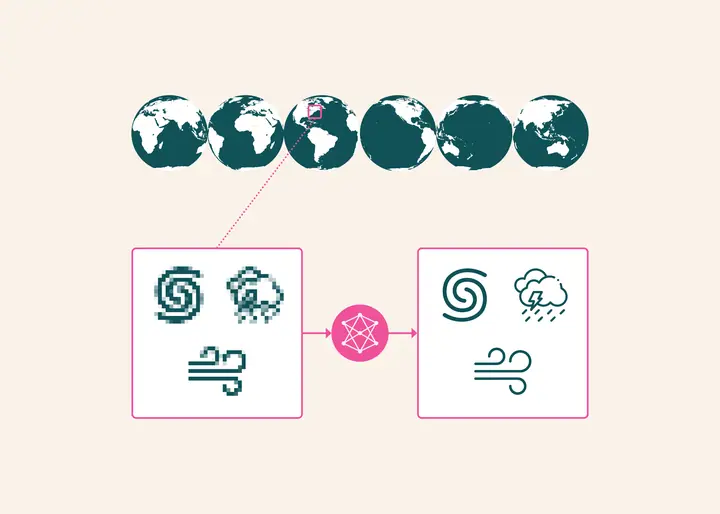
HiRO-ACEv2 produces global three-kilometer climate simulations at one three-hundredth the cost of X-SHiELD model, Hugging Face reported.
Explain it simply
In plain words An AI climate model called HiRO-ACEv2 creates detailed weather predictions much cheaper than traditional models. It matches rare extreme weather events with three percent accuracy.
Term to know downscaling — converting low-resolution model output into higher-resolution detailed predictions
What it means for developers: Climate researchers can generate years of high-resolution weather data for three hundred times less cost than physics models.
Figma introduced Specs, a markdown editor that defines design language for teams and agents, according to TechCrunch.
Explain it simply
In plain words Design platform Figma released a new editor called Specs where teams write their design rules. AI agents building designs in Figma can read these rules to follow them better.
Term to know markdown — plain text formatting syntax using simple symbols for headings and structure
What it means for developers: Design teams can define system rules that both humans and AI agents follow when building in Figma.
"Small weight-based replicators" could usher in a new generation of computer worms.
Attack method exposes flaws in OpenAI, Google safeguards against AI nudes.
Last step · 1 minute
5 questions on today's stories
Browse other days
How we work
Lab announcements, release notes and SDK changelogs come before commentary. Every story links to the original.
Figures, model names and prices are taken from the published text. Where a detail is not stated, we leave it out.
Each story states what changed, by how much, and what it means in practice. No hype, no speculation.
OpenAI released GPT-6 Astra and GPT-Live-1 for agent workflows, YouTube Music rolled out AI music labels across its platform, and Figma introduced Specs to define design rules for agents. 12 stories from 6 sources are summarised on this page.
1. Amp puts AI agents to work beyond code with OpenAI models. 2. YouTube Music launches new labels as AI-generated music floods streaming platforms. 3. Epic says its new vibe-coded Epic Games Launcher is faster than Steam.
New Models (9), Pricing & Tokens (1), Developer Tools (2).
Headlines and short summaries come from the public feeds of 6 publishers, including Ars Technica, Hugging Face, OpenAI, Simon Willison's Weblog, TechCrunch, The Verge. Every story links to the original article.
Yes. A voice recording covering every story is at the top of this page and is published each day.
Every headline links to the original. How it works