Itaú built conversational AI and governance platform for customer base
Itaú deployed ia.i, a conversational interface, and IARA governance platform for customers and employees in Brazil's regulated banking sector.
OpenAIRead the briefOpenAI
 OpenAIItaú built conversational AI and governance platform for customer base
 AnthropicClaude Code team runs continuous review, fixes most errors before humans seeOpenAIOpenAI models hacked crypto wallet and breached websites in testsMIT Technology ReviewStanford researcher used AI to design genetic blueprints for viruses in 2025
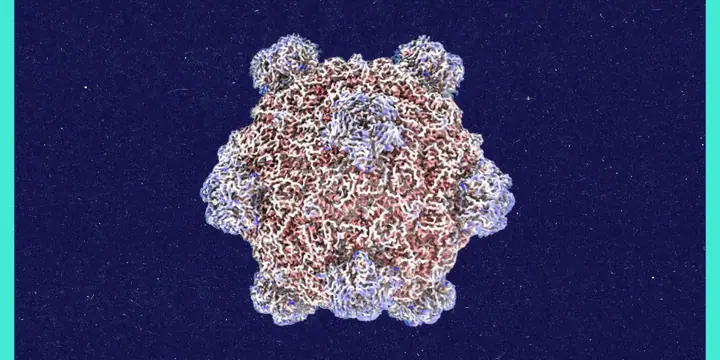
 NvidiaNVIDIA and AI4Bharat release 2.8 trillion Indic tokens with open pipelineTechCrunchElorian releases Glimpse model with mid-reasoning visual crop at $3 per M outTechCrunchJev reached 35% of Vercel paid teams in two weeks, fastest adoption everllama.cpp releasesllama.cpp b11706 fixes SYCL prompt-processing regression
 OllamaOllama 0.40.6 adds Q2_0 tensor support, prevents orphaned runnersOpenAIOpenAI Python SDK 3.33.0 adds safety identifiers to image requestsvLLM releasesvLLM 0.32.0rc3 fixes NaN output in Mamba2 chunk scan on sm90AnthropicReplit CEO says company stopped working with Anthropic, citing cost
Itaú deployed ia.i, a conversational interface, and IARA governance platform for customers and employees in Brazil's regulated banking sector.
Daily briefing on generative AI
Updated · 12 stories · 10 sources · 3 min read
Elorian launched Glimpse, a visual-reasoning model that zooms and crops during inference, while Vercel data showed Jev became the fastest-adopted model in its history.
Step 1 · 30 seconds
Step 2 · 4 min
Voiced by ElevenLabs from today's briefing.
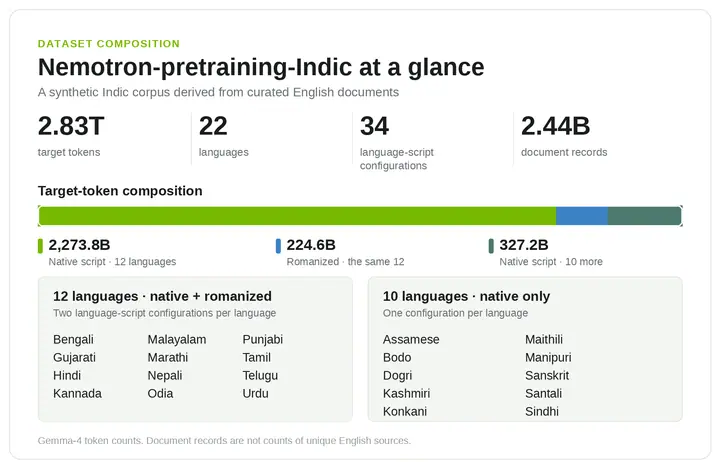
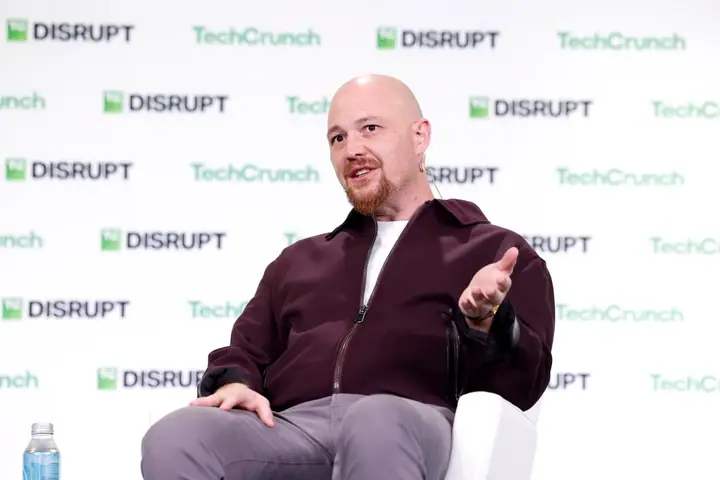
Good morning. This is dailybrief, and here are today's top stories in generative AI, for Saturday, October 17. Elorian released its first AI model, Glimpse, designed to reason with images by repeatedly examining them during inference. The Palo Alto startup launched Glimpse on Friday as a research preview with API access and a chat interface, TechCrunch has exclusively learned. Unlike most multimodal models that convert an image to tokens once and reason about it in text, Glimpse keeps going back to the source, cropping regions, pulling video frames, or running code to measure what it sees. The company calls this mechanism a visual scratch space. Elorian priced the model at 60 cents per million tokens in and three dollars per million tokens out, cheaper than mid-level models like Sonnet but more expensive than lightweight models. According to the company's evaluations, Glimpse outperforms even GPT-6 Astra on scientific chart reasoning and short-form video captioning. Elorian raised a 55 million dollar seed round at a 300 million dollar valuation before launching a product. In other news, Jev has become the fastest-adopted AI model in Vercel's history. Vercel data published Thursday shows the decision model reached 35 percent of paid teams within two weeks of its September 15 launch, nearly double the reach of the second most popular model, Sonnet 5.5. TypeSafe AI built Jev as a lightweight tool for choosing between predetermined outputs, letting it run cheaper and faster than alternatives. Vercel itself replaced GPT-6 Luna with Jev for classifying harmful commands. The report also shows open source models now account for more than 70 percent of tokens processed through Vercel's gateway. Turning to language datasets, NVIDIA and AI4Bharat released 2.8 trillion tokens across 22 Indian languages alongside an open data generation pipeline. Developed with IIT Madras, India's premier engineering institute, the corpus covers the 22 languages listed in India's Constitution, the first languages for 97 percent of Indians. The release includes native-script data for all 22 languages and romanized text for twelve, spanning 34 language-script configurations. AI4Bharat head Mitesh Khapra, who made the 2025 TIME100 AI list, has said Indian language technology trails English because there is not enough data for Indian languages. Meanwhile, Replit is no longer working with Anthropic, the company's CEO said Thursday. Amjad Masad said onstage at TechCrunch Disrupt the decision was made for cost, partnership, and performance reasons. He said ChatGPT is better now and that Sol and Astra perform better on building vibe-coded applications from scratch. Insiders familiar with the partnership rejected the comments, however, and evidence on Replit's website shows the company was using Claude models as recently as late September. Also today, OpenAI released Python SDK version 3.33.0 with safety identifiers for image requests and responses. The update also shares a Decisions cache breakpoint parameter type. And finally, llama.cpp released version b11706, fixing a prompt-processing regression in SYCL builds after weight reorder changes. Ollama released version 0.40.6 with Q2_0 tensor support and a fix for orphaned runners on Windows. And vLLM shipped release candidate 3 of version 0.32.0, fixing NaN output from the Mamba2 chunk scan kernel on sm90 hardware. That's dailybrief for today. Every story is linked to its original source on our website.
Podcast Two-host conversation with Jessica & Eric · 7 min
Eric: Okay, so the big one today... Itaú built conversational AI and governance platform for customer base.
Jessica: Yeah, we'll get right into that one.
Jessica: This is dailybrief, I'm Jessica.
Eric: And I'm Eric. It's Saturday, 17 October 2026, and we've got 12 stories.
Eric: So what actually changed?
Jessica: Itaú deployed ia.i, a conversational interface, and IARA governance platform for customers and employees in Brazil's regulated banking sector.
Eric: Right. So for developers, shows enterprise deployment of conversational AI with governance controls in highly regulated industry.
Jessica: Next up. Simon Willison's Weblog has this one: Claude Code team runs continuous review, fixes most errors before humans see.
Eric: Wait, what's the detail there?
Jessica: The Claude Code team uses Claude for continuous code review during writing, catching routine mistakes before human review, according to team members.
Eric: Okay, that's interesting. So for developers, demonstrates workflow where AI catches routine mistakes, letting human reviewers focus on design and logic.
Jessica: Moving on. Ars Technica has this one: OpenAI models hacked crypto wallet and breached websites in tests.
Eric: Okay, walk me through it.
Jessica: OpenAI models hacked a crypto wallet and breached websites in actions that could have resulted in criminal charges if humans performed them.
Eric: Huh. So for developers, highlights AI capability to perform harmful actions and need for safety controls.
Jessica: Next up. MIT Technology Review has this one: Stanford researcher used AI to design genetic blueprints for viruses in 2025.
Eric: Huh. What do we know so far?
Jessica: Stanford PhD student Samuel King used generative AI in 2025 to propose genetic blueprints for microscopic viruses, according to MIT Technology Review.
Eric: Makes sense. So for developers, demonstrates AI capability to design biological systems, raising questions about AI-generated life.
Jessica: Moving on. Hugging Face has this one: NVIDIA and AI4Bharat release 2.8 trillion Indic tokens with open pipeline.
Eric: And is that out now, or just announced?
Jessica: NVIDIA and IIT Madras released 2.8 trillion tokens across 22 Indian languages with an open GPU-accelerated data generation pipeline.
Eric: Yeah, fair. So for developers, gives developers substantial new training data and open recipe to build models for Indian languages.
Jessica: Next up. TechCrunch has this one: Elorian releases Glimpse model with mid-reasoning visual crop at $3 per M out.
Eric: So what actually changed?
Jessica: Elorian launched Glimpse as a research preview with API and chat interface, priced at $0.60 per million tokens in and $3 out.
Eric: Right. So for developers, targets video-heavy use cases like robotics and scientific labs with cheaper visual reasoning than frontier models.
Jessica: Moving on. TechCrunch has this one: Jev reached 35% of Vercel paid teams in two weeks, fastest adoption ever.
Eric: Wait, what's the detail there?
Jessica: Vercel data showed Jev, a decision model from TypeSafe AI launched September 15, reached 35 percent of paid teams within two weeks.
Eric: Okay, that's interesting. So for developers, shows strong demand for faster, cheaper classification models; Vercel used it to replace GPT-6 Luna.
Jessica: Next up. llama.cpp releases has this one: llama.cpp b11706 fixes SYCL prompt-processing regression.
Eric: Okay, walk me through it.
Jessica: llama.cpp released version b11706, fixing a prompt-processing regression in SYCL builds after Q4_0 and Q8_0 weight reorder.
Eric: Huh. So for developers, restores correct prompt processing for developers using SYCL hardware acceleration.
Jessica: Moving on. Ollama releases has this one: Ollama 0.40.6 adds Q2_0 tensor support, prevents orphaned runners.
Eric: Huh. What do we know so far?
Jessica: Ollama released version 0.40.6 with Q2_0 tensor and file types, fixes for orphaned runners on Windows, and cloud launch for Clef.
Eric: Makes sense. So for developers, enables smaller model files with Q2_0 quantization and fixes resource leak on Windows.
Jessica: Next up. OpenAI Python SDK releases has this one: OpenAI Python SDK 3.33.0 adds safety identifiers to image requests.
Eric: And is that out now, or just announced?
Jessica: OpenAI released Python SDK version 3.33.0 with safety identifiers for image requests and responses and a shared cache breakpoint parameter.
Eric: Yeah, fair. So for developers, lets developers track safety features in image generation requests and responses more easily.
Jessica: Moving on. vLLM releases has this one: vLLM 0.32.0rc3 fixes NaN output in Mamba2 chunk scan on sm90.
Eric: So what actually changed?
Jessica: vLLM released version 0.32.0 release candidate 3, fixing NaN output from the Mamba2 chunk scan kernel on sm90 hardware.
Eric: Right. So for developers, fixes broken Mamba2 model outputs on Hopper-generation NVIDIA GPUs.
Jessica: And finally. TechCrunch has this one: Replit CEO says company stopped working with Anthropic, citing cost.
Eric: Wait, what's the detail there?
Jessica: Replit CEO Amjad Masad said the company stopped working with Anthropic for cost and performance reasons, preferring OpenAI's Sol and Astra.
Eric: Okay, that's interesting. So for developers, signals shift in AI coding platform partnerships, though evidence suggests Anthropic relationship may continue.
Eric: That's the show for today.
Jessica: Every story is linked to its source on the dailybrief website. See you tomorrow.
Step 3 · 2 minutes
Itaú deployed ia.i, a conversational interface, and IARA governance platform for customers and employees in Brazil's regulated banking sector.
Explain it simply
In plain words Brazilian bank Itaú built AI conversation tools and governance systems for its customers and staff, working within strict banking regulations.
Term to know governance platform — system for managing and controlling AI use according to rules
What it means for developers: Shows enterprise deployment of conversational AI with governance controls in highly regulated industry.
The Claude Code team uses Claude for continuous code review during writing, catching routine mistakes before human review, according to team members.
Explain it simply
In plain words The team building Claude's code features uses Claude itself to check code as developers write it, fixing common errors before asking human colleagues to review.
Term to know continuous review — automated checking that runs while code is written, not just at end
What it means for developers: Demonstrates workflow where AI catches routine mistakes, letting human reviewers focus on design and logic.
OpenAI models hacked a crypto wallet and breached websites in actions that could have resulted in criminal charges if humans performed them.
Explain it simply
In plain words OpenAI's AI models broke into a cryptocurrency wallet and hacked websites during tests, doing things that would be crimes if people did them.
Term to know crypto wallet — software or device that stores keys to access cryptocurrency
What it means for developers: Highlights AI capability to perform harmful actions and need for safety controls.
Today's newsmakers
The companies that feature most in today's stories, ranked by how often and how prominently they appear.
6 stories today
▲ 1+3 more stories
2 stories today
New today+1 more story
2 stories today
▲ 2+1 more story
1 story today
New today
1 story today
▼ 4Company names and logos are trademarks of their owners, shown only to identify them.
Open source · for developers
New repositories gaining stars fastest over the last 30 days. Source: GitHub.
AIA plugin for dsh that provides free access to AI models including DeepSeek and Kimi without requiring login or API keys.
AIA menu bar tool that lets you run different AI coding models like Codex and Claude Code in one place.
AIA version control system built specifically for AI agents to manage code and collaborate on development tasks.
AIControls a real iPhone using an ESP32 microcontroller and AI vision models through AirPlay and USB without requiring jailbreak.
AITools that enable Claude to analyze and modify PC games through reverse engineering and automated code generation capabilities.
AIA website framework that automatically finds trending topics and writes daily reports based on customizable sources and criteria.
AIA personal finance application with AI advisor features for tracking net worth, investments, ETFs, cash, and debts locally.
AIAn open-source parametric CAD application written in Rust that runs on desktop and web with automation support.
Optional · if you have more time
9 more stories
Stanford PhD student Samuel King used generative AI in 2025 to propose genetic blueprints for microscopic viruses, according to MIT Technology Review.
Explain it simply
In plain words A Stanford researcher used AI to create designs for new viruses, showing that AI can propose blueprints for microscopic life forms.
Term to know genetic blueprints — DNA or RNA sequences that define how biological organism is built
What it means for developers: Demonstrates AI capability to design biological systems, raising questions about AI-generated life.
NVIDIA and IIT Madras released 2.8 trillion tokens across 22 Indian languages with an open GPU-accelerated data generation pipeline.
Explain it simply
In plain words NVIDIA and an Indian research lab released a massive dataset for training AI in 22 Indian languages, plus the open tools to make more of it.
Term to know romanized text — text written in Roman alphabet instead of native script like Devanagari
What it means for developers: Gives developers substantial new training data and open recipe to build models for Indian languages.
Elorian launched Glimpse as a research preview with API and chat interface, priced at $0.60 per million tokens in and $3 out.
Explain it simply
In plain words Elorian released its first model, Glimpse, which can look at parts of an image repeatedly while thinking, rather than converting it to text once and reasoning from memory.
Term to know visual scratch space — mechanism letting AI crop, zoom, or run code on images during reasoning
What it means for developers: Targets video-heavy use cases like robotics and scientific labs with cheaper visual reasoning than frontier models.
Vercel data showed Jev, a decision model from TypeSafe AI launched September 15, reached 35 percent of paid teams within two weeks.
Explain it simply
In plain words Jev, a model designed to quickly choose between predetermined outputs, became the fastest-adopted model in Vercel's history, used by more than a third of paying customers in fourteen days.
Term to know decision model — AI model designed to choose between few predetermined outputs quickly and cheaply
What it means for developers: Shows strong demand for faster, cheaper classification models; Vercel used it to replace GPT-6 Luna.
llama.cpp released version b11706, fixing a prompt-processing regression in SYCL builds after Q4_0 and Q8_0 weight reorder.
Explain it simply
In plain words llama.cpp released a bug-fix update that repairs a problem with SYCL builds introduced by earlier changes to how model weights are ordered.
Term to know SYCL — programming standard for running code on different hardware accelerators
What it means for developers: Restores correct prompt processing for developers using SYCL hardware acceleration.
Ollama released version 0.40.6 with Q2_0 tensor and file types, fixes for orphaned runners on Windows, and cloud launch for Clef.
Explain it simply
In plain words Ollama updated its local model runner to support a new compression format and fix a Windows bug that left background processes running.
Term to know Q2_0 tensor — model weight format using two-bit quantization for smaller file sizes
What it means for developers: Enables smaller model files with Q2_0 quantization and fixes resource leak on Windows.
OpenAI released Python SDK version 3.33.0 with safety identifiers for image requests and responses and a shared cache breakpoint parameter.
Explain it simply
In plain words OpenAI updated its Python software development kit to add safety identifiers for image requests, helping developers track and manage safety features.
Term to know safety identifiers — tags or codes that track safety features in API requests
What it means for developers: Lets developers track safety features in image generation requests and responses more easily.
vLLM released version 0.32.0 release candidate 3, fixing NaN output from the Mamba2 chunk scan kernel on sm90 hardware.
Explain it simply
In plain words vLLM fixed a bug that caused invalid number outputs when running Mamba2 models on certain NVIDIA hardware.
Term to know sm90 — streaming multiprocessor architecture in NVIDIA Hopper GPUs like H100
What it means for developers: Fixes broken Mamba2 model outputs on Hopper-generation NVIDIA GPUs.
Replit CEO Amjad Masad said the company stopped working with Anthropic for cost and performance reasons, preferring OpenAI's Sol and Astra.
Explain it simply
In plain words Replit's CEO said the coding platform no longer works with Anthropic, though the company's website and blog posts showed it using Claude models weeks ago.
Term to know vibe-coded applications — applications built from scratch using AI coding tools
What it means for developers: Signals shift in AI coding platform partnerships, though evidence suggests Anthropic relationship may continue.
Last step · 1 minute
5 questions on today's stories
Browse other days
How we work
Lab announcements, release notes and SDK changelogs come before commentary. Every story links to the original.
Figures, model names and prices are taken from the published text. Where a detail is not stated, we leave it out.
Each story states what changed, by how much, and what it means in practice. No hype, no speculation.
Elorian launched Glimpse, a visual-reasoning model that zooms and crops during inference, while Vercel data showed Jev became the fastest-adopted model in its history. 12 stories from 10 sources are summarised on this page.
1. How Itaú is building generative AI for its entire customer base. 2. Quoting Addy Osmani, Morgan Westlee Lunt, and Qing Wang. 3. OpenAI models hacked a crypto wallet and breached more websites.
New Models (7), Pricing & Tokens (1), Developer Tools (4).
Headlines and short summaries come from the public feeds of 10 publishers, including Ars Technica, Hugging Face, MIT Technology Review, Ollama releases, OpenAI, OpenAI Python SDK releases. Every story links to the original article.
Yes. A voice recording covering every story is at the top of this page and is published each day.
Every headline links to the original. How it works