Today
Top stories
New ModelsTop story

web-edit 0.1a2

web-edit (previously) is my tiny web app for browsing and editing files in a folder. I mainly built it for editing files on different machines via Tailscale.

  • DeepSeek 4.1 Flash
Simon Willison's WeblogRead the briefSimon Willison's Weblog

Daily briefing on generative AI

AI briefingSunday, 18 October

Listen to today's briefing4 min · AI voice by ElevenLabs

Updated · 12 stories · 9 sources · 3 min read

vLLM zero point three two brings structured endpoints and FP4 KV cache to more GPUs, while Replit switches from Anthropic to OpenAI as its default model provider.

Step 1 · 30 seconds

Summary

Step 2 · 4 min

Listen

Voiced by ElevenLabs from today's briefing.

Read the transcript

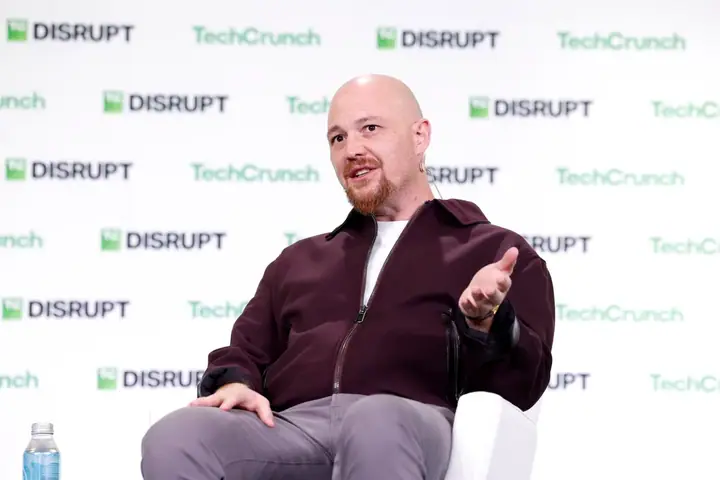
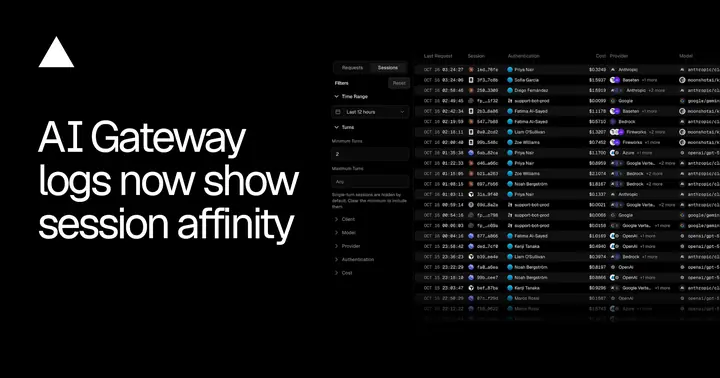
Good morning. This is dailybrief, and here are today's top stories in generative AI, for Sunday, October eighteenth. vLLM has released version zero point three two with eight hundred fourteen commits from three hundred sixty three contributors. The update adds a new POST /v1/systemone endpoint that answers choice, noul and score questions over structured state, according to the vLLM project. The release expands low-precision KV cache support, with NVFP4 KV cache now running on SM8x, SM12x and SM90 GPUs. For GLM-5.x models, FP8 KV cache on SM100 cuts KV memory per rank in half while delivering two point three to five point five percent more throughput, though with a seven to eleven percent time-to-first-token cost. The release drops Python three point ten support and requires transformers version five point sixteen point one or higher. Turning to model providers, Replit has made OpenAI its default AI provider over Anthropic, CEO Amjad Masad said Thursday at TechCrunch Disrupt. Masad cited cost, partnership and performance as reasons for the change, saying ChatGPT now performs better on the company's internal benchmarks. Replit had been a top-five customer of Anthropic until recently, according to Masad. Anthropic models remain available to Replit customers, but OpenAI is now the default, Masad clarified after the event. The shift could significantly reduce Replit's spend with Anthropic since most customers stick with defaults. In developer tools, Vercel has added a Sessions view to AI Gateway logs that groups requests into sessions and shows how session affinity routed each one. Each session displays the coding agent or app that ran it, along with cost, models, providers and cache hit rates across every turn, according to Vercel. Session affinity routes each turn to the provider that served the previous one, so the provider already has most of the prompt in cache. Developers can group requests by sending the same session ID in provider options or headers. Meanwhile, llama.cpp has released version b eleven seven one nine with CUDA twelve point eight and thirteen point four library support. The release includes builds for Ubuntu and Windows on x64 and arm64, along with ROCm ten point zero support for Ubuntu and Windows. Ollama released version zero point four zero seven, adding support for OpenAI Responses effort on non-thinking models. The update also adds PPLX Decider v one point two support to the MLX backend and lets llama-server infer the draft speculative type automatically. Also today, NVIDIA launched RTX Spark laptops with Blackwell RTX graphics and up to one hundred twenty eight gigabytes of unified memory. Laptops from ASUS, Dell, HP, Lenovo, Microsoft and MSI are available now starting at two thousand three hundred ninety nine dollars, according to NVIDIA. The company celebrated the launch with events in Berlin, Beijing, Istanbul, Seoul, San Francisco and Taipei. And finally, Meta removed language from its commercial terms that appeared to permit scraping websites of businesses with Meta accounts for AI training. Legal experts told Nieman Lab the provision looked like permission to scrape publisher websites and use content to train AI models. Meta said the terms only applied to ads and business products and clarified the language in the terms themselves. That's dailybrief for today. Every story is linked to its original source on our website.

Podcast Two-host conversation with Jessica & Eric · 5 min

Read the podcast transcript

Jessica: Okay, so Replit just switched their default AI from Anthropic to OpenAI.

Eric: Wait, Replit? They were like a top-five customer for Anthropic.

Jessica: Exactly. The CEO said it was about cost and performance.

Eric: That's a massive shift.

Jessica: This is dailybrief, I'm Jessica.

Eric: And I'm Eric. It's Sunday, October eighteenth, twenty twenty six.

Jessica: So yeah, according to TechCrunch, Replit's CEO Amjad Masad confirmed OpenAI is now the default model provider. Users can still pick Anthropic if they want, but—

Eric: But defaults drive everything.

Jessica: Right. And he mentioned they've been building these vibe-coded applications, where you basically describe what you want and the AI builds it from scratch.

Eric: I mean, that's interesting, but this really feels like it's about money more than anything.

Jessica: Yeah, he did cite cost. And apparently their enterprise business grew from two percent to fifteen percent of revenue.

Eric: Okay, that's real traction.

Jessica: Speaking of enterprise spending, NVIDIA just launched RTX Spark laptops with their new Blackwell graphics.

Eric: How much?

Jessica: Starting at two thousand three ninety nine dollars.

Eric: Of course.

Jessica: But you get up to one hundred twenty eight gigs of unified memory, which is actually pretty wild for a laptop.

Eric: Wait, unified memory meaning shared between CPU and GPU?

Jessica: Exactly. So you can run way bigger models locally without shuffling data around. ASUS, Dell, HP, Lenovo, Microsoft, MSI—they're all shipping them now.

Eric: Okay, for someone who actually needs to run models on the go, that's compelling. Expensive, but compelling.

Jessica: On the open-source side, llama dot cpp released version b eleven seven one nine with CUDA thirteen support.

Eric: That's the tool for running models locally, right?

Jessica: Yep. So now you get CUDA twelve point eight and thirteen point four library support on Ubuntu and Windows, both x64 and arm64. Plus ROCm ten for AMD GPUs.

Eric: What does CUDA thirteen actually get you?

Jessica: Newer GPU features, better performance hooks. It's mostly about keeping up with NVIDIA's latest drivers and libraries.

Eric: Cool. Makes sense.

Jessica: And vLLM put out version zero point three two with a bunch of upgrades. They added structured decision endpoints—

Eric: Okay, what does that mean?

Jessica: So there's a new endpoint at slash v one slash systemone that handles choice, noul, and score questions. Like, instead of parsing a blob of text, you just get structured answers back.

Eric: That's actually really useful.

Jessica: Yeah. And they expanded FP4 KV cache to more GPU types—SM8x, SM12x, SM90.

Eric: That's the four-bit key-value cache, right? Cuts memory use in half?

Jessica: Exactly. Though heads up, they dropped Python three point ten support.

Eric: Always something.

Jessica: Ollama also updated—version zero point four zero seven. They added support for OpenAI's Responses effort parameter on non-thinking models.

Eric: Wait, I thought effort was just for the reasoning models.

Jessica: It was, but now Ollama lets you use it more broadly. They also added PPLX Decider v one point two support on the MLX backend, and the llama-server now infers draft speculative type automatically.

Eric: That last one's nice—less config, fewer knobs to turn.

Jessica: Quick fix from OpenAI: Python SDK three point three five point one patches a bug in the Realtime API.

Eric: What broke?

Jessica: Byte reads over websockets. So if you're using the streaming voice API, this fixes how it reads data off the wire.

Eric: Okay, good to know.

Jessica: Vercel added a sessions view to their AI Gateway logs. It groups requests and shows you which provider handled each turn.

Eric: So you can see cache hit rates?

Jessica: Yep. It's all about session affinity—routing each request to the same provider so you reuse the cached prompts. You get cost, models, providers, cache hit rates, all in one view.

Eric: That's genuinely useful for debugging your spend.

Jessica: Meanwhile, Meta quietly removed some language from their commercial terms after legal experts raised red flags.

Eric: What'd they say?

Jessica: According to TechCrunch, the terms appeared to let Meta scrape the websites of any business with a Meta account for AI training. Experts at Nieman Lab flagged it, and Meta pulled it.

Eric: Did Meta say it was a mistake?

Jessica: They said the terms only applied to ads and business products, not web crawling. But... the fact it was in there at all is kind of telling.

Eric: Yeah, that's not great.

Jessica: Simon Willison updated his web-edit tool—tiny web app for browsing and editing files over Tailscale. He added copy-to-clipboard for text and images.

Eric: That's handy. I use Tailscale for that kind of thing all the time.

Jessica: Alright, that's it for today. Every story we talked about is linked to its source on the dailybrief website.

Eric: See you tomorrow.

Step 3 · 2 minutes

Top 3 stories

Simon Willison's Weblog

web-edit 0.1a2

New Models

web-edit (previously) is my tiny web app for browsing and editing files in a folder. I mainly built it for editing files on different machines via Tailscale.

  • DeepSeek 4.1 Flash
  • I added a "copy to clipboard" option for both text and image data.
  • We're going to need default hard budget caps on pretty much everything - 3rd October 2026
Read the full story at Simon Willison's Weblog
llama.cpp releases

llama.cpp releases b eleven seven one nine with CUDA thirteen support

Developer Tools

llama.cpp released version b eleven seven one nine with CUDA twelve point eight and thirteen point four library support across multiple platforms.

  • Ubuntu and Windows x64 builds now include CUDA thirteen libraries
  • Windows and Ubuntu arm64 builds also ship CUDA thirteen support
  • ROCm ten point zero support included for Ubuntu and Windows

Explain it simply

In plain words llama.cpp, a tool for running large language models locally, released a new version with support for NVIDIA's CUDA thirteen libraries on Linux and Windows.

Term to know CUDA — NVIDIA's parallel computing platform that lets programs run on GPUs

What it means for developers: CUDA thirteen support enables developers to use newer NVIDIA GPU features and libraries

Read the full story at llama.cpp releases
WIRED

OnlyFans Creators Are Pissed That Meta Lets Muse Talk Dirty

Developer Tools

On top of that, Vanniall struggles to build an audience on popular social media platforms, like Instagram, without getting in trouble.

  • So, when I tell her that Meta allows its AI agent, called Muse, to engage in explicit sexting with adult users, she seems frustrated by the decision…
  • It’s a common refrain I heard from other adult content creators, who questioned why their accounts on Meta platforms often seem restricted, while…
  • “A private, one-to-one conversation between an adult and an individualized AI agent on a platform restricted to people 18 and over is very different…
Read the full story at WIRED

Today's newsmakers

Who's making AI news

The companies that feature most in today's stories, ranked by how often and how prominently they appear.

  1. #1

    OpenAI

    3 stories today

    Steady
  2. #2

    Nvidia

    2 stories today

    ▲ 1

    +1 more story

  3. #3

    Meta

    2 stories today

    New today

    +1 more story

  4. #4

    Ollama

    1 story today

    Steady
  5. #5

    Anthropic

    1 story today

    ▼ 3

Company names and logos are trademarks of their owners, shown only to identify them.

Optional · if you have more time

More stories

9 more stories

vLLM releases

vLLM zero point three two adds structured endpoints, FP4 KV cache expansion

vLLM released version zero point three two with eight hundred fourteen commits, adding structured decision endpoints and low-precision KV cache across more GPU types.

  • Qwen3
  • New POST /v1/systemone endpoint answers choice, noul and score questions
  • NVFP4 KV cache now runs on SM8x, SM12x, and SM90 GPUs
  • Breaking changes include dropping Python three point ten support

Explain it simply

In plain words vLLM, an inference server for running large language models, released version zero point three two. The update adds endpoints for structured decisions and expands support for four-bit KV cache to more GPU types.

Term to know KV cache — stored key-value pairs that speed up text generation by reusing computations

What it means for developers: FP4 KV cache halves memory use per GPU while structured endpoints simplify decision tasks

Developer Tools
OpenAI Python SDK releases

OpenAI Python SDK three point three five point one fixes Realtime byte reads

OpenAI released Python SDK version three point three five point one, fixing beta Realtime byte reads on websockets.

  • Bug fix preserves beta Realtime byte reads on websockets
  • Released October eighteenth twenty twenty six
  • Version is a patch release addressing single issue

Explain it simply

In plain words OpenAI released a bug-fix update to its Python SDK that fixes how the Realtime API reads bytes over websocket connections.

Term to know websockets — protocol for two-way persistent connections between client and server

What it means for developers: Fixes byte-reading bug for developers using OpenAI's streaming Realtime voice API

Developer Tools
Ollama releases

Ollama zero point four zero seven adds Responses effort, PPLX Decider support

Ollama released version zero point four zero seven, allowing Responses effort on non-thinking models and adding PPLX Decider v one point two support.

  • OpenAI Responses effort parameter now works on non-thinking models
  • MLX backend adds PPLX Decider v one point two support
  • llama-server now infers draft speculative type automatically

Explain it simply

In plain words Ollama, a tool for running language models locally, released version zero point four zero seven with support for OpenAI's Responses effort parameter and PPLX Decider model.

Term to know speculative type — method for predicting next tokens to speed up text generation

What it means for developers: Responses effort support and automatic inference simplify model configuration for developers

Developer Tools
TechCrunch

Replit switches default AI provider from Anthropic to OpenAI

Replit CEO Amjad Masad said OpenAI is now the default model provider, citing cost, performance and partnership, though Anthropic models remain accessible.

  • OpenAI now default but customers can still select Anthropic models
  • Replit was previously a top-five customer of Anthropic, Masad said
  • Enterprise grew from two percent to fifteen percent of revenue

Explain it simply

In plain words Replit, an AI coding platform, changed its default AI model provider from Anthropic to OpenAI. The CEO cited better performance and lower cost, though users can still choose Anthropic.

Term to know vibe-coded applications — apps built from scratch using AI coding agents based on prompts

What it means for developers: Default changes drive most usage, potentially shifting significant revenue between AI providers

New Models
WIRED

Why AI Isn’t Ready to Tackle Our Convoluted Genomes

In fact, the human genome is less a script than a puzzle that gets harder the closer they look.

  • It’s now clear that understanding the human genome is no longer a matter of figuring out what each gene does.
  • Some are counting on outsourcing the analysis to artificial intelligence.
  • This approach is likely to be useful, but for those who crave real understanding of how the genome, and ultimately life itself, works, a…
New Models
Vercel

Vercel AI Gateway adds session affinity view to request logs

Vercel AI Gateway logs now group requests into sessions and show how session affinity routed each turn to maximize prompt cache hits.

  • Sessions view shows cost, models, providers and cache hit rates
  • Session affinity routes turns to provider that served previous turn
  • Single-turn sessions hidden until minimum turns filter cleared

Explain it simply

In plain words Vercel's AI Gateway now shows which AI provider served each part of a conversation and how much of the prompt was read from cache, helping developers see costs and routing.

Term to know session affinity — routing each request to the same provider to reuse cached prompts

What it means for developers: Visibility into cache hit rates and provider routing helps optimize costs and latency

Developer Tools
WIRED

Data Centers Have a New PR Plan: Your Kid’s Field Trip

The nonprofit 7x24 Exchange International wants to promote data centers, which they believe are "mission critical” infrastructure.

  • "Like when my mom shops online late at night because my dad is sleeping and won't know about it?
  • The story is part of a broader pattern across the data center industry.
  • Alex Molnar, a research professor at the University of Colorado Boulder and the director of the National Education Policy Center, tells WIRED that…
Chips & Infrastructure
TechCrunch

Meta removes clause allowing scraping of business account domains

Meta removed commercial terms language that appeared to permit scraping any business account's website for AI training after legal experts raised concerns.

  • Updated terms said Meta could use content from business domains
  • Legal experts told Nieman Lab provision looked like scraping permission
  • Meta said terms only applied to ads, business products, not web crawling

Explain it simply

In plain words Meta changed its commercial terms after legal experts said language appeared to let Meta scrape websites of any business with a Meta account for AI training.

Term to know web scraping — automated extraction of data from websites for other uses

Why it matters: Clarifies that Meta business accounts don't grant website scraping or AI training rights

Research
NVIDIA Blog

NVIDIA RTX Spark laptops launch starting at two thousand three ninety nine dollars

NVIDIA RTX Spark laptops with Blackwell RTX graphics and up to one hundred twenty eight GB unified memory are now available from six manufacturers.

  • Laptops from ASUS, Dell, HP, Lenovo, Microsoft and MSI available now
  • Starting price is two thousand three ninety nine dollars
  • Launch events held in Berlin, Beijing, Istanbul, Seoul, San Francisco, Taipei

Explain it simply

In plain words NVIDIA launched RTX Spark laptops with its new Blackwell graphics chips and up to one hundred twenty eight gigabytes of memory, starting at two thousand three ninety nine dollars.

Term to know unified memory — RAM shared between CPU and GPU for faster data access

Why it matters: High unified memory and Blackwell GPUs enable running larger AI models locally on laptops

Chips & Infrastructure

Last step · 1 minute

Daily quiz

5 questions on today's stories

Browse other days

How we work

Editorial standards

Primary sources first

Lab announcements, release notes and SDK changelogs come before commentary. Every story links to the original.

Only what the source says

Figures, model names and prices are taken from the published text. Where a detail is not stated, we leave it out.

Written for developers

Each story states what changed, by how much, and what it means in practice. No hype, no speculation.

Quick answers

What happened in AI on Sunday, 18 October 2026?

vLLM zero point three two brings structured endpoints and FP4 KV cache to more GPUs, while Replit switches from Anthropic to OpenAI as its default model provider. 12 stories from 9 sources are summarised on this page.

What are the top AI stories today?

1. web-edit 0.1a2. 2. llama.cpp b11719 released. 3. OnlyFans Creators Are Pissed That Meta Lets Muse Talk Dirty.

Which AI topics does today's briefing cover?

New Models (3), Developer Tools (6), Research (1), Chips & Infrastructure (2).

Where does the information come from?

Headlines and short summaries come from the public feeds of 9 publishers, including NVIDIA Blog, Ollama releases, OpenAI Python SDK releases, Simon Willison's Weblog, TechCrunch, Vercel. Every story links to the original article.

Is there an audio version of this briefing?

Yes. A voice recording covering every story is at the top of this page and is published each day.

Sources

Every headline links to the original. How it works