OpenAI introduces Rosalind Academic Plan for life sciences labs
OpenAI announced the Rosalind Academic Plan, offering eligible academic labs sponsored access to GPT-Rosalind and tools for life sciences research.
OpenAIRead the briefOpenAI
 OpenAIOpenAI introduces Rosalind Academic Plan for life sciences labs
 Hugging FaceReflection launches Beam, 501B-parameter open model with 1M-token contextSimon Willison's WeblogChirp PongOpenAITeaching students to think and learn through questions
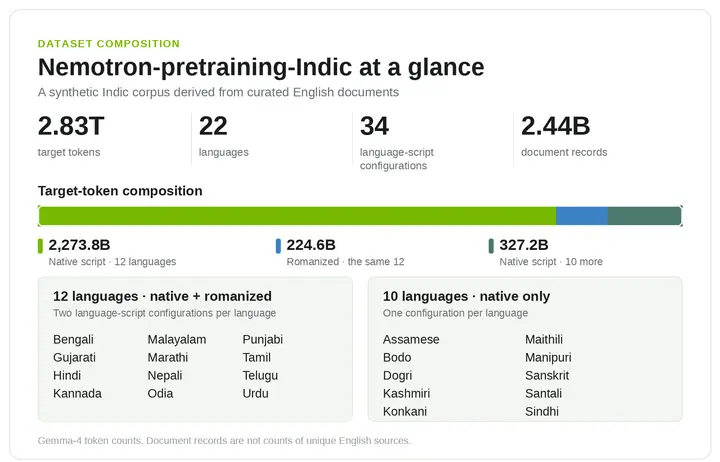
 NvidiaNvidia and IIT Madras release 2.8 trillion Indic pretraining tokens
 IBMGranite Switch 4.1 combines chat, decision and speech in one endpointHugging FaceTransformers v5.20.1 adds support for Reflection's Beam modelTechCrunchReplit CEO describes 'self-driving company' with agents doing grunt workllama.cpp releasesllama.cpp b11696 fixes Hexagon HMX FA sinks
 MetaMeta releases Muse Spark Open, 816B-parameter model for MacsMetaAI-Generated Hot Girls Are Ripping Off Comedians to Boost Their Horny Content
 GoogleGoogle launches Universal Cart shopping tool in US
OpenAI announced the Rosalind Academic Plan, offering eligible academic labs sponsored access to GPT-Rosalind and tools for life sciences research.
Daily briefing on generative AI
Updated · 12 stories · 7 sources · 3 min read
Reflection launched Beam, a 501-billion-parameter open model with one-million-token context, while Meta released Muse Spark Open, an 816-billion-parameter model designed to run locally on Macs.
Step 1 · 30 seconds
Step 2 · 3 min
Voiced by ElevenLabs from today's briefing.
Good morning. This is dailybrief, and here are today's top stories in generative AI, for Friday, October 16. Reflection has launched Beam, a 501-billion-parameter open model focused on coding and agentic work. According to Hugging Face, Beam is a mixture-of-experts model that activates 23 billion parameters per token and supports a one-million-token context window. The model is released under the Apache 2.0 license, meaning developers can run and customize it on their own infrastructure. Beam ships with a Rust-based harness and has day-zero support in transformers, vLLM, and SGLang. Reflection is offering ten thousand dollars in Hugging Face credits to developers who build the best projects using Beam. In other news, Meta has released Muse Spark Open, an 816-billion-parameter model designed to run locally on Macs. According to TechCrunch, the model requires at least one terabyte of RAM and runs best on Mac Studio equipped with the M5 Ultra chip. Meta says the model is natively multimodal and built for complex coding tasks and agentic workflows. The company demonstrated it running coding fixes and operating DaVinci Resolve video editing software. Muse Spark Open is available now through multiple API platforms. Turning to developer tools, Hugging Face released Transformers version 5.20.1 with immediate support for Beam. The update also fixes a bug that prevented models from loading on PyTorch versions before 2.8. Additional patches address issues in HunYuan-VL, DeepGEMM, and distributed checkpointing. Meanwhile, IBM introduced Granite Switch 4.1 models in eight-billion and 30-billion parameter sizes. According to Hugging Face, the models include a new Decision adapter for general decision-making and a Guardian adapter for safety tasks. They also embed Granite-Speech-5.0-Turbo-CTC, the fastest automatic speech recognition model on the OpenASR leaderboard. Because the adapters share the base model's memory cache, all three capabilities use roughly the same GPU memory as the base model alone. Also today, Nvidia and IIT Madras released Nemotron-pretraining-Indic-v1, a corpus of approximately 2.8 trillion tokens across 22 Indian languages. According to Hugging Face, the dataset includes native-script data for all 22 languages and romanized text for twelve. The teams are also releasing the open, GPU-accelerated pipeline used to generate the data, including prompts, workflows, and quality checks. Developers can use the corpus directly or adapt the pipeline to their own source material. And finally, OpenAI announced the Rosalind Academic Plan, offering eligible academic labs sponsored access to GPT-Rosalind. OpenAI said the program is designed to advance life sciences research, though pricing and availability details were not provided. That's dailybrief for today. Every story is linked to its original source on our website.
Podcast Two-host conversation with Jessica & Eric · 6 min
Jessica: Okay, so Meta just dropped an eight hundred sixteen billion parameter model that runs on a Mac.
Eric: Wait, on a Mac?
Jessica: On a Mac. If you have one terabyte of RAM.
Eric: Right, so not my Mac.
Jessica: This is dailybrief, I'm Jessica.
Eric: And I'm Eric. It's Friday, October sixteenth, twenty twenty-six.
Jessica: So yeah, Muse Spark Open. According to TechCrunch, it's got a million token context window, it's open-weight, designed for coding and agentic workflows.
Eric: But who actually has a terabyte of RAM in a Mac?
Jessica: Mac Studio with the M5 Ultra chip. That's the sweet spot they're targeting.
Eric: So this is for, what, the three people who maxed out their Mac Studio config?
Jessica: I mean, it's a real local inference play for video editors, developers doing complex coding. You get eight hundred sixteen billion parameters without sending anything to the cloud.
Eric: Okay, that's actually cool if you're in that world.
Jessica: Speaking of giant models, Reflection launched Beam today. Five hundred one billion parameters total, but it's mixture-of-experts, so only twenty three billion active per token.
Eric: Right, so it's way cheaper to run than the full parameter count suggests.
Jessica: Exactly. And it's got a million token context window, Apache two point oh license, ships with Rust harness, day-zero support in transformers and vLLM.
Eric: Wait, day-zero transformers support?
Jessica: Yeah, Hugging Face put out Transformers five point twenty point one today with Beam support baked in. You can start using it immediately.
Eric: That's actually impressive coordination.
Jessica: And it's open. So you can deploy it, customize it, fine-tune it on your own infrastructure.
Eric: That's the second frontier-scale open model this week with a million token window.
Jessica: Yep. The bar just keeps moving.
Eric: Okay, what about Granite Switch four point one? I saw IBM dropped something.
Jessica: Yeah, this one's clever. It combines chat, decision-making, and speech recognition in one endpoint.
Eric: In one endpoint?
Jessica: Same VRAM as the base model. They're using cache-efficient adapters, so you get all three capabilities without needing extra GPU memory.
Eric: And the speech part is—
Jessica: Granite-Speech-five-point-oh-Turbo-CTC. According to Hugging Face, it's the fastest ASR model on the OpenASR leaderboard.
Eric: So you can transcribe, chat, and make decisions all in one call without loading three different models.
Jessica: Right. Comes in eight billion and thirty billion sizes.
Eric: That's genuinely practical.
Jessica: Also on the open data front, Nvidia and IIT Madras released nearly three trillion pretraining tokens for Indian languages.
Eric: Three trillion?
Jessica: Two point eight trillion tokens, twenty two constitutional Indian languages in native scripts, twelve also in romanized form.
Eric: And they open-sourced the pipeline too?
Jessica: Yeah, the whole GPU-accelerated generation pipeline. Translation, quality checks, data generation—it's all there on Hugging Face.
Eric: So if you're building models for Indian languages, you just got a massive head start.
Jessica: Exactly.
Eric: What's this Rosalind Academic Plan from OpenAI?
Jessica: OpenAI announced sponsored access to GPT-Rosalind for eligible academic labs doing life sciences research.
Eric: Sponsored meaning free?
Jessica: Meaning labs may not have to pay standard API costs. No pricing or availability details yet, though.
Eric: So if you're an academic lab working on biology stuff, you might get access without blowing your grant budget.
Jessica: That's the idea.
Eric: Did you see the thing with Replit's CEO?
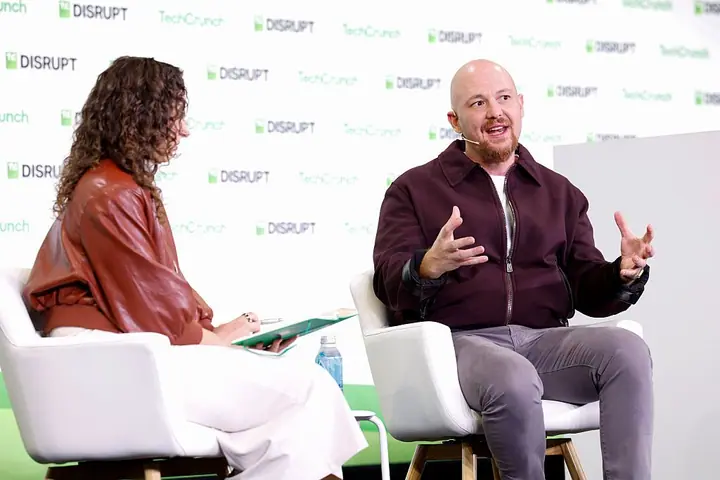
Jessica: Yeah, Amjad Masad told TechCrunch Disrupt that agents now triage support tickets and apply fixes at Replit.
Eric: So agents are doing the grunt work.
Jessica: Right. And he said human judgment is still crucial for deciding how to proceed, what to build. Teams spend more time on architecture.
Eric: The 'self-driving company.'
Jessica: That's what he called it. I think it's interesting because it's not—
Eric: It's not replacing people, it's redirecting what they do.
Jessica: Yeah, exactly.
Eric: Google launched something called Universal Cart?
Jessica: Yeah, US only for now. You save products from search and Gemini, it tracks prices, sends you alerts when things drop or come back in stock.
Eric: And checkout happens through this Universal Commerce Protocol?
Jessica: Right. It's an open standard for AI agents and retailers to handle shopping and checkout.
Eric: So if you're building a commerce agent, you can hook into Google's system.
Jessica: Yep.
Eric: Llama dot cpp had a release?
Jessica: Build eleven thousand six ninety-six. Fixes for Hexagon HMX code—that's Qualcomm Snapdragon acceleration.
Eric: So better performance on mobile and edge?
Jessica: Yeah, if you're running models on Snapdragon hardware, this update should help.
Eric: And Simon Willison made a game that syncs over chirps?
Jessica: Chirp Pong. Two players on two phones, game state sent via audio noises through the microphone. Static HTML.
Eric: That's delightful and completely impractical.
Jessica: It's a perfect Simon Willison experiment.
Jessica: That's it for today. Every story is linked to its source on the dailybrief website.
Eric: We'll see you Monday.
Step 3 · 2 minutes
OpenAI announced the Rosalind Academic Plan, offering eligible academic labs sponsored access to GPT-Rosalind and tools for life sciences research.
Explain it simply
In plain words OpenAI is giving some academic research labs access to GPT-Rosalind, a model for life sciences work. The access is sponsored, meaning labs may not have to pay.
Term to know sponsored access — free or subsidized use of a service paid for by the provider
What it means for developers: Academic researchers can use GPT-Rosalind for life sciences work without paying standard API costs
Beam is a mixture-of-experts model with 23 billion active parameters per token, released under Apache 2.0 for coding and agentic use cases.
Explain it simply
In plain words Reflection released Beam, a large open model with 501 billion parameters that activates only 23 billion per request. It supports coding tasks and one-million-token context windows under an open license.
Term to know mixture-of-experts — model architecture where each request activates only a subset of parameters
What it means for developers: Developers can deploy, customize and fine-tune a frontier-scale model on their own infrastructure
Another game experiment - I wanted to see if it was feasible to have a two player game on two separate phones running in static HTML where the networking code uses chirps sent via the microphone. It seems to work!
Today's newsmakers
The companies that feature most in today's stories, ranked by how often and how prominently they appear.
4 stories today
▲ 4+1 more story
2 stories today
▼ 1+1 more story
2 stories today
▲ 1+1 more story
2 stories today
New today+1 more story
1 story today
New todayCompany names and logos are trademarks of their owners, shown only to identify them.
Open source · for developers
New repositories gaining stars fastest over the last 30 days. Source: GitHub.
AIA plugin that provides access to AI models including DeepSeek and Kimi without requiring login or API keys.
AIA menu bar application that lets you access different AI models like DeepSeek and Claude in one place.
AIConnect an AI vision model to control a real iPhone using an ESP32 board through AirPlay and USB HID.
AIA version control system designed specifically for AI agents to use with code repositories.
AITools that enable Claude to analyze and modify PC games through reverse engineering and code generation capabilities.
AIA website framework that automatically finds trending topics and writes daily reports based on customizable sources and criteria.
AIA self-hosted personal finance application with AI advisor features for tracking net worth, investments, and debts locally.
AIA parametric 3D CAD application written in Rust that runs on desktop and web with automation support.
Optional · if you have more time
9 more stories
Celebrate Teachers’ Day with AI for Educators in Brazilian Portuguese and see how Study Mode can help teachers support active, step-by-step learning.
Nemotron-pretraining-Indic-v1 covers 22 Indian languages in native scripts and twelve in romanized form, with an open GPU-accelerated generation pipeline.
Explain it simply
In plain words Nvidia and IIT Madras created nearly three trillion tokens of training data for 22 Indian languages. They are releasing the data and the tools used to make it.
Term to know pretraining tokens — text units used to teach a model language patterns before task-specific training
What it means for developers: Model builders gain substantial Indian-language training data and can generate more with the open pipeline
IBM's Granite Switch 4.1 in eight-billion and 30-billion sizes includes a decision adapter and Granite-Speech-5.0-Turbo-CTC, the fastest ASR on OpenASR leaderboard.
Explain it simply
In plain words IBM's Granite Switch 4.1 models combine chat, decision-making and speech recognition in a single deployment. All features use roughly the same memory as the base model alone.
Term to know ASR — automatic speech recognition, converting spoken audio into text
What it means for developers: Developers get multiple capabilities—chat, decisions, transcription—without needing extra GPU memory
Hugging Face released Transformers version 5.20.1 with day-zero support for Beam and fixes for loading models on older PyTorch versions.
Explain it simply
In plain words Hugging Face updated its Transformers library to support Beam immediately at launch. The release also fixes bugs that broke model loading on older PyTorch versions.
Term to know day-zero support — library compatibility available on the same day a model is released
What it means for developers: Developers can start using Beam in Transformers workflows immediately without waiting for library updates
Amjad Masad told TechCrunch Disrupt that agents now do support triaging and patching at Replit, leaving humans to focus on judgment and architecture.
Explain it simply
In plain words Replit's CEO said AI agents now handle many routine tasks at his company, such as checking support tickets and writing patches. People focus on deciding what work matters.
Term to know agents — AI systems that perform tasks autonomously, with limited human intervention
What it means for developers: Shows how AI agents are changing developer workflows in production, not replacing but redirecting human work
The llama.cpp release corrects HMX FA sinks in hexagon code and vectorizes sinks in HMX kernels.
Explain it simply
In plain words The llama.cpp project released a fix for code that runs models on Qualcomm Snapdragon chips, improving performance on mobile and edge devices.
Term to know Hexagon NPU — Qualcomm neural processing unit for efficient AI inference on mobile chips
What it means for developers: Developers running models on Snapdragon hardware get performance improvements from corrected acceleration code
Muse Spark Open runs locally on Macs with at least one terabyte of RAM and works best on Mac Studio with M5 Ultra chip.
Explain it simply
In plain words Meta launched an open-weight model with 816 billion parameters designed to run on Apple computers. It needs very high memory—at least one terabyte of RAM.
Term to know open-weight — model whose parameters are public, offering transparency and cost efficiency
What it means for developers: Developers can run a powerful multimodal model locally for coding and video editing tasks
Last week, the stand-up comedian Julia Jasunas was on Instagram when she got a DM from a fellow comic. Did she know, her friend wrote, that a random Instagram influencer had ripped off a joke from her stand-up act?
Google's Universal Cart lets US users save products from search and Gemini, track prices, and check out via the Universal Commerce Protocol.
Explain it simply
In plain words Google released a tool that saves shopping items from different stores in one place. It alerts users when prices drop or out-of-stock items return.
Term to know Universal Commerce Protocol — open standard for AI agents and retailers to handle shopping and checkout
What it means for developers: Developers building commerce agents can integrate with Google's open checkout protocol
Last step · 1 minute
5 questions on today's stories
Browse other days
How we work
Lab announcements, release notes and SDK changelogs come before commentary. Every story links to the original.
Figures, model names and prices are taken from the published text. Where a detail is not stated, we leave it out.
Each story states what changed, by how much, and what it means in practice. No hype, no speculation.
Reflection launched Beam, a 501-billion-parameter open model with one-million-token context, while Meta released Muse Spark Open, an 816-billion-parameter model designed to run locally on Macs. 12 stories from 7 sources are summarised on this page.
1. Bringing GPT-Rosalind to academic research labs. 2. Welcome Beam: a 501B open model you can own, customize, and scale. 3. Chirp Pong.
New Models (8), Developer Tools (4).
Headlines and short summaries come from the public feeds of 7 publishers, including Hugging Face, Hugging Face Transformers releases, OpenAI, Simon Willison's Weblog, TechCrunch, WIRED. Every story links to the original article.
Yes. A voice recording covering every story is at the top of this page and is published each day.
Every headline links to the original. How it works