Jessica: So Google just dropped a new frontier model at two dollars per million input tokens.
Eric: Wait, two dollars?
Jessica: Two dollars. That's Gemini 4 Argon, out today.
Eric: Okay, that's... that's half the price of most frontier models right now.
Jessica: This is dailybrief, I'm Jessica.
Eric: And I'm Eric. It's Wednesday, October fourteenth, twenty twenty-six.
Jessica: Right, so Argon. DeepMind says it's ranking first on the Vals Index benchmark for economic sectors, and they've got this great example where the Chrome team used it to finish months of refactoring work in weeks.
Eric: And the output pricing?
Jessica: Ten dollars per million output tokens. But here's the clever part—cached input is ninety-five percent off.
Eric: That's huge for anything with long context you're reusing. Like if you're feeding in a big codebase over and over.
Jessica: Exactly. You pay once, then it's basically free to keep that context around.
Jessica: Now, they also put out a whole safety doc because Argon solved twelve out of twelve simulated cyberattack scenarios.
Eric: Twelve out of twelve?
Jessica: Yeah, up from five in the previous generation. So they're adding what they call frontier-level safety guardrails—three layers of protection, input screening, internal introspection, the works.
Eric: I mean, that makes sense. If your model's that good at finding bugs, you don't want it also good at helping attackers exploit them.
Jessica: Right. They say violations on adversarial tests dropped nearly twofold, but it does mean if you're using it for security work, you're gonna hit stricter checks on anything that looks risky.
Eric: There's also a robotics angle here?
Jessica: Oh yeah. Argon scores eighty-seven percent on the Embodied Reasoning benchmark. DeepMind says it can control a Boston Dynamics Spot quadruped for mobile manipulation tasks.
Eric: Wait, so it's driving the robot directly?
Jessica: Yeah, and it can also create MuJoCo digital twins—basically practice simulations—so the robot can rehearse moves before it tries them in the real world.
Eric: That's... honestly, that's pretty wild. You're going from prompt to physical action.
Jessica: And they say it works across the full development lifecycle. Simulation, real-time control, closed-loop steering.
Eric: Alright, but Google's not the only one dropping models this week. Meta released Muse Wonder on Monday.
Jessica: Their first frontier model. Four dollars per million input tokens, twenty for output.
Eric: So double Argon's price.
Jessica: Yeah, but TechCrunch says the benchmark scores are comparable to Fable 5.1 and GPT-6 Astra. And it scores higher on MemoryBench than Fable, Opus, or Astra.
Eric: What's MemoryBench testing?
Jessica: Long-term memory—how well it retains and synthesizes user information over extended time. Meta's calling it active memory.
Eric: That could be really useful for agents that need to keep context over days or weeks.
Jessica: Right. And they trained it at their Prometheus data center in central Ohio, which... I just like that we know the exact data center now.
Eric: Yeah, very specific.
Jessica: OpenAI also announced something today—Higgsfield. It's video generation, but now it goes past ten minutes instead of the one-minute limit.
Eric: Ten times longer. That's a big jump.
Jessica: Yeah, it's using GPT-6 Astra for the longer videos and GPT-Image-2.5 for precise visuals. OpenAI says it's a path toward voice-driven filmmaking with something called GPT-Live.
Eric: Okay, but is that actually available now, or is that the roadmap?
Jessica: Higgsfield is available. GPT-Live sounds like it's coming. But the ten-minute thing is live, and that's what matters for developers building video apps.
Eric: Hugging Face also shipped a new model. LFM2.5-24B-A2B. That's a mouthful.
Jessica: It really is. It's twenty-four billion parameters, but only two billion are active at a time, so it runs fast on local hardware.
Eric: How fast?
Jessica: A hundred eighty-four tokens per second on an Apple M5 Max. And the context window is a hundred thirty-one thousand tokens, up from thirty-two thousand.
Eric: That's a huge context window for something you can run on-device.
Jessica: Yeah, and it scores 48.09 on LiveClaw versus 38.19 for Qwen3.6, which has fifty percent more active parameters. So you're getting competitive performance at lower cost.
Eric: That's the kind of thing that makes agentic workflows on a laptop actually practical.
Jessica: Speaking of agents, there's a nice little technique from Geoffrey Huntley on Simon Willison's blog. He's using pre-commit hooks to enforce agent library use.
Eric: What's the problem he's solving?
Jessica: Agents drifting away from approved libraries. So he writes a hook that checks the git diff for direct observability calls that bypass his diagnostics module. If it finds any, it fails the commit and prompts the agent to use the right library.
Eric: Oh, that's clever. You're basically teaching the agent the rules through the commit process.
Jessica: Yeah, it's version control as a teaching layer. I really like that.
Eric: Alright, there's also some drama. Anthropic put out a report saying a Chinese model called GLM-5.3 poses a major cyberattack risk.
Jessica: Because it's open. MIT Technology Review says the model weights are publicly available for download and modification, and Anthropic's arguing that's dangerous.
Eric: I mean... the top eight models on Artificial Analysis are all closed, right?
Jessica: According to the report, yeah. But open models are only trailing closed ones by a handful of months at this point.
Eric: So this is the open-versus-closed debate all over again.
Jessica: Pretty much. And it matters because it could lead to restrictions on downloadable frontier systems, which would hit developers who want to run stuff locally.
Eric: Quick housekeeping—Ars Technica says Gemini 4 Argon is rolling out in the Gemini app and something called Antigravity, but only if you pay.
Jessica: Right. Though developers get fifty percent discounted API rates through November.
Eric: And apparently Google wants to host your personal vibe-coded apps in the Play Store now?
Jessica: Yeah, Ars mentioned they're planning to help turn AI-generated apps into wide releases. No details yet, but... that'll be interesting to watch.
Eric: Oh, and Epic Games is reportedly pivoting to an AI-first game development model.
Jessica: Ars says no more hand-written code or AI-free art for their delayed Marvel slash Star Wars shooter.
Eric: That'll go over well.
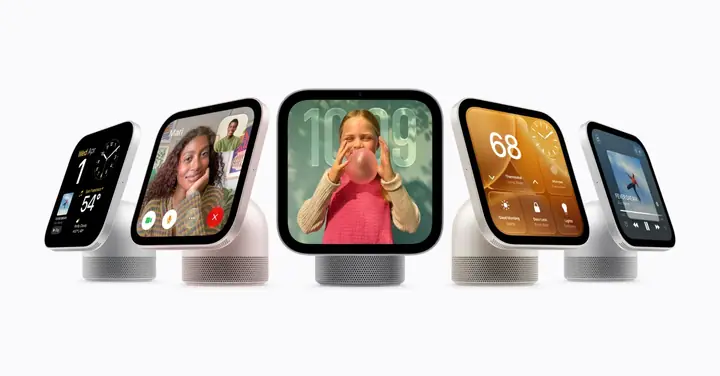
Jessica: And Apple launched HomeView, their first smart display with Siri AI built in. The Verge got a first look and says it's gorgeous.
Eric: Natural-language voice interactions, smart home control, the whole thing.
Jessica: Yep. Apple's finally in the home display game.
Jessica: That's it for today. Every story is linked to its source on the dailybrief website.
Eric: See you tomorrow.