Schlotzsky's franchisee cuts menu repricing time 95% with ChatGPT Work
A Schlotzsky's and Cinnabon franchisee reduced menu repricing time by ninety-five percent using ChatGPT Work, OpenAI said.
OpenAIRead the briefOpenAI
 OpenAISchlotzsky's franchisee cuts menu repricing time 95% with ChatGPT WorkOpenAIALTK-Evolve reaches 67.5% on tau-squared-bench using GPT-4.1 guidelines
 GoogleGemini's Personal Intelligence coming to cars, Ars Technica reportsOpenAITerminal X eval agent matches senior investor judgment 88.6% with GPT-6.1Simon Willison's WeblogBattle Drones RTS game adds audio-based multiplayer between nearby devices
 NvidiaNVIDIA Cosmos3-H-Dreams brings generative surgery simulation to clinical cases
 Hugging FaceFairStress benchmark measures LLM decision robustness across demographics
 DeepSeekDeepSeek open-sources DeepInfer inference stack serving 155T tokens daily
 AnthropicAnthropic drafts bill allowing model halt if 50-plus deaths foreseeablellama.cpp releasesllama.cpp b11786 adds CPU gelu-quick without fp16 tableDeepSeekChina proposes frontier AI approval; DHS restricts DeepSeek procurementTechCrunchElectric Plant raises $11.2M for AI model deciphering plant electrical signals
A Schlotzsky's and Cinnabon franchisee reduced menu repricing time by ninety-five percent using ChatGPT Work, OpenAI said.
Daily briefing on generative AI
Updated · 12 stories · 8 sources · 3 min read
DeepSeek open-sourced DeepInfer, its production inference stack claiming eighty percent margins and seventy-two hour caching, while Anthropic circulated draft legislation defining when AI releases could be blocked.
Step 1 · 30 seconds
Step 2 · 3 min
Voiced by ElevenLabs from today's briefing.
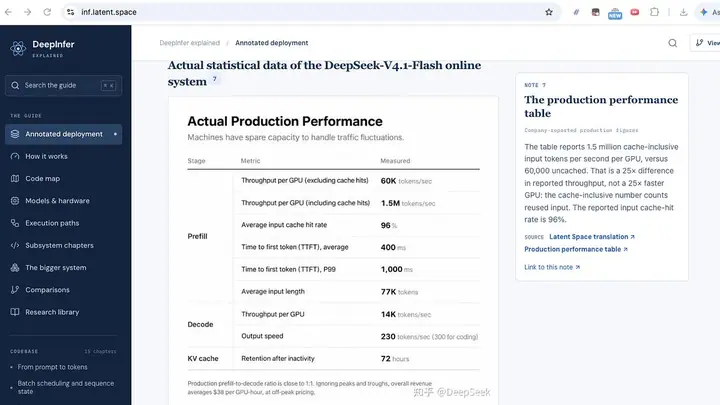
Good morning. This is dailybrief, and here are today's top stories in generative AI, for Wednesday, October twenty-first. DeepSeek has open-sourced DeepInfer, the production inference engine behind its V4.1 Flash model. The company said the system serves one hundred fifty-five trillion tokens per day from a single cluster, achieving a ninety-six percent input cache hit rate. DeepSeek reported an average time to first token of four hundred milliseconds and generation speeds reaching two hundred thirty tokens per second. According to estimates cited in coverage, the system generates over eighty percent gross margin when selling tokens. The release includes support for distributed inference and speculative decoding on NVIDIA and Huawei Ascend platforms. DeepSeek said prompt caching can extend up to seventy-two hours, compared to twelve hours that OpenAI announced recently. In other news, Anthropic has been circulating draft legislation on AI safety that would allow courts to block model releases under specific circumstances. According to Politico, the bill would permit halting distribution if a model poses foreseeable, imminent risk of over fifty deaths or more than one billion dollars in property damage. The legislation proposes independent evaluators registered with the Commerce Department assess catastrophic risks. Evaluators would have seventy-two hours to notify Commerce when they identify imminent danger. The draft expressly forbids any federal agency from halting model distribution without a judge's approval. An Anthropic spokesperson confirmed the draft represents proposals from the company's Advanced AI Framework. Turning to benchmarks, ALTK-Evolve has topped the tau-squared-bench leaderboard on customer service tasks using GPT-4.1. Hugging Face said the system reached sixty-seven point five percent Pass-to-the-four on retail tasks, scoring above every retail entry in the October twelve leaderboard snapshot. The approach learns behavioral guidelines by analyzing the agent's own training attempts and appending them to the system prompt. No weight updates or human annotation are required. Meanwhile, Terminal X reported its Eval Agent matches senior investor judgment eighty-eight point six percent of the time using GPT-6.1 Sol. OpenAI said the system grades outputs against a fifty-four criterion rubric and catches twenty-five percent more deviations from a fund's mandate. Also today, NVIDIA released Cosmos3-H-Dreams, a generative surgical simulator trained on clinical cholecystectomy video and robot kinematics. Hugging Face said the system runs interactively on a single NVIDIA RTX PRO six thousand GPU. The model uses twenty-eight action dimensions and is powered by Cosmos three with FlashDreams acceleration. And finally, llama.cpp released version b11786, which computes f32 gelu-quick and geglu-quick activation functions on CPUs without requiring the fp16 lookup table. The release keeps the previous table path as an alternative and adds a VXE gelu-quick computation path. That's dailybrief for today. Every story is linked to its original source on our website.
Podcast Two-host conversation with Jessica & Eric · 7 min
Jessica: So DeepSeek just open-sourced the actual inference engine they use in production.
Eric: Wait, the thing serving a hundred fifty-five trillion tokens a day?
Jessica: That exact stack. With the prompt caching, the whole thing.
Eric: Okay, that's wild.
Jessica: This is dailybrief, I'm Jessica.
Eric: And I'm Eric. It's Wednesday, October twenty-first, twenty twenty-six.
Jessica: So yeah, DeepSeek released DeepInfer. It's built on vLLM, they credit SGLang and TRRTLLM, but this is their production setup. They're claiming ninety-six percent cache hit rates and fourteen thousand output tokens per second.
Eric: And they say they're running eighty percent inference margins with this?
Jessica: According to Latent Space, yeah. The prompt caching goes up to seventy-two hours.
Eric: That's... honestly that's the part I care about most. If those cache numbers hold up in other workloads, that changes the economics pretty fast.
Jessica: Right, and it's open-source, so you can just go look at how they're doing it.
Eric: Speaking of production stuff, what's this Terminal X thing?
Jessica: So Terminal X built an eval agent using GPT six point one Sol, and it matched senior investor judgment eighty-eight point six percent of the time. OpenAI reported this.
Eric: What's it evaluating?
Jessica: Investment fund mandate compliance. They've got a fifty-four criterion rubric, and it catches twenty-five percent more mandate deviances than before.
Eric: Eighty-eight point six percent expert match is... that's actually a useful benchmark if you're building compliance tools.
Jessica: Yeah, and it's GPT six point one, so not even the bleeding edge.
Jessica: Actually, speaking of older models—there's this ALTK-Evolve thing that scored sixty-seven point five percent on tau-squared-bench retail tasks using GPT four point one.
Eric: Four point one? That's ancient.
Jessica: Right? But they used it to extract behavioral rules from the system's own training attempts. No weight updates, no human annotation. It topped the October twelve retail leaderboard, according to Hugging Face.
Eric: So it's learning guidelines, not retraining the model.
Jessica: Exactly. You just append the learned rules and run the same model.
Eric: Huh. That's actually pretty clever if you're trying to improve agent performance without the compute bill.
Jessica: Okay, NVIDIA released something called Cosmos three H Dreams, and it is... it's a real-time generative surgical simulator.
Eric: A what now?
Jessica: It generates realistic surgical video as you move virtual instruments. Trained on clinical cholecystectomy video and robot kinematics. Runs on a single RTX PRO six thousand, according to Hugging Face.
Eric: So you're not modeling physics, you're just—
Jessica: —generating what it would look like. It's a world foundation model. It learns the visual dynamics from video instead of explicit geometry.
Eric: That's... honestly that feels like a big deal for surgical training. If it actually looks right.
Jessica: Yeah, and it uses twenty-eight action dimensions, so it's tracking pose, gripper, all of that.
Eric: On the much lighter end of things, Simon Willison built a game?
Jessica: He did! Battle Drones, it's a Command and Conquer style RTS. He used Claude Fable five and Claude Code with TypeScript. Nine buildings, seven ground vehicles, six aerial vehicles.
Eric: And the multiplayer works how?
Jessica: Audio. Two nearby phones transmit game state through sound to synchronize.
Eric: That's delightfully weird.
Jessica: It's also got AI versus AI mode with different personalities. He calls it vibe coding on his blog—just describing features to the AI without reviewing the code.
Eric: I mean, if it gets you to a playable prototype...
Jessica: Okay, policy corner. Anthropic circulated draft legislation that would let judges block AI releases if over fifty deaths or a billion dollars in damage is foreseeable.
Eric: Wait, Anthropic wrote a bill?
Jessica: TechCrunch says Politico reported it. Independent evaluators registered with the Commerce Department would assess catastrophic risk. They'd have seventy-two hours to notify Commerce of imminent risk, and no federal agency could halt distribution without judge approval.
Eric: So you'd need a court order, not just an agency decision.
Jessica: Right. It's defining the thresholds—fifty deaths or a billion in damage.
Eric: That's... I don't know how you forecast that, but at least it's specific.
Jessica: And then internationally, China's MOFCOM proposed requiring pre-approval for sharing frontier models across borders, while DHS blocked DeepSeek from federal civilian procurement. This is from Interconnects.
Eric: So DeepSeek the company and the models can't be used in US government contracts?
Jessica: Correct. Though it's unclear how that applies to finetuned or derivative models.
Eric: And China's doing approvals but with automatic approvals for open-source?
Jessica: That's what the proposal includes, yeah.
Eric: So everyone's drawing lines, just in different places.
Jessica: Quick one—there's a new benchmark called FairStress on Hugging Face. It tests whether models resist persuasive arguments equally across demographic groups.
Eric: So like, are you harder to persuade away from the right answer depending on who benefits?
Jessica: Exactly. Three hundred two-candidate scenarios across twenty-nine domains. Hiring, lending, healthcare, housing, criminal justice.
Eric: That's a good test to have.
Jessica: Uh, a Schlotzsky's and Cinnabon franchisee cut menu repricing time ninety-five percent with ChatGPT Work, OpenAI said. Also cut cash reconciliation ninety-four percent.
Eric: That freed up a hundred thousand dollars in cash flow?
Jessica: Yep. Just workflow automation for a franchise operator.
Eric: Gemini's Personal Intelligence is coming to cars, according to Ars Technica, who suggested people audit their settings.
Jessica: Yeah, no technical specs, just the privacy reminder.
Eric: Oh, and Electric Plant raised eleven point two million for a model that interprets electrical signals from plants.
Jessica: It's called Bombadil. Works on about a hundred twenty-five species, sensors cost tens of dollars. TechCrunch says they're claiming twenty percent water reduction while boosting yields.
Eric: That's... okay, that's cool if it works.
Jessica: And llama dot cpp released b11786, which computes f32 gelu-quick without the fp16 table.
Eric: Just updated CPU activation paths, nothing dramatic.
Jessica: That's it for today. Every story is linked to its source over on the dailybrief website.
Eric: We'll see you tomorrow.
Step 3 · 2 minutes
A Schlotzsky's and Cinnabon franchisee reduced menu repricing time by ninety-five percent using ChatGPT Work, OpenAI said.
Explain it simply
In plain words A restaurant franchise owner used ChatGPT to speed up menu pricing and cash counting, saving enough time to free up significant cash.
Term to know workflow — sequence of connected tasks automating a business process
What it means for developers: Developers see ChatGPT Work applied to operational workflows in franchise restaurant settings
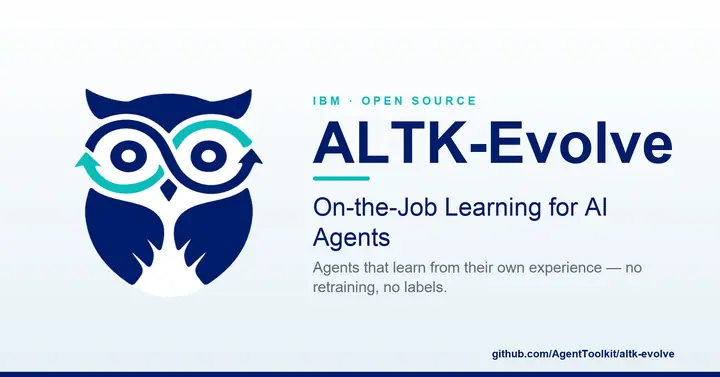
ALTK-Evolve scored sixty-seven point five percent Pass-to-the-four on tau-squared-bench retail tasks using learned guidelines with GPT-4.1, according to Hugging Face.
Explain it simply
In plain words A customer service agent system learned rules from its own attempts and scored higher than other retail entries on a benchmark, all using an older model.
Term to know Pass-to-the-four — percentage of tasks solved correctly in all four independent attempts
What it means for developers: Developers can improve agent performance by appending learned guidelines without retraining model weights
Gemini's Personal Intelligence feature is coming to cars, Ars Technica reported, suggesting users audit their Gemini settings.
Explain it simply
In plain words Google's Gemini AI assistant will be available in cars, prompting a tech publication to suggest users check their privacy preferences.
Term to know Personal Intelligence — Gemini feature using personal data to provide contextual assistance
What it means for developers: Developers building automotive integrations should note Gemini's expansion into vehicle environments
Today's newsmakers
The companies that feature most in today's stories, ranked by how often and how prominently they appear.
4 stories today
New today+1 more story
3 stories today
New today+2 more stories
2 stories today
New today+1 more story
2 stories today
▼ 3+1 more story
1 story today
New todayCompany names and logos are trademarks of their owners, shown only to identify them.
Open source · for developers
New repositories gaining stars fastest over the last 30 days. Source: GitHub.
AIA JavaScript plugin for dsh that provides free access to AI models including DeepSeek and Kimi without requiring registration or API keys.
AIA Go menu bar application that provides centralized access to different AI coding agents running on models like DeepSeek and Claude.
AIAn open-source parametric 3D CAD application written in Rust that runs on desktop, web, and supports automation through MCP.
AIA Python tool that enables Claude Code to mod PC games through reconnaissance, reverse engineering, and code generation capabilities.
AIA TypeScript framework for building automated news sites that find trending topics and generate daily reports based on customizable sources.
AIA C project that lets AI vision models control a real iPhone using an ESP32 via AirPlay and USB HID.
AIA Python tool that adds audio processing capabilities to coding agents, enabling them to hear, review, and generate sound on CPU.
AIWebGPU shader components that work with React, Vue, Svelte, Solid, vanilla JavaScript, and Framer for visual effects.
Optional · if you have more time
9 more stories
Terminal X's Eval Agent matched senior investor judgment eighty-eight point six percent using GPT-6.1 Sol against a fifty-four criterion rubric, OpenAI said.
Explain it simply
In plain words An evaluation system using GPT-6.1 matched expert investor decisions nearly ninety percent of the time when checking compliance with investment rules.
Term to know rubric — structured scoring guide with multiple evaluation criteria
What it means for developers: Developers building compliance tools can reference eighty-eight point six percent expert-match rate as benchmark
Simon Willison built Battle Drones, a Command and Conquer-style real-time strategy game with multiplayer using audio to synchronize state, according to his blog.
Explain it simply
In plain words A developer built a mobile-friendly strategy game using AI coding assistants that lets two nearby phones play together by transmitting game data through sound.
Term to know vibe coding — building software by describing desired features to AI without reviewing code
What it means for developers: Developers see example of iterative AI-assisted game development reaching playable multiplayer prototype
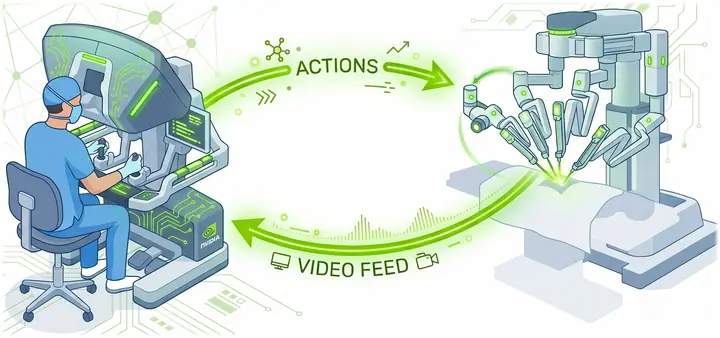
NVIDIA released Cosmos3-H-Dreams, a real-time generative surgical simulator trained on clinical cholecystectomy video and robot kinematics, according to Hugging Face.
Explain it simply
In plain words NVIDIA made a simulator that generates realistic surgical video in real time as you move virtual instruments, trained on recordings from actual operations.
Term to know world foundation model — model learning visual scene dynamics from video instead of explicit geometry
What it means for developers: Developers can build interactive surgical training environments without explicitly modeling physics or tissue deformation
FairStress tests whether models resist persuasive arguments equally across demographic groups when making high-stakes decisions, Hugging Face said.
Explain it simply
In plain words A new benchmark checks whether AI systems are equally hard to persuade away from correct decisions regardless of which demographic group benefits.
Term to know adversarial prefix — persuasive argument designed to change a model's decision
What it means for developers: Developers can test if models apply consistent decision criteria across protected demographic groups
DeepSeek released DeepInfer, its production inference engine, with up to seventy-two hour prompt caching and claimed eighty percent inference margins.
Explain it simply
In plain words DeepSeek made public the software it uses to run AI models in production. The company said it serves one hundred fifty-five trillion tokens daily with ninety-six percent cache hit rates.
Term to know prompt caching — storing parts of previous requests to avoid recomputing them
What it means for developers: Developers get open-source access to production-grade inference optimization achieving over eighty percent margins
Anthropic circulated draft legislation allowing judges to block AI releases if over fifty deaths or one billion dollars damage is foreseeable, Politico reported.
Explain it simply
In plain words Anthropic shared a proposed law that would let courts stop an AI model's release if it could kill over fifty people or cause a billion dollars in damage.
Term to know catastrophic risk — potential for mass death or billion-dollar damage from AI release
What it means for developers: Developers could face court-ordered release blocks if evaluators find foreseeable harm above defined thresholds
llama.cpp released b11786, computing f32 gelu-quick and geglu-quick without the fp16 table, according to the project's release notes.
Explain it simply
In plain words The llama.cpp library updated how it computes certain activation functions on CPUs, removing the need for a lookup table.
Term to know gelu-quick — fast approximation of Gaussian Error Linear Unit activation function
What it means for developers: Developers get updated CPU computation paths for activation functions in llama.cpp inference
China's MOFCOM proposed requiring pre-approval for international sharing of frontier models, while DHS blocked DeepSeek from federal civilian procurement, Interconnects reported.
Explain it simply
In plain words China proposed a system requiring government approval before sharing advanced AI internationally, while the United States banned DeepSeek from government contracts.
Term to know Entity List — Commerce Department roster restricting companies' access to American technology
What it means for developers: Developers face new regulatory frameworks around open model distribution and procurement eligibility
Electric Plant raised eleven point two million dollars seed funding for Bombadil, a language model interpreting electrical signals from plants, TechCrunch reported.
Explain it simply
In plain words A startup trained an AI model to understand the electrical signals plants naturally produce, aiming to tell growers exactly what their crops need.
Term to know cambium — layer of living tissue just under bark where electrical signals flow
What it means for developers: Developers in agriculture can reference AI approach to interpreting biological electrical signals
Last step · 1 minute
5 questions on today's stories
Browse other days
How we work
Lab announcements, release notes and SDK changelogs come before commentary. Every story links to the original.
Figures, model names and prices are taken from the published text. Where a detail is not stated, we leave it out.
Each story states what changed, by how much, and what it means in practice. No hype, no speculation.
DeepSeek open-sourced DeepInfer, its production inference stack claiming eighty percent margins and seventy-two hour caching, while Anthropic circulated draft legislation defining when AI releases could be blocked. 12 stories from 8 sources are summarised on this page.
1. Franchisee reconciles cash in 94% less time with ChatGPT Work. 2. ALTK-Evolve: How learned memory tops the τ²-bench leaderboard on customer service tasks without a frontier model. 3. Gemini's Personal Intelligence is coming to cars.
New Models (11), Developer Tools (1).
Headlines and short summaries come from the public feeds of 8 publishers, including Ars Technica, Hugging Face, Interconnects, Latent Space, OpenAI, Simon Willison's Weblog. Every story links to the original article.
Yes. A voice recording covering every story is at the top of this page and is published each day.
Every headline links to the original. How it works