OpenAI models coming to Google Cloud Marketplace through Model Garden
OpenAI and Google Cloud announced they are bringing OpenAI frontier models and Codex workflows to Gemini's Model Garden, available through Google Cloud Marketplace.
Daily briefing on generative AI
Updated · 12 stories · 9 sources · 3 min read
DeepSeek open-sourced DeepInfer, its production inference stack serving 155 trillion tokens daily with 96% cache hits and over 80% margins, while Recursive released Flint, a 40-billion-parameter coding model now available through Ollama.
Step 1 · 30 seconds
Step 2 · 3 min
Voiced by ElevenLabs from today's briefing.
Good morning. This is dailybrief, and here are today's top stories in generative AI, for Thursday, October 22nd. DeepSeek has open-sourced DeepInfer, the production inference stack behind its V4.1 Flash model. According to DeepSeek, the system serves 155 trillion tokens daily from a single cluster. The company reports a 96 percent input cache hit rate and 400 millisecond average time to first token. Generation reaches 230 tokens per second, rising to 300 for coding tasks. At current pricing, Latent Space estimates the system generates over 80 percent inference margins. In other news, Recursive has released Flint, a 40-billion-parameter coding model now available through Ollama. CEO Richard Socher said nearly every aspect of the model pipeline was improved by the company's Eureka Machine recursive AI system. The model uses a mixture-of-experts architecture with 2.5 billion parameters active per token. Recursive reports benchmark scores of 54.9 percent on Terminal-Bench 2.1 and 74.2 percent on SWE-bench Verified. The model carries an Apache 2.0 license and supports a 262,000-token context window. Ollama version 0.40.8 adds support for Flint. The release currently supports MacOS only. Support for other GPU platforms will arrive in a subsequent release. Also today, NVIDIA released Kumo Relational, a pre-trained foundation model for relational databases. According to NVIDIA, the model makes predictions directly on enterprise databases without task-specific training or feature engineering. It gathers up to 10,000 historical examples as context and predicts outcomes in a single forward pass. NVIDIA said Kumo Relational outperforms supervised models across 41 tasks on 15 databases. On the SAP SALT enterprise benchmark, it beats AutoGluon ensembles by 8 percent in mean reciprocal rank. The model scales to databases with over 500 billion rows and is available as an NVIDIA NIM. Turning to developer tools, Google released version 2.32.0 of its Generative AI Python SDK. The update adds Live API in-session context updates through a new send_context_update function. It also adds base_voice to PromptedVoice and generation_output_config to GenerateContentConfig. Bug fixes include proper base64 encoding for inline bytes in Live send_tool_response. Meanwhile, OpenAI and Google Cloud announced they are bringing OpenAI frontier models to Gemini's Model Garden. The models will be available through Google Cloud Marketplace. Codex workflows are also included in the offering. And finally, researchers publishing the VocabX paper report a 77 percent reduction in measured inference cost by specializing a model's vocabulary. Working with a Portuguese essay grader running on Qwen3-4B, they rebuilt the tokenizer vocabulary without changing the base model. The original Qwen vocabulary contained 151,669 entries for many languages and domains. The specialized version reduced both token fragmentation and vocabulary scoring overhead. That's dailybrief for today. Every story is linked to its original source on our website.
Podcast Two-host conversation with Jessica & Eric · 7 min
Jessica: DeepSeek just open-sourced the actual inference engine they use in production.
Eric: Wait, the real one?
Jessica: The real one. Serving a hundred and fifty-five trillion tokens a day.
Eric: Okay, that's wild.
Jessica: This is dailybrief, I'm Jessica.
Eric: And I'm Eric. It's Thursday, October twenty-second, twenty twenty-six.
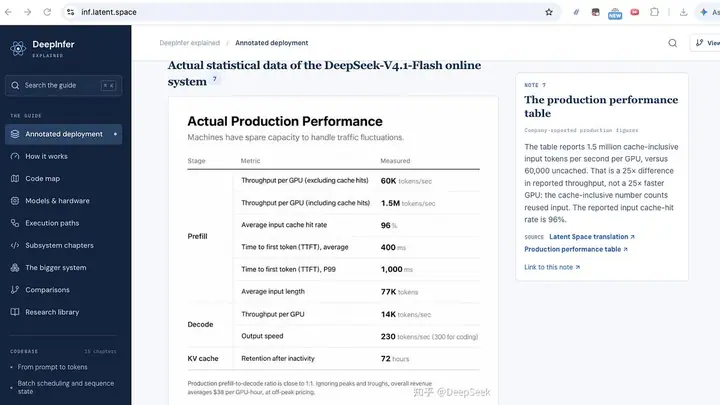
Jessica: So DeepInfer is what they're calling it. And the numbers are... honestly kind of crazy. Ninety-six percent input cache hit rate, four hundred millisecond time to first token, two hundred and thirty tokens per second generation speed.
Eric: And they claim over eighty percent margin at their current pricing?
Jessica: According to them, yeah. That's at fifteen cents per million input tokens and sixty cents output.
Eric: That cache hit rate is doing a lot of work there.
Jessica: Right. Ninety-six percent means they're barely recomputing anything. They're just serving cached results for almost every request.
Eric: Which makes sense if you think about how many prompts probably start the same way.
Jessica: Okay, next one. Recursive released a coding model called Flint, and the interesting part is how they built it.
Eric: Recursive... that's the startup with the four-point-six-five billion dollar valuation?
Jessica: Yeah, Google Ventures and NVIDIA backed. So Flint is a forty-billion-parameter model, but according to CEO Richard Socher, nearly every aspect of the pipeline was improved by their Eureka Machine system.
Eric: Which is an AI building the AI.
Jessica: Exactly. The Eureka Machine devised new training methods, architectures, even chip-optimized code. They're saying this let a small team build something competitive really fast.
Eric: How competitive are we talking?
Jessica: Benchmark scores show it outperforms similar-size models on coding tasks. That's from WIRED, but no specific numbers in what I saw.
Eric: Hmm. I mean, the idea is interesting—
Jessica: It is, but yeah, we need to see it in practice.
Eric: Can we actually run it yet?
Jessica: Yes! Ollama zero-point-four-oh-point-eight just added it. It's a mixture-of-experts model with two-point-five billion active parameters per token, two hundred and sixty-two thousand token context window.
Eric: Two hundred and sixty-two K context. That's huge for a coding model.
Jessica: Right, so you can fit a lot of code in there. Scores are fifty-four-point-nine percent on Terminal-Bench two-point-one, seventy-four-point-two on SWE-bench Verified. Apache two-point-oh licensed.
Eric: MacOS only right now though.
Jessica: For now. Other GPU platforms coming.
Eric: Okay, I need to talk about this game someone built.
Jessica: Battle Drones?
Eric: Yes. Simon Willison built a full Command and Conquer-style RTS game in the browser using Claude Code across three hundred and twenty-one commits.
Jessica: Mostly through high-level prompts, right?
Eric: Yeah, he calls it vibe coding. Just giving it instructions without reviewing the generated code much. And it has nine buildings, thirteen vehicle types, six maps, AI personalities...
Jessica: And multiplayer that synchronizes through audio?
Eric: Yeah, it uses sound to send data between nearby devices. Which is honestly kind of brilliant and ridiculous at the same time.
Jessica: I love that this is possible now.
Eric: Speaking of things I didn't think were possible... NVIDIA released something called Kumo Relational.
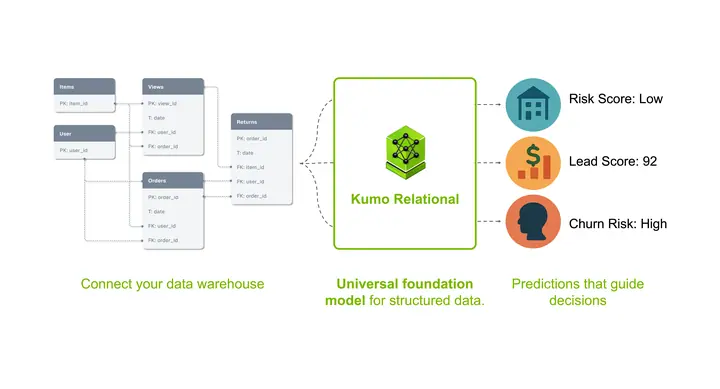
Jessica: This one's clever. It's a pre-trained foundation model for relational databases that makes predictions on up to ten thousand historical examples without task-specific training.
Eric: So no feature engineering?
Jessica: No feature engineering. You just point it at your database and ask it to predict. NVIDIA says it outperforms supervised models across forty-one tasks on fifteen databases.
Eric: That's... that eliminates weeks of work.
Jessica: Exactly. And it scales to databases with five hundred billion-plus rows. It's available as an NVIDIA NIM.
Eric: Who's this for, like enterprise data teams?
Jessica: Yeah, anyone running predictions on business databases. Fraud detection, churn prediction, that kind of thing.
Eric: Okay, there's a cost story that actually caught my eye.
Jessica: The essay grader?
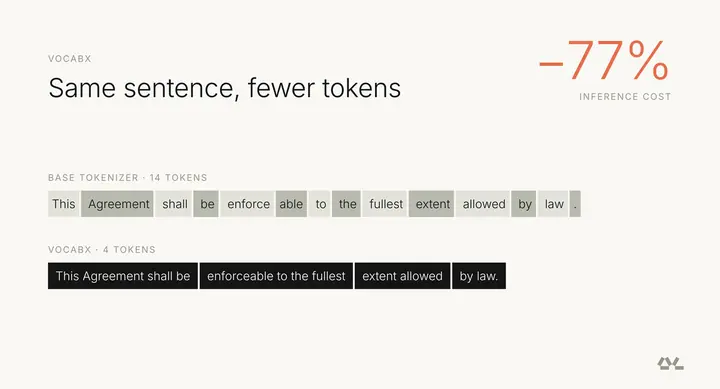
Eric: Yeah. A company running a Portuguese essay grader on Qwen three-four B cut their measured inference cost by seventy-seven percent.
Jessica: By rebuilding the vocabulary.
Eric: Right. They didn't change the base model at all. They just specialized the tokenizer for their domain. The original Qwen tokenizer had a hundred and fifty-one thousand six hundred and sixty-nine entries for many languages.
Jessica: And they only needed Portuguese essay vocabulary.
Eric: Exactly. So they reduced tokens per output and cut the vocabulary scoring overhead. Seventy-seven percent cost reduction.
Jessica: That's a huge deal for anyone running single-domain applications at scale.
Eric: Yeah, and it's something you can do before training, according to the VocabX paper.
Jessica: Alright, partnership news. OpenAI models are coming to Google Cloud Marketplace through Model Garden.
Eric: Wait, really?
Jessica: Yep. OpenAI and Google Cloud announced it. Frontier models and Codex workflows will be available through Google's platform.
Eric: So if I'm already on Google Cloud, I don't have to switch vendors to use GPT models.
Jessica: Right. You access them alongside Gemini and everything else in Model Garden.
Eric: Huh. That's surprisingly practical.
Jessica: Ars Technica also reported it, so it's confirmed from multiple sources.
Eric: Quick developer tools update. Google released version two-point-thirty-two of its Generative AI Python SDK.
Jessica: The Live API got in-session context updates.
Eric: Yeah, through a new send context update function. So you can change context mid-conversation instead of restarting.
Jessica: That's useful. Also adds base voice to prompted voice and some bug fixes.
Eric: Nothing huge, but if you're using the Live API, it's worth updating.
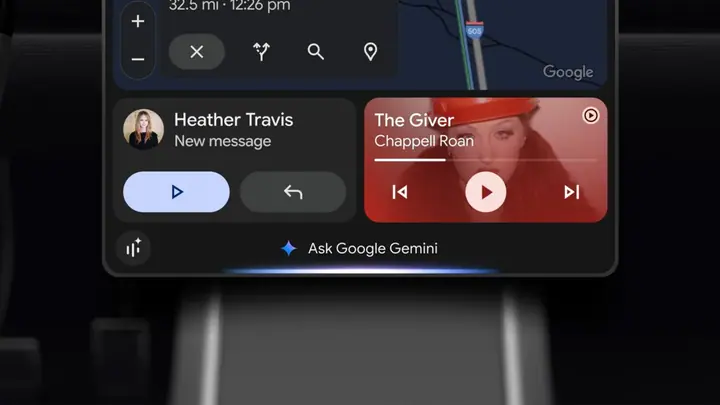
Jessica: We've also got links to stories about AT&T using OpenAI for legal work, ChatGPT Ads expanding to twenty-six new countries with over a hundred thousand advertisers, and Gemini coming to cars.
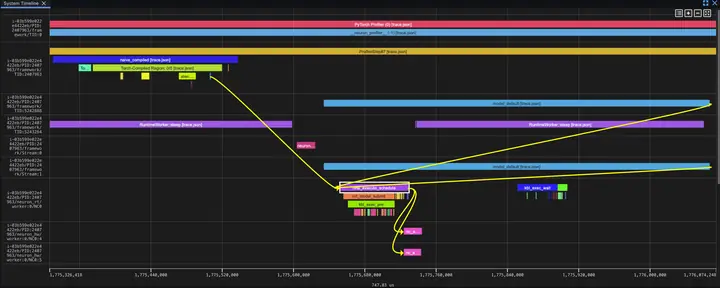
Eric: And a profiling guide for TorchNeuron on AWS Trainium if you're optimizing training.
Jessica: Every story is linked to its source on the dailybrief website.
Eric: We'll see you tomorrow.

Step 3 · 2 minutes
OpenAI and Google Cloud announced they are bringing OpenAI frontier models and Codex workflows to Gemini's Model Garden, available through Google Cloud Marketplace.
Explain it simply
In plain words OpenAI's models will soon be available through Google's cloud platform. Developers using Google Cloud will be able to access OpenAI models alongside Google's own.
Term to know Model Garden — Google Cloud's catalog of AI models from multiple providers
What it means for developers: Developers on Google Cloud gain access to OpenAI models without switching platforms or vendors.
NVIDIA released Kumo Relational, a pre-trained foundation model for relational databases that makes predictions on up to 10,000 historical examples without task-specific training.
Explain it simply
In plain words NVIDIA built a model that makes predictions directly on business databases without the usual weeks of data preparation. It works by gathering examples and predicting in one step.
Term to know feature engineering — manual process of selecting and transforming raw data into model inputs
What it means for developers: Eliminates weeks of feature engineering and per-task training, turning new predictions into queries.
Google released version 2.32.0 of its Generative AI Python SDK with Live API in-session context updates through send_context_update and new generation output configuration.
Explain it simply
In plain words Google updated its Python library for AI development. The new version lets developers update context during live conversations and fixes several bugs.
Term to know in-session context updates — changing the conversation context while a live session is running
What it means for developers: Developers can now update Live API context mid-session instead of restarting conversations.
Today's newsmakers
The companies that feature most in today's stories, ranked by how often and how prominently they appear.
3 stories today
Steady4 stories today
▲ 3+3 more stories
3 stories today
▼ 1+2 more stories
2 stories today
▲ 2+1 more story
1 story today
New todayCompany names and logos are trademarks of their owners, shown only to identify them.
Open source · for developers
New repositories gaining stars fastest over the last 30 days. Source: GitHub.
AIA plugin that provides free access to AI models including DeepSeek and Kimi without requiring login or API keys.
AIA menu bar application that lets you access multiple AI coding models like DeepSeek and Claude Code from one interface.
AIAn open-source parametric CAD application written in Rust that runs on desktop, web, and supports automation through MCP.
AITools that enable Claude to mod PC games through reconnaissance, reverse engineering, and code generation capabilities.
AIA website framework that automatically finds trending topics and writes daily reports based on customizable sources and criteria.
AIConnects an AI vision model to control a real iPhone using an ESP32 via AirPlay and USB HID.
AIAdds audio capabilities to AI coding agents, enabling them to process sound and generate audio output on CPU only.
AIA Mac and iPhone companion app that monitors AI coding agents including Claude Code, Cursor, and others.
Optional · if you have more time
9 more stories
AT&T is working with OpenAI to make legal knowledge easier to access. Learn how its LegalEdge team is rethinking intake and scaling legal judgment.
From local businesses to global brands, more advertisers can now reach people as they explore, compare and decide what to buy in ChatGPT.
A company running a Portuguese essay grader on Qwen3-4B reduced measured inference cost by 77% by rebuilding the vocabulary without changing the base model, according to VocabX paper.
Explain it simply
In plain words Researchers found that rebuilding how a model splits text into tokens can dramatically cut costs. They kept the same model but changed the vocabulary to fit one task.
Term to know tokenizer — component that splits text into units a language model processes
What it means for developers: Developers can reduce inference costs by specializing tokenizers for single-domain applications before training.
Many ML practitioners have some intuition about how to make models run fast, but fewer know how to analyze why a model is slow.
Recursive released Flint, a 40-billion-parameter model, saying nearly every aspect of the pipeline was improved by its Eureka Machine recursive AI system, according to CEO Richard Socher.
Explain it simply
In plain words A startup called Recursive built a coding model using AI to automate most of the development work. The company says this let a small team build a strong model quickly.
Term to know recursive self-improvement — AI system that modifies and enhances its own capabilities
What it means for developers: Demonstrates AI-automated model development can produce competitive results with smaller teams and faster timelines.
It's probably time to audit your Gemini settings.
Simon Willison built Battle Drones, a Command & Conquer-style browser game with audio-based multiplayer, using Claude Code across 321 commits, mainly through high-level prompts.
Explain it simply
In plain words A developer built a full strategy game by giving AI coding assistants high-level instructions. The game even synchronizes multiplayer by sending data through sound between phones.
Term to know vibe coding — building software through high-level prompts without reviewing generated code
What it means for developers: Shows AI coding tools can build complex interactive applications from prompts in unfamiliar languages.
DeepSeek released DeepInfer, its production inference engine, reporting 155 trillion tokens per day with 96% input cache hits and 400 millisecond time to first token.
Explain it simply
In plain words DeepSeek made public the software it uses to run AI model responses in production. The system handles enormous scale with very high efficiency by reusing cached data.
Term to know cache hit rate — percentage of requests served from stored data without recomputing
What it means for developers: Developers can study production-grade inference optimization and potentially replicate DeepSeek's cost efficiency.
Ollama version 0.40.8 released with support for Flint, a 40-billion-parameter mixture-of-experts coding model with 262,000-token context window, currently MacOS only.
Explain it simply
In plain words Ollama added a new coding model called Flint that can work across large codebases and handle longer programming tasks. It works on Mac computers now.
Term to know mixture-of-experts — model architecture using different specialized sub-networks for each input
What it means for developers: Developers gain local access to a capable coding model with Apache license and large context.
Last step · 1 minute
5 questions on today's stories
Browse other days
How we work
Lab announcements, release notes and SDK changelogs come before commentary. Every story links to the original.
Figures, model names and prices are taken from the published text. Where a detail is not stated, we leave it out.
Each story states what changed, by how much, and what it means in practice. No hype, no speculation.
DeepSeek open-sourced DeepInfer, its production inference stack serving 155 trillion tokens daily with 96% cache hits and over 80% margins, while Recursive released Flint, a 40-billion-parameter coding model now available through Ollama. 12 stories from 9 sources are summarised on this page.
1. OpenAI models are coming to Google Cloud. 2. NVIDIA Kumo Relational Outperforms Supervised Machine Learning on Relational Data, No Training Required. 3. Google Gen AI Python SDK v2.32.0 released.
New Models (9), Pricing & Tokens (1), Developer Tools (2).
Headlines and short summaries come from the public feeds of 9 publishers, including Anthropic Python SDK releases, Ars Technica, Google Gen AI SDK releases, Hugging Face, Latent Space, Ollama releases. Every story links to the original article.
Yes. A voice recording covering every story is at the top of this page and is published each day.
Every headline links to the original. How it works