Uber deploys ChatGPT Work to more than thirty thousand employees
Uber rolled out ChatGPT Work to more than thirty thousand employees for research, data analysis, presentations, and workflows, OpenAI said.
OpenAI+1 more outletRead the briefOpenAI
 OpenAIUber deploys ChatGPT Work to more than thirty thousand employees
 GoogleGoogle DeepMind maps global forest types at ten-meter resolutionOpenAIOpenAI ships Python SDK three point thirty-seven with breaking Decisions changesOpenAIBuild more responsive apps with the Decisions APIOpenAIWhat FDE means at OpenAISimon Willison's WeblogDE STAAT - FREEDOM (Official Music Video)MIT Technology ReviewThe Foundations of Scalable AI
 AnthropicAnthropic donates Agent Skills standard to Agentic AI Foundation
 Hugging FaceHugging Face releases OlmoEarth one point three satellite embedding modelSimon Willison's WeblogQuoting Armin RonacherMIT Technology ReviewMaking the case for context-aware AIMIT Technology ReviewAI inference generates one hundred thirty times more backend data than output
Uber rolled out ChatGPT Work to more than thirty thousand employees for research, data analysis, presentations, and workflows, OpenAI said.
Daily briefing on generative AI
Updated · 12 stories · 8 sources · 2 min read
OpenAI expanded its Decisions API with new input types and released Python SDK version three point thirty-seven, while Anthropic donated its Agent Skills standard to the Agentic AI Foundation.
Step 1 · 30 seconds
Step 2 · 3 min
Voiced by ElevenLabs from today's briefing.
Good morning. This is dailybrief, and here are today's top stories in generative AI, for Friday, October twenty-third. OpenAI has released version three point thirty-seven of its Python SDK with breaking changes to the Decisions API. According to OpenAI, question instructions can now be either a string or a list of structured text, image, or JSON parts. Developers must check the instruction type before using string operations and update exhaustive type checks. Existing string instructions and user-message inputs remain supported. Anthropic donated its Agent Skills standard to the Agentic AI Foundation under the Linux Foundation. According to Anthropic, the move keeps Agent Skills open, community-driven, and vendor-neutral. The foundation was co-founded by Anthropic, Block, and OpenAI last year. Anthropic previously donated the Model Context Protocol specification to the same foundation. Turning to satellite imaging, Hugging Face released OlmoEarth version one point three, a satellite embedding model with precomputed embeddings for the entire planet. The embeddings are available at ten-meter resolution in sixty-four and one hundred twenty-eight dimensions. According to Hugging Face, the model scored highest on twenty of twenty-seven evaluations across six continents. The model took fifty-three percent of the computing time of version one point two and half the carbon emissions. Developers can use the embeddings to build crop maps and land-cover analysis without GPU access. Google DeepMind and partners released Forest Typology 2020, a global map categorizing every ten-by-ten-meter land patch into six distinct forest types. According to Google DeepMind, the map includes a time series tracking changes from 2017 to 2025. The map shows not just where forest was lost but what replaced it, whether timber plantation, tree-crop farm, or other land. The map provides a baseline for the EU's deforestation regulation. Meanwhile, Uber rolled out ChatGPT Work to more than thirty thousand employees, OpenAI said. Teams will use the tool for research, data analysis, presentations, and complex workflows. And finally, storage costs from AI inference are outpacing initial infrastructure planning. Western Digital found that an eight-second AI video clip creates more than five hundred megabytes of backend data, compared to a four-megabyte output file. That's a one hundred thirty times increase. The backend data includes logs, cached context, renders, backups, and safety records. McKinsey projects AI inference demand will grow at thirty-five percent annually through 2030. A WD-sponsored IDC survey found ninety-five percent of IT leaders reported data volume increases from generative AI over the past twelve months. That's dailybrief for today. Every story is linked to its original source on our website.
Podcast Two-host conversation with Jessica & Eric · 5 min
Jessica: So Uber just rolled out ChatGPT to thirty thousand employees.
Eric: Wait, the entire workforce?
Jessica: Yeah. OpenAI announced it yesterday. Research, data analysis, presentations, workflows across teams.
Eric: Okay, that's wild.
Jessica: This is dailybrief, I'm Jessica.
Eric: And I'm Eric. It's Friday, October twenty-third, twenty twenty-six.
Jessica: So this is ChatGPT Work, the enterprise version. And according to OpenAI and TechCrunch, it's now live for basically everyone at Uber.
Eric: I mean, that's... that's the bet, right? You hand everyone the tool and see what sticks.
Jessica: It shows the scale enterprise is willing to go. Not a pilot team. Thirty thousand people.
Eric: Yeah. No turning back from that.
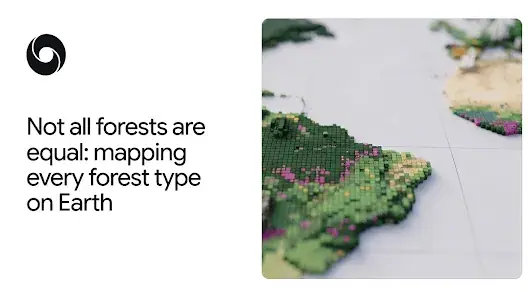
Jessica: Okay, next one's kind of beautiful. Google DeepMind just released a global forest map at ten-meter resolution.
Eric: Wait, like... every tree?
Jessica: Every ten-by-ten-meter patch. And it's not just 'trees here, no trees there.' It tells you what kind of forest. Primary, regenerating, planted, tree crops.
Eric: Huh.
Jessica: Plus a time series from twenty seventeen to twenty twenty-five. Year by year, what changed, what replaced natural forests.
Eric: So this is for the EU deforestation regs?
Jessica: Exactly. Companies need to prove their supply chains are forest-free. This gives them the baseline data.
Eric: That's a genuinely useful application of this stuff.
Jessica: Yeah. It's called Forest Typology twenty twenty, based on UN definitions. It's the kind of thing that makes you remember why we build models in the first place.
Eric: All right, so OpenAI also shipped a breaking change yesterday.
Jessica: Oh no.
Eric: Python SDK three point thirty-seven. If you're using the Decisions API, you need to check your types before you upgrade.
Jessica: What broke?
Eric: Question instructions. They used to be strings. Now they can be strings or structured parts—text, image, JSON. Same with Decisions request inputs, they added new message roles and tool-history items.
Jessica: So if your code assumes it's always a string—
Eric: You're gonna hit a runtime error. You have to check the type first.
Jessica: Classic SDK update. More flexible, more work.
Eric: Yeah. Existing string instructions still work, but if you're not careful, this'll bite you.
Jessica: Speaking of standards, Anthropic just donated the Agent Skills spec to the Agentic AI Foundation.
Eric: Wait, the Linux Foundation thing?
Jessica: Yeah. The foundation was co-founded by Anthropic, Block, and OpenAI last year. They already manage the Model Context Protocol. Now they've got Agent Skills too.
Eric: So Anthropic's basically handing over control to keep it vendor-neutral.
Jessica: Right. According to Anthropic, this ensures it stays community-driven.
Eric: I mean, in theory. We'll see if everyone actually adopts it.
Jessica: Fair.
Jessica: Hugging Face dropped OlmoEarth one point three. It's a satellite embedding model.
Eric: Okay, and what does that mean for me?
Jessica: It converts satellite images into numerical summaries—embeddings—that you can use for mapping tasks without needing a GPU.
Eric: Oh, that's actually useful.
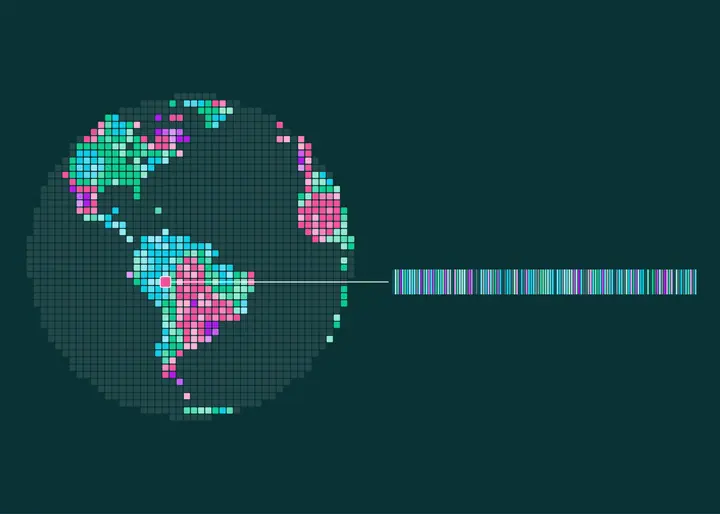
Jessica: And they precomputed embeddings for the entire planet at ten-meter resolution. Sixty-four and one twenty-eight dimensions. You can grab them from Source Cooperative.
Eric: Wait, so I don't even have to run the model?
Jessica: Nope. Just pull the embeddings and build a lightweight classifier. Crop maps, land cover, whatever you need.
Eric: Okay, that's the second satellite model this week that's actually practical.
Jessica: Yeah. And according to Hugging Face, it scored highest on twenty of twenty-seven evaluations across six continents. Took about half the compute time of version one point two.
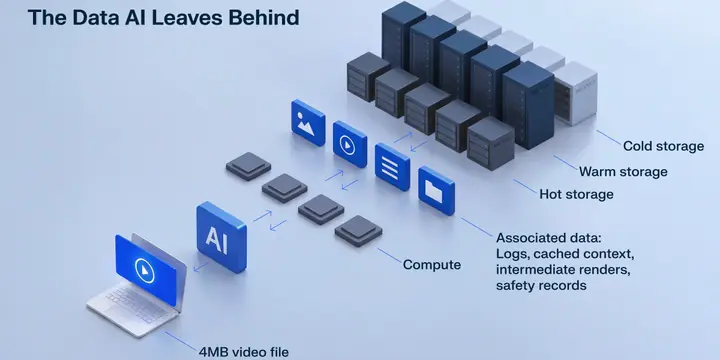
Eric: Last thing. This one's a little alarming. Western Digital found that AI inference generates a hundred thirty times more backend data than the actual output.
Jessica: Wait, what?
Eric: An eight-second video clip. Four megabytes output. Over five hundred megabytes of backend data.
Jessica: What is that data?
Eric: Logs, cached context, renders, backups, safety records. McKinsey projects inference demand growing at thirty-five percent annually through twenty thirty.
Jessica: So storage costs are gonna outpace compute budgets.
Eric: Yeah. Ninety-five percent of IT leaders surveyed said they're already seeing data volume increases from generative AI. And this is continuous, not a one-time training run.
Jessica: That's... honestly, that's the hidden cost no one's talking about yet.
Eric: Yep.
Jessica: Oh, and there's a great quote from Armin Ronacher. 'As fun as AI is, we built so much bad software over the last thirty years, and now the universe is punishing us for our sins.'
Eric: That's... yeah, that tracks.
Jessica: All right, that's it for today. Every story is linked to its source on the dailybrief website.
Eric: Have a good weekend.
Jessica: See you Monday.
Step 3 · 2 minutes
Uber rolled out ChatGPT Work to more than thirty thousand employees for research, data analysis, presentations, and workflows, OpenAI said.
Explain it simply
In plain words Uber gave its entire workforce access to OpenAI's workplace version of ChatGPT for business tasks.
Term to know ChatGPT Work — OpenAI's enterprise version of ChatGPT for workplace collaboration and productivity
What it means for developers: Shows large-scale enterprise adoption of generative AI tools across entire workforce
Google DeepMind and partners released Forest Typology 2020, categorizing every ten-by-ten-meter land patch into six forest types, plus a time series from 2017 to 2025.
Explain it simply
In plain words Google DeepMind created a map that shows not just where trees are, but what kind of forest they form and how that changed each year. The map helps companies comply with deforestation regulations.
Term to know primary forest — native forest with no visible signs of human disturbance
What it means for developers: Provides baseline data for EU deforestation regulation requiring proof of forest-free supply chains
OpenAI released Python SDK version three point thirty-seven on October twenty-second with breaking changes to Decisions types and expanded input handling.
Explain it simply
In plain words OpenAI updated its Python software development kit with changes that may break existing code, particularly for applications using its Decisions feature. Developers must now check whether instructions are simple text or structured data before processing them.
Term to know breaking change — update that requires developers to modify existing code to maintain compatibility
What it means for developers: Developers using Decisions must update type checks before upgrading to avoid runtime errors
Today's newsmakers
The companies that feature most in today's stories, ranked by how often and how prominently they appear.
5 stories today
Steady+2 more stories
1 story today
Steady1 story today
Steady1 story today
▲ 4Company names and logos are trademarks of their owners, shown only to identify them.
Open source · for developers
New repositories gaining stars fastest over the last 30 days. Source: GitHub.
AIA plugin that provides access to AI models including DeepSeek and Kimi without requiring login, registration, or API keys.
AIA menu bar application that provides access to different AI coding models including Codex and Claude Code in one place.
AIAn open-source parametric 3D CAD application written in Rust that runs on desktop, web, and supports automation through MCP.
AITools that enable Claude Code to modify PC games through reconnaissance, reverse engineering, and code generation capabilities.
AIA website framework that automatically finds trending topics and generates daily reports based on customizable sources and selection criteria.
AIAn ESP32-based system that lets AI models control a real iPhone using AirPlay for vision and USB HID for input.
AIA tool that adds audio capabilities to AI coding agents, allowing them to process sound and generate audio output using CPU.
AIA Mac and iPhone application that monitors AI coding agents including Claude Code, Codex, Cursor, and others from the notch.
Optional · if you have more time
9 more stories
Fast, focused, low-cost decisions for any application.
(via) OK well this is a first for me... at 00:44 in this new music video by Dutch alternative rock band De Staat:
A scalable AI system requires a strong foundation. Data, engineering, platforms, operating models, and governance must converge to work as one.
Anthropic donated the Agent Skills standard to the Agentic AI Foundation under the Linux Foundation, according to Anthropic.
Explain it simply
In plain words Anthropic handed control of its Agent Skills specification to an industry foundation that manages standards for AI agents. The foundation also oversees the Model Context Protocol specification.
Term to know open standard — technical specification available for anyone to implement without proprietary restrictions
What it means for developers: Ensures Agent Skills remains vendor-neutral and community-driven for broader adoption across platforms
Hugging Face released OlmoEarth version one point three with precomputed annual embeddings for the planet at ten-meter resolution in sixty-four and one twenty-eight dimensions.
Explain it simply
In plain words Hugging Face shipped a model that converts satellite images into numerical summaries that developers can use for mapping tasks without needing expensive graphics processors. The company already computed these summaries for every ten-meter patch of Earth.
Term to know embedding — numerical representation that captures what a model learned from data
What it means for developers: Developers can build crop maps and land-cover analysis with lightweight classifiers, no GPU required
As fun as AI is, we built so much bad software over the last 30 years, and now the universe is punishing us for our sins.
Enterprise AI can generate recommendations, automate tasks, and help organizations make decisions faster.
An eight-second AI video clip creates more than five hundred megabytes of backend data versus a four-megabyte output file, Western Digital found.
Explain it simply
In plain words Every AI-generated video leaves far more data on company servers than what users see, creating hidden storage costs. Inference produces data continuously, unlike one-time training runs.
Term to know inference — process of running a trained model to generate responses to user requests
What it means for developers: Storage costs from inference accumulate faster than compute budgets, requiring new infrastructure planning
Last step · 1 minute
5 questions on today's stories
Browse other days
How we work
Lab announcements, release notes and SDK changelogs come before commentary. Every story links to the original.
Figures, model names and prices are taken from the published text. Where a detail is not stated, we leave it out.
Each story states what changed, by how much, and what it means in practice. No hype, no speculation.
OpenAI expanded its Decisions API with new input types and released Python SDK version three point thirty-seven, while Anthropic donated its Agent Skills standard to the Agentic AI Foundation. 12 stories from 8 sources are summarised on this page.
1. Uber brings ChatGPT Work to all employees with OpenAI. 2. Beyond tree cover: mapping the world’s forest types. 3. OpenAI Python SDK v3.37.0 released.
New Models (7), Pricing & Tokens (1), Developer Tools (4).
Headlines and short summaries come from the public feeds of 8 publishers, including Anthropic Python SDK releases, Google DeepMind, Hugging Face, MIT Technology Review, OpenAI, OpenAI Python SDK releases. Every story links to the original article.
Yes. A voice recording covering every story is at the top of this page and is published each day.
Every headline links to the original. How it works